 Camilla Forte/Borderless Magazine/Catchlight Local/Report for America
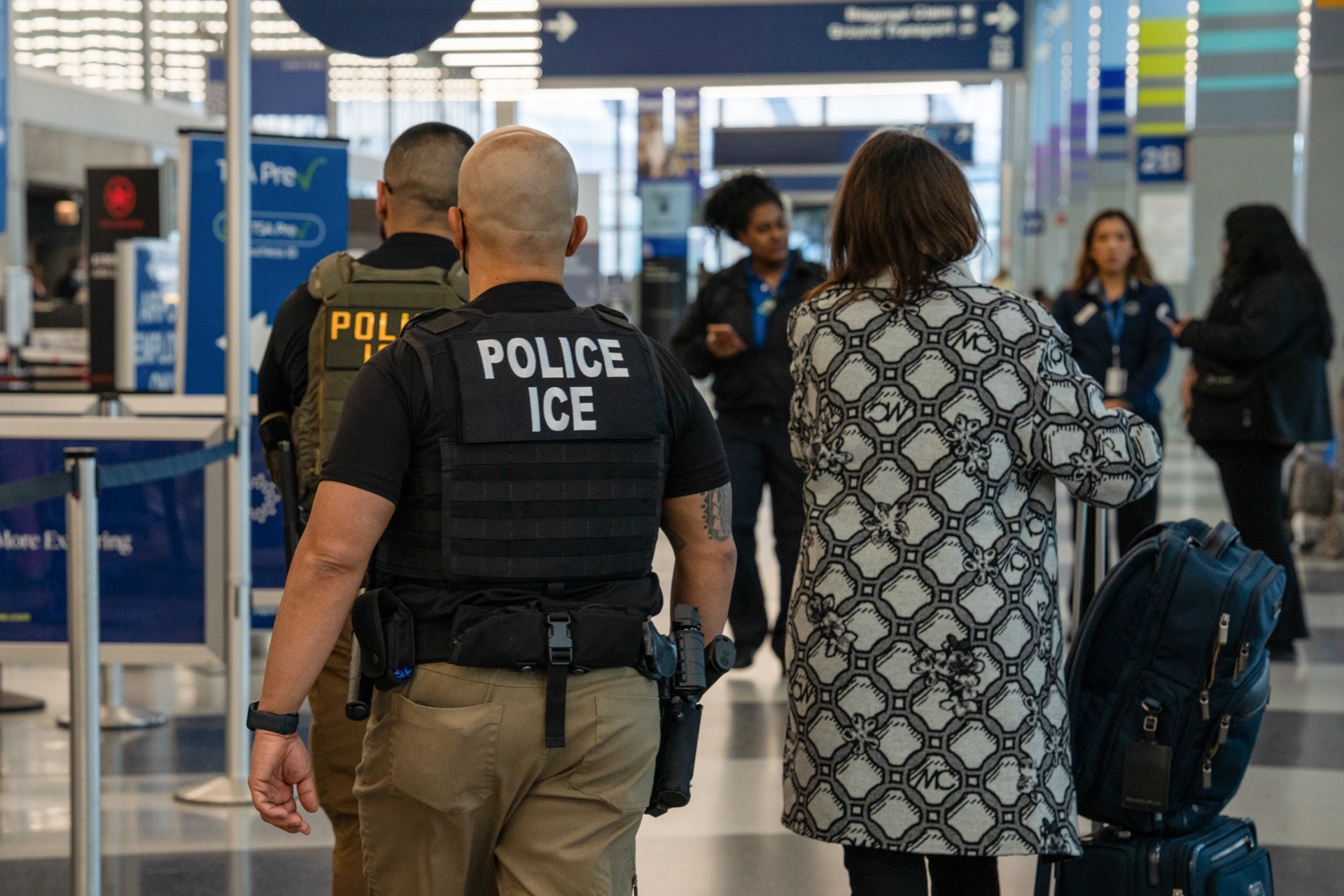
Immigration attorneys and advocates say this summer’s surge in ICE arrests showed a change in ICE tactics, with arrests becoming less “flashy” and more targeted.
When federal immigration agents were deployed in Illinois during Operation Midway Blitz last fall, their presence was palpable. Agents raided an apartment building in South Shore, tear gassed peaceful protesters and detained day laborers and street vendors.
One year later, ICE arrests have increased again, according to local immigrant organizations. But, advocates say the enforcement looks different: agents are increasingly making targeted arrests of individuals, often with less visible activity on the ground.
Since June 2026, local groups have confirmed over 80 ICE arrests across Chicago every month, over double the arrests confirmed in March 2026.
Noticias que ponen el poder en el punto de mira y a las comunidades en el centro.
Suscríbase a nuestro boletín gratuito y reciba actualizaciones dos veces por semana.
In response, Karina Martinez, communications coordinator at the Brighton Park Neighborhood Council, says requests for legal representation are rising amid arrests.
“It feels very different than it did in the fall of last year,” Martinez said. “But they still remain in our communities and that means you have to look out for your neighbors if you see something strange.”
The surge in arrests
From September to November of last year — the height of Operation Midway Blitz — ICE arrested more than 3,600 people across Illinois.
During that time, ICE agents:
- asesinado a tiros Silverio Villegas-Gonzalez at a traffic stop in Franklin Park,
- shot Marimar Martinez five times in Brighton Park,
- pepper sprayed and tear gassed peaceful protesters,
- and arrested day laborers, street vendors and landscaping workers.
ICE arrests in Illinois declined around mid-November 2025, but they began increasing once again in April 2026, according to the Deportation Data Project.
Nationally, ICE arrests reached an all-time high in August 2026, when the agency arrested more than 50,000 people across the country.
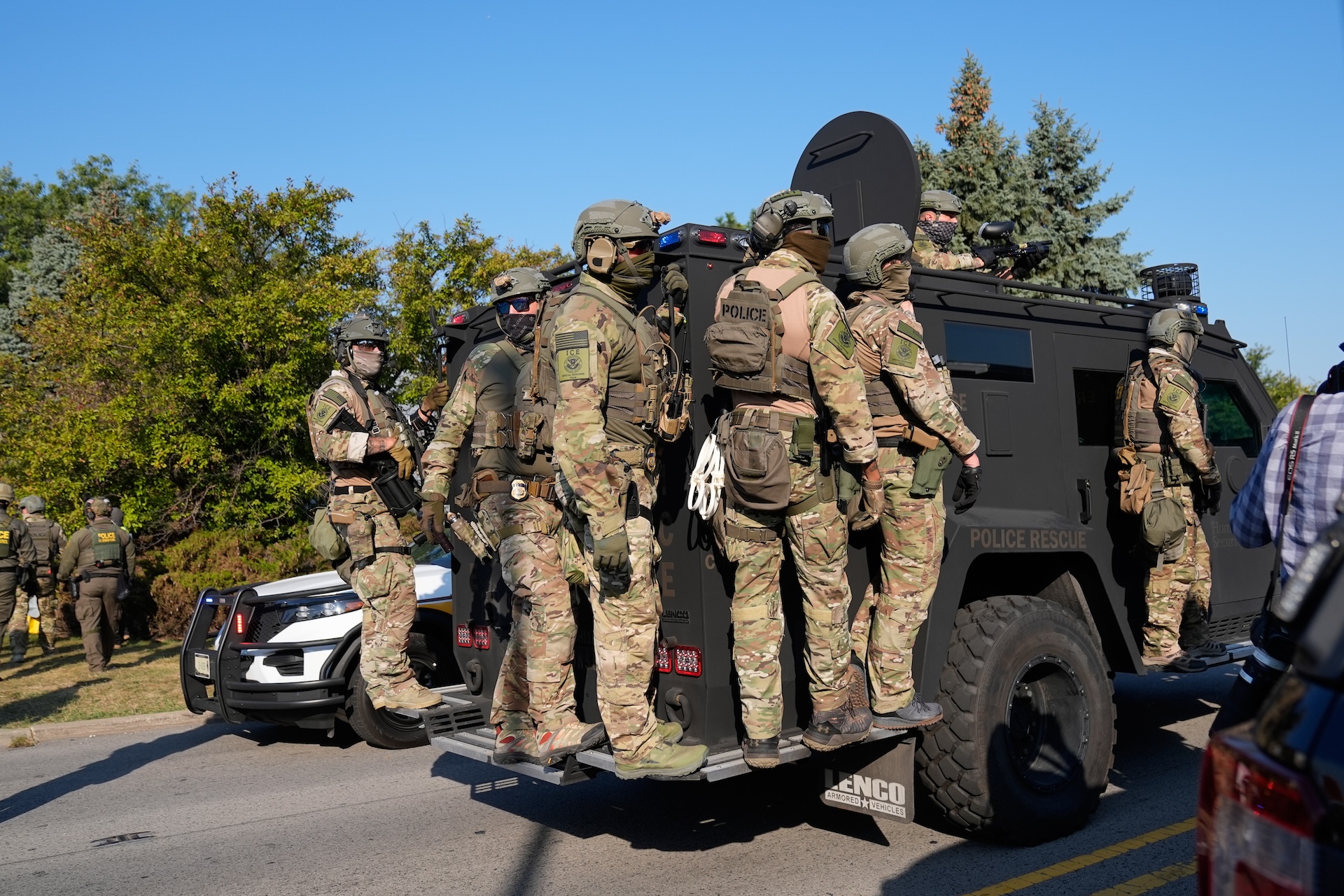
This summer, immigration enforcement intensified once again but in a quieter way, immigration advocates and experts told Borderless. Community members reported ICE presence in Chicago suburbs and neighborhoods across the city, including Albany Park, Back of the Yards and Logan Square.
Officials have seen an increase in ICE arrests in courthouses and out of vehicles, according to a video posted Oct. 5 from Pooja Ravindran of the Committee for Immigrant and Refugee Rights (CIRR) on Instagram.
Evelyn Vargas of Organized Communities Against Deportations (OCAD) says this year, ICE agents have moved away from the “2025 visuals of a lot of breaking of glass, a lot of chasing after landscapers, a lot of marching downtown or other streets.”
Chicago’s O’Hare and Midway airports also became hot spots for heightened immigration enforcement.
In August, ICE agents pulled Omar David Panqueva Rojas, an asylum seeker from Colombia, from his Uber after it arrived at Midway airport. Panqueva Rojas, a DJ, was flying to Washington, D.C. with his partner to perform in a series of after-parties for Colombian artist Karol G’s U.S. tour.
The couple, who has a pending asylum case, was arrested for overstaying tourist visas, a DHS spokesperson told Block Club Chicago. According to their attorney, Enrique Espinoza, they filed for asylum within a year of arriving and complied with every requirement set by immigration authorities.
They were both taken to Broadview ICE facility, and later held in an Indiana detention center. They were released 10 days later.
In a statement to Borderless, DHS said the administration is working to prevent people who are in the country without legal status from traveling.
“We went through all the trauma that takes being in a jail, and apart from your community, apart from your people, and thinking that anything can happen to you,” Panqueva Rojas said. “Then coming back and now you can have your freedom back and continue to fight your case.”
Continued enforcement
In September, after Panqueva Rojas’ arrest, another U.S. citizen was left injured after ICE agents mistook him for a fugitive in Evanston. That same month, agents again clashed with peaceful protesters at the Broadview ICE processing facility, exactly one year after their first violent encounter at the start of Midway Blitz.
This most recent surge of ICE arrests has shown to increasingly affect more people without criminal records, including those who are traveling within the United States, according to immigration attorney Enrique Espinoza.
“I have needed to adjust the speech that I would give to an undocumented individual, to [someone with legal status],” he said. “It is important to be ready to minimize potential risks [of an arrest], not only by understanding one’s legal rights but also by recognizing the realities of immigration enforcement.”
Uncertainty over these new realities are being heightened by tactics that are becoming increasingly difficult to track, advocates say.
Yessica Martinez of Enlace Chicago said that this more targeted enforcement strategy is showcasing ICE’s use of surveillance tools and databases to identify and track people, making enforcement harder for communities to see and document.
“It just means that they’ve figured out how to get around so that people are not necessarily documenting them, what times they can get away with things,” they said. “There’s a lot more happening behind the scenes with tools that they are using to track individuals, which is something that we didn’t necessarily see at the onset of Operation Midway Blitz.”
Federal authorities’ use of surveillance tools to aid in the Trump administration’s immigration operation has been ongoing since President Trump returned to office. Over the last year, the federal government has invested in more surveillance technology that has scanned the faces of immigrants and protestors and photographed their license plates, assisting in their arrests.
Más información

Un Chicago Reader report released in late September showed that federal authorities accessed a network of automated license plate readers (ALPRs) and surveillance cameras in their attempts to prosecute Marimar Martínez and Anthony Ruiz for interfering with immigration agents last year. She and Ruiz were accused of interfering with an immigration operation.
Vargas says organizations have witnessed targeted enforcement strategies consisting of more focus on picking people up in domestic violence or traffic court, as well as identifying people using a combination of ALPRs y companies that share data with ICE.
“The efforts of agents have been less in our face, mostly because they are now more able to rely on technology and databases,” said Vargas. “They are able to do more systematic targeting, like pulling information from databases around license plates or court hearings.”
Even beyond arrests, Vero Ortiz of Enlace Chicago says they have seen how potential arrests could impact families in their daily lives. They have noticed a drop in attendance in school, a reflection, they say could be due to more parents being afraid of going to work, and their children picking up the breadwinner roles.
“If there’s an arrest, people stop going to work, they stop going to do any kind of service work, manual labor,” said Ortiz. “They will pull back for a couple of days, which means that’s a drop in income, and that young person needs to pick that up.”
What experts recommend
Regardless of status, Espinoza recommends always having an emergency plan in place. This includes keeping important documents organized and accessible to a trusted individual or attorney in the instance of detention. He also recommends carrying appropriate identification, while understanding that the documents an individual should carry may vary depending on a person’s immigration circumstances.
Regardless of immigration status, Espinoza says, it is important to keep relevant documents readily accessible.
“These may include identification, immigration records, tax documents and proof of employment, depending on the individual’s circumstances,” he said.

Espinoza also recommends considering leaving a spare house key to a trusted person so that they could access important documents and personal belongings, if they are detained. He says having access to these materials may help an attorney in evaluating legal options and seeking release.
In a social media video, Ravindran also urges people to fill out the Emergency Family Plan form, which is made available by the City of Chicago and consists of a template to organize emergency contacts and important documents to keep readily accessible.
Individuals can document and report ICE activity in violation of state, county or city law through this form.
Organizers and immigration experts urge residents to report ICE sightings or arrests to the Illinois Coalition for Immigrant and Refugee Rights hotline at 1-855-435-7693. ICIRR also connects immigrants to local organizations to provide further resources and services for families in need.
Speaking with an attorney or accredited representative to learn more about an individual’s specific case is also helpful, experts say. It will help individuals understand what options are available to them and to have a plan in place in case they encounter an immigration agent.
Borderless put together a resource guide to help individuals find free immigration lawyers.
For those that do not have access to an attorney, Enlace Chicago offers brief legal services that do not require an attorney.
The Asylum Seeker Advocacy Project, Human Rights First and National Immigration project recently launched a free online tool for people in immigration detention to ask for the federal court to release them, without a lawyer. Immigrants or their families can answer a series of questions and receive a ready habeas petition through the DetentionHelp website.
Martinez says DetentionHelp could help alleviate financial stress for those who need legal support but don’t have the funds for it, at a time when nonprofit organizations are at capacity.
“It’s very hard because it’s really the situation that we’re in right now,” they said. “We’re not able to serve everybody with the urgency that they need.”
Tara Mobasher es reportera y redactora del boletín de Borderless Magazine. Envía un correo electrónico a Tara a [email protected].