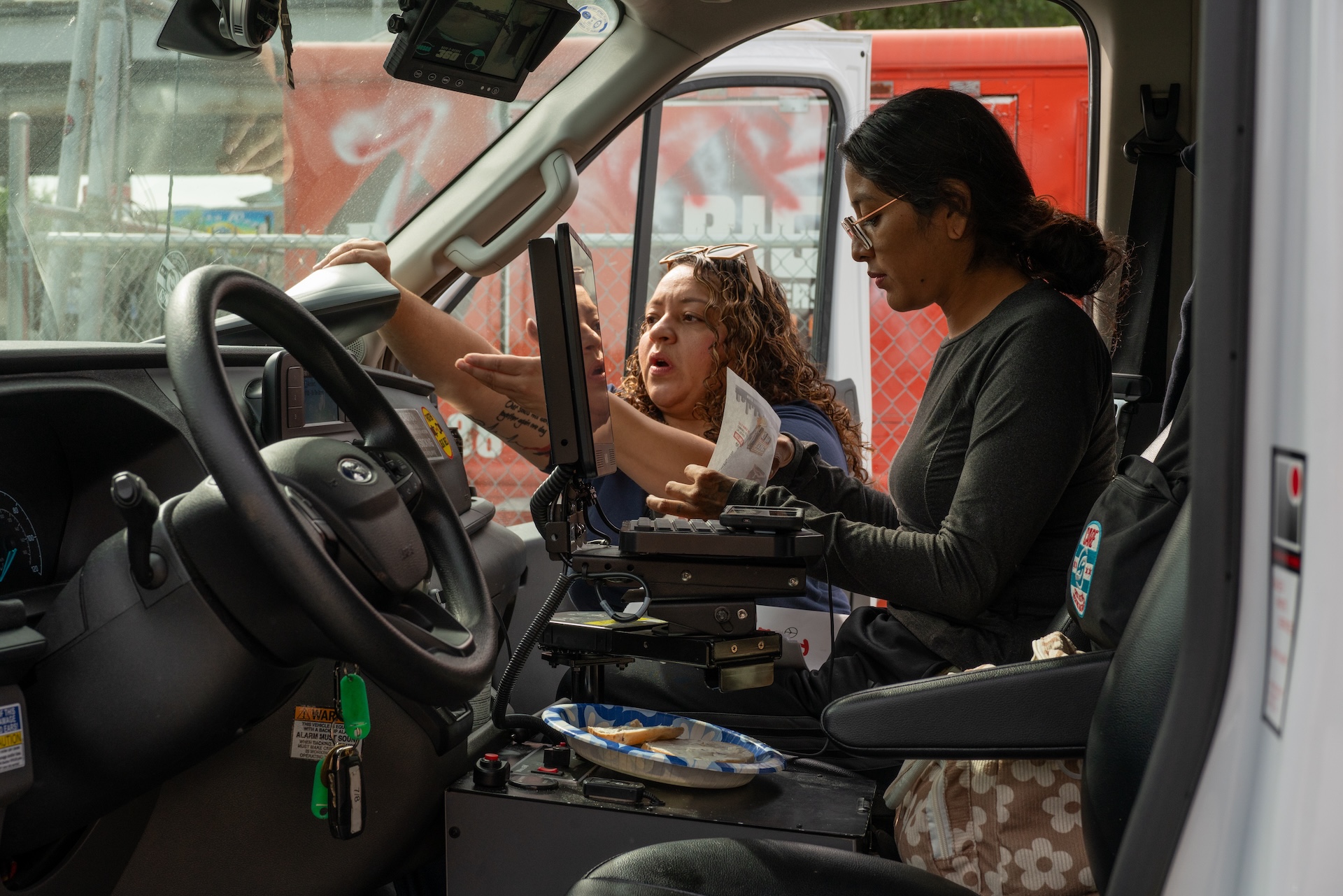
 Camilla Forte/Borderless Magazine/Catchlight Local/Report for America
Borderless conversó con la directora del programa de Asistencia y Respuesta ante Crisis en Chicago para explicar este servicio.
El programa de Asistencia, Respuesta y Participación ante Crisis (CARE, por sus siglas en inglés) de Chicago ha respondido a un aumento del 51 % de llamadas al 911 desde que se expandió a toda la ciudad en mayo, según datos que Borderless recibió del Departamento de Salud Pública de la ciudad. El programa ofrece asistencia de emergencia que no involucra a la policía a personas que atraviesan crisis de salud mental o situaciones de angustia conductual.
El equipo de CARE, compuesto por profesionales clínicos y técnicos en emergencias médicas (EMT), respondió a 127 llamadas entre mayo y agosto. La mayoría de estas llamadas vinieron de los vecindarios de Lakeview, Uptown y Near West Side.
Lanzado en seis distritos policiales en 2021, CARE se expandió esta primavera para brindar servicios a los residentes de toda la ciudad.
“Reafirmamos nuestro compromiso de priorizar la compasión sobre la criminalización, el tratamiento sobre el trauma y de atender a nuestra gente allí donde se encuentre, brindándole el apoyo que necesita”, dijo el alcalde Brandon Johnson sobre la expansión en mayo.
Noticias que ponen el poder en el punto de mira y a las comunidades en el centro.
Suscríbase a nuestro boletín gratuito y reciba actualizaciones dos veces por semana.
El programa ha atendido a más de 2.600 personas desde su inicio y ha contratado a más personal para satisfacer la creciente demanda.
Borderless conversó con Tiffany Patton-Burnside, quien dirige el programa como directora sénior de servicios de crisis del Departamento de Salud Pública de Chicago(CDPH por sus siglas en inglés), para conocer más sobre el programa y cómo las personas pueden acceder a esta ayuda para la salud mental.
¿Cómo funciona CARE?
Para recibir asistencia de CARE, las personas deben llamar al 911 y solicitar el servicio especificamente. Si la solicitud cumple con las pautas del programa, un profesional clínico de CARE y un técnico en emergencias médicas (EMT) acudirán al lugar para brindar ayuda, dijo Patton-Burnside.
Según las pautas, las llamadas elegibles involucran a personas que no tienen armas, problemas médicos, consumo activo de sustancias ni planes de quitarse la vida mediante suicidio.
El equipo también trabaja con personas que no son violentas ni representan una amenaza para sí mismas o para otras personas.
Para comprender las necesidades de una persona, los miembros del equipo realizan evaluaciones de salud mental y otras evaluaciones.
A veces, “puede ser tan sencillo como tener una conversación para averiguar qué está pasando”, dijo Patton-Burnside. “Damos el tiempo y el espacio necesario para eso”.

¿Qué tipo de ayuda brinda el equipo de CARE?
“El objetivo es ayudar a las personas a sentirse más como personas y más como ellas mismas”, dijo Patton-Burnside. “Intentamos ayudarlas a recuperar ese estado. Eso puede significar darles ropa. También puede significar ayudarlas a conseguir alimentos”.
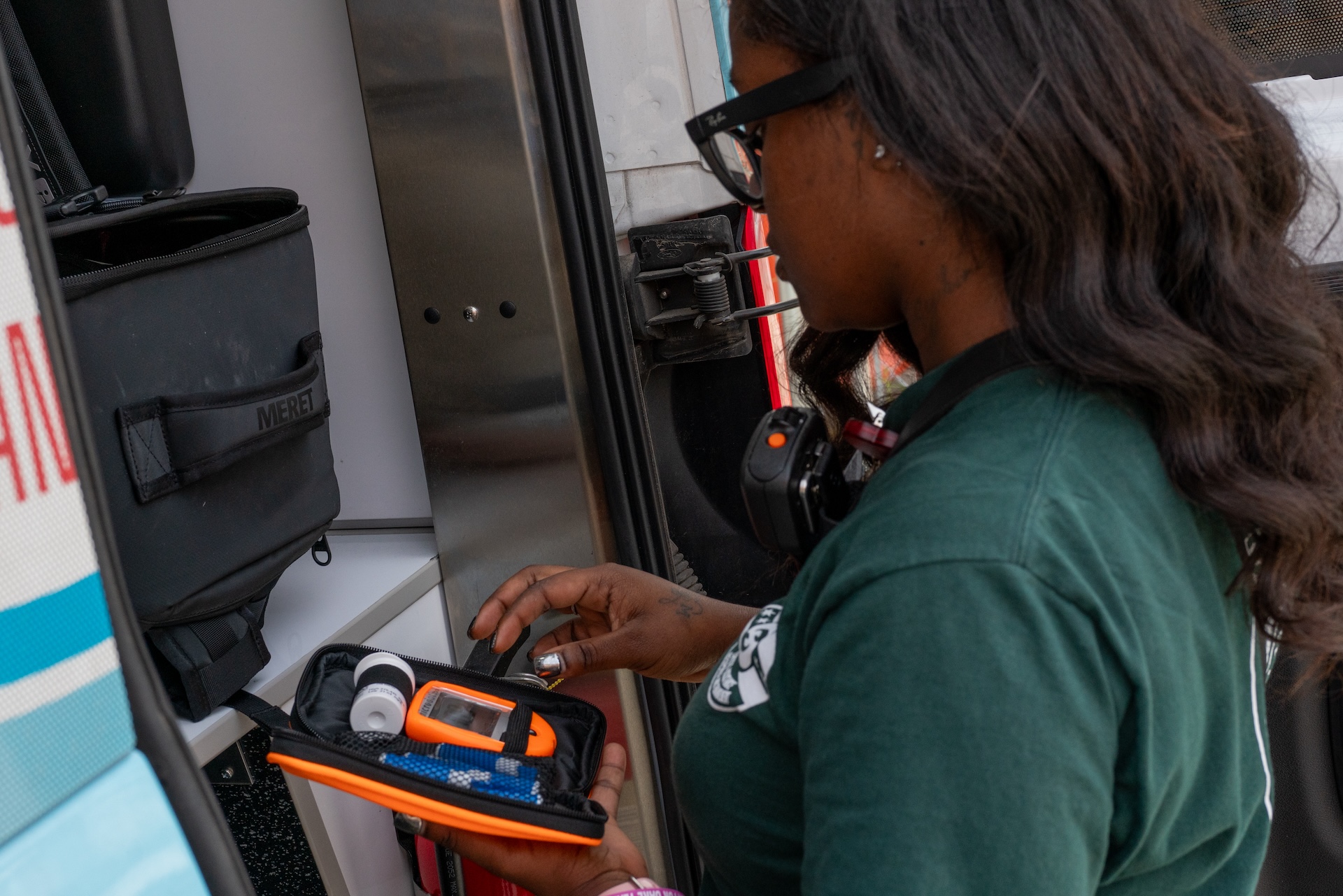
Las camionetas de CARE llevan agua embotellada y tarjetas de regalo de Subway, además de artículos de higiene personal, ponchos para la lluvia y chamarras. También cuentan con kits de reducción de daños, que incluyen Narcan — un medicamento que puede salvar vidas al revertir una sobredosis de opioides — y otros equipos médicos para ayudar a prevenir la propagación de enfermedades infecciosas.
“Atender esas necesidades básicas puede ayudar a una persona a recuperar su dignidad y sentirse nuevamente como ella misma, y a procesar un poco mejor lo que está viviendo”, dijo Patton-Burnside.
El personal también ofrece referencias a otros programas y recursos y, en ocasiones, lleva a las personas a bancos de alimentos y refugios de emergencia.
¿Qué pasa si no hablo inglés?
La Oficina de Manejo de Emergencias y Comunicaciones de Chicago, que administra el centro de llamadas del 911, ofrece servicios en más de 240 idiomas y dialectos.
El equipo de CARE también es diverso. Muchos de sus integrantes son bilingües, dijo Patton-Burnside. El personal de distintas religiones también ayuda a abordar aspectos religiosos que pueden influir en las necesidades de las personas o en su acceso a los servicios.
“Reconociendo que vivimos en una ciudad muy diversa, con 77 comunidades distintas, tratamos de incorporar a personas de todos los rincones de la ciudad y de diferentes orígenes”.
¿Qué sucede después de recibir ayuda de CARE?
El personal se comunica con las personas atendidas 24 horas después y programa seguimientos después de una semana y de un mes. Los administradores de casos ayudan a determinar cómo comunicarse con cada persona y con qué frecuencia mantener el contacto.
“Esos seguimientos pueden ser en persona”, dijo. “Pueden ser por teléfono, por mensaje de texto o por correo electrónico. Realmente depende de cómo la persona prefiera comunicarse”.
Para las personas que están hospitalizadas, el equipo de CARE coordina con el hospital la atención y el apoyo que recibirán después del alta, dijo Patton-Burnside.
¿Cuándo está disponible CARE?
CARE’s hours of operations have now expanded – with the team providing services from 8 a.m. to 10 p.m. Monday through Friday. The program previously ran from 10 a.m. to 4:30 p.m. Monday through Friday.
Johnson recently announced the new hours along with the team’s plans to launch a second shift starting Oct. 5. Clinicians are also available by email at por correo electrónico en [email protected] para brindar apoyo.
Patton-Burnside said she and city officials hope to expand the program so that it is eventually available seven days a week, 24 hours a day.
“Es un proceso desarrollar este programa”, le dijo a Borderless. “Como este trabajo es tan complejo, requiere atención a los detalles y una planificación cuidadosa para asegurarnos de contratar a las personas adecuadas para el trabajo”.
¿Dónde puedo encontrar ayuda para la salud mental si CARE no está disponible?
Puedes encontrar recursos adicionales de salud mental en mentalhealth.chicago.gov.La línea de ayuda 211 conecta a los residentes del condado de Cook con servicios sociales.
El La Línea Nacional de Prevención del Suicidio 988 está disponible las 24 horas del día, los 7 días de la semana. La línea de ayuda para casos de violencia doméstica de Illinois esta disponible al 877-863-6338, también ofrece atención las 24 horas del día, los 7 días de la semana.
Amanda Tugade es reportera de Borderless Magazine. Puedes contactarla por medio de su coreo electrónico [email protected].
Update 10/02/2026: This piece has been updated to reflect the new expanded hours of the CARE program.