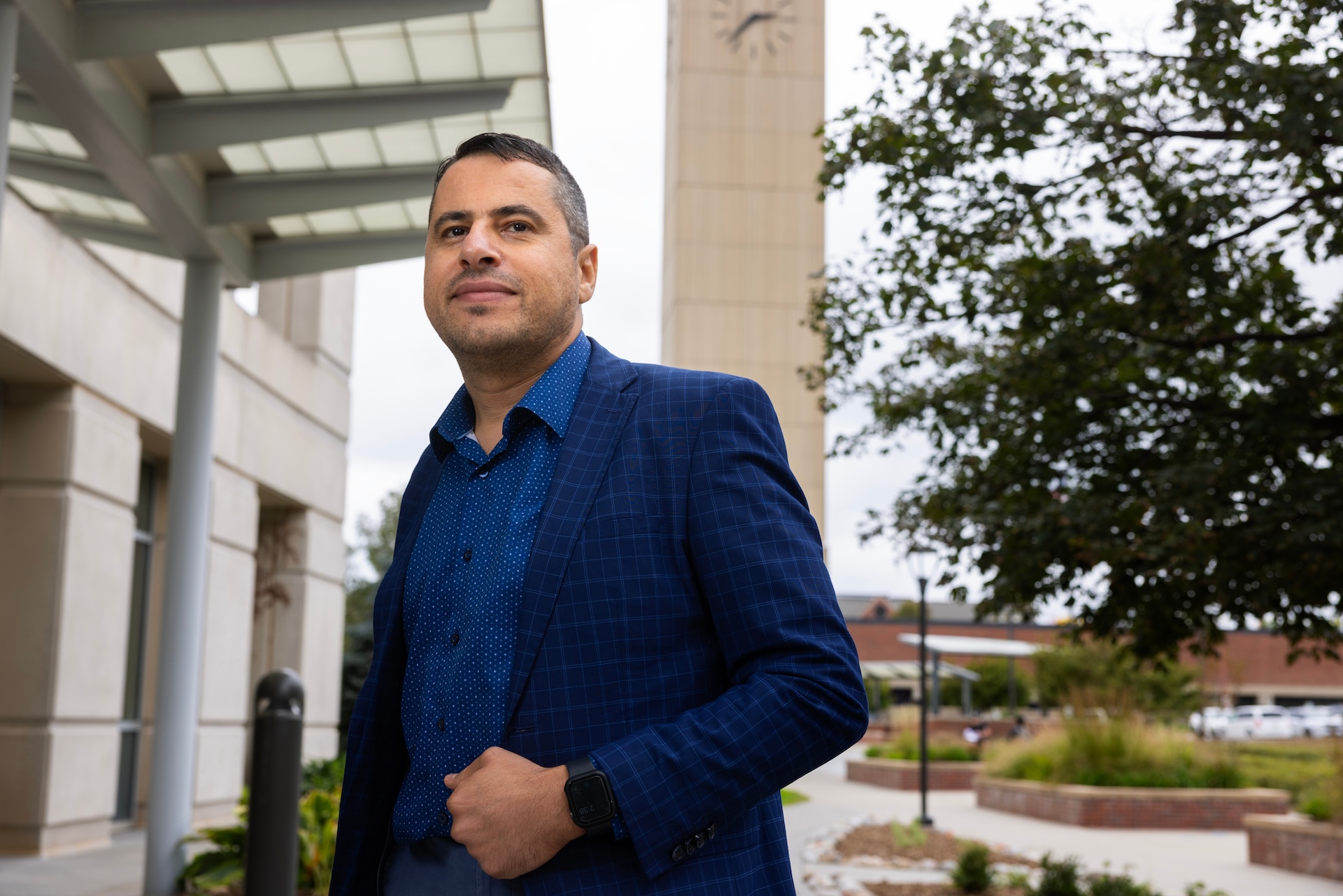
 Rebecca Gratz for Borderless Magazine
Illinois refugees will lose Medicaid access in October as part of federal funding cuts.
This was supposed to be Mustafa Rfat’s new beginning.
Originally from Iraq, Rfat fled to Turkey in 2010 after receiving threats on his life because of his political affiliations, ethnicity and the status of some of his family members. He was admitted to the United States as a refugee the following year, and he enrolled in college at West Virginia University.
But within days of starting classes, he was admitted to the hospital.
Rfat lives with ankylosing spondylitis, a form of arthritis affecting the spine and causing extreme pain with even the smallest movements. His back seared in pain whenever he tried to carry his books through the hilly college campus.
Noticias que ponen el poder en el punto de mira y a las comunidades en el centro.
Suscríbase a nuestro boletín gratuito y reciba actualizaciones dos veces por semana.
“When I arrived in the U.S.,” said Rfat, “if I did not have access to Medicaid, I would probably be dead by now. If I don’t access my medication, I cannot survive. So Medicaid is so important. Because of Medicaid, I was able to get my education. Now, I will be a professor teaching the next generation.”
Being a refugee is a challenge in itself. After proving that your life is in danger and waiting for admission to the United States, refugees have to learn how to live in a new country with different laws and a language they may not speak. Navigating a new country with a disability adds an extra layer of complexity as refugees try to find the medical care they need.
Pero eligibility changes to Medicaid next month will likely make this experience even more difficult for some refugees. Starting Oct. 1, refugees will no longer be able to access free or low-cost medical care through the federal program. It’s the latest in a series of federal cuts impacting refugees with disabilities, including reductions to Refugee Medical Assistance y SNAP.
Illinois historically offered a medical safety net to immigrants and refugees beyond that of the federal level. In June of this year, however, Illinois Gov. JB Pritzker signed the Medicaid Omnibus Bill into law, aligning Illinois with federal rules. This will result in thousands of Illinois immigrants losing medical support next month. In anticipation of these changes, local advocates are doing what they can to help bridge the gaps.
A health safety net
Medicaid is a federally and state-funded program that provides health care coverage at free or reduced rates to eligible low-income individuals. Immigrants with certain humanitarian protections, such as asylum seekers, refugees, victims of trafficking or domestic violence, were previously eligible for Medicaid coverage.
Due to a change in federal law, however, many immigrants who once had Medicaid will now lose their coverage. Starting Oct. 1, only U.S. citizens and a small subset of immigrants — including children, pregnant individuals, green card holders and immigrants from Cuba or Haiti under certain humanitarian programs — will still be eligible for Medicaid.
These changes will result in an estimated 10,000 individuals in Illinois with various immigration statuses losing Medicaid coverage, including refugees with disabilities.
Según el 2026 World Migration Report, there are more than 62 million global refugees, migrants, or Internationally Displaced Persons (IDPs) with a significant disability. Upon entering the U.S., refugees are considered legal residents. However, they are unable to apply for a green card until they have lived in the country for at least a year. Green card processing times around 32 months mean a refugee with a disability would have to wait three years or longer to be eligible for Medicaid under the new rules.
For many, waiting that long is not an option — so community members and fellow refugees are stepping in to help.
“We all have dreams of contributing”
Rfat’s journey had tremendous physical and administrative hurdles, many of them brought on by the lack of resources catering to refugees living in the U.S. with disabilities. When he first came to the U.S., his associate’s degree and previous credentials were not recognized by American employers or universities. He did not speak English, which made finding work and getting access to disability resources and medical care even more difficult. He often had to choose between buying food and medication for his worsening back condition.
“When you come here as a refugee with disabilities, you’re often not seen as a person who is going to contribute to society,” said Rfat. “The caseworkers have very limited time, so it makes sense to spend that time with someone who’s ready to work, not on someone who needs help, more guidance, and connection to resources … Because of that, I was often told, ‘you can’t do it.’… It was heartbreaking.”
Rfat moved from Alabama to Chicago and eventually settled in West Virginia to attend college. To fund his degree, he applied for a scholarship for individuals with disabilities through local rehabilitation services. Finally feeling that he was making progress toward his goals, he found himself in the hospital in his first week of school. He wondered if those who had told him ‘you can’t do this’ were right.
Then he received a call from his school supervisor asking why he hadn’t attended class.
“I said, ‘I’m sorry, I don’t think I can attend college because I can’t carry my books and notebooks,’” he recalled. “And she replied, ‘That shouldn’t be the condition for you not to get an education.’”
She told him about the campus disability office and connected him with vocational rehabilitation services. Through these connections, he was able to get a backpack with wheels, a loaner iPad with his school books downloaded and a keyboard that connected to the iPad.
Access to these simple resources allowed Rfat to continue in his academic journey. He now holds two master’s degrees and a doctorate in philosophy with a focus on refugees with disabilities. He now works as an assistant professor at the Grace Abbott School of Social Work at the University of Nebraska at Omaha, where he is helping spread awareness of the gaps in assistance.
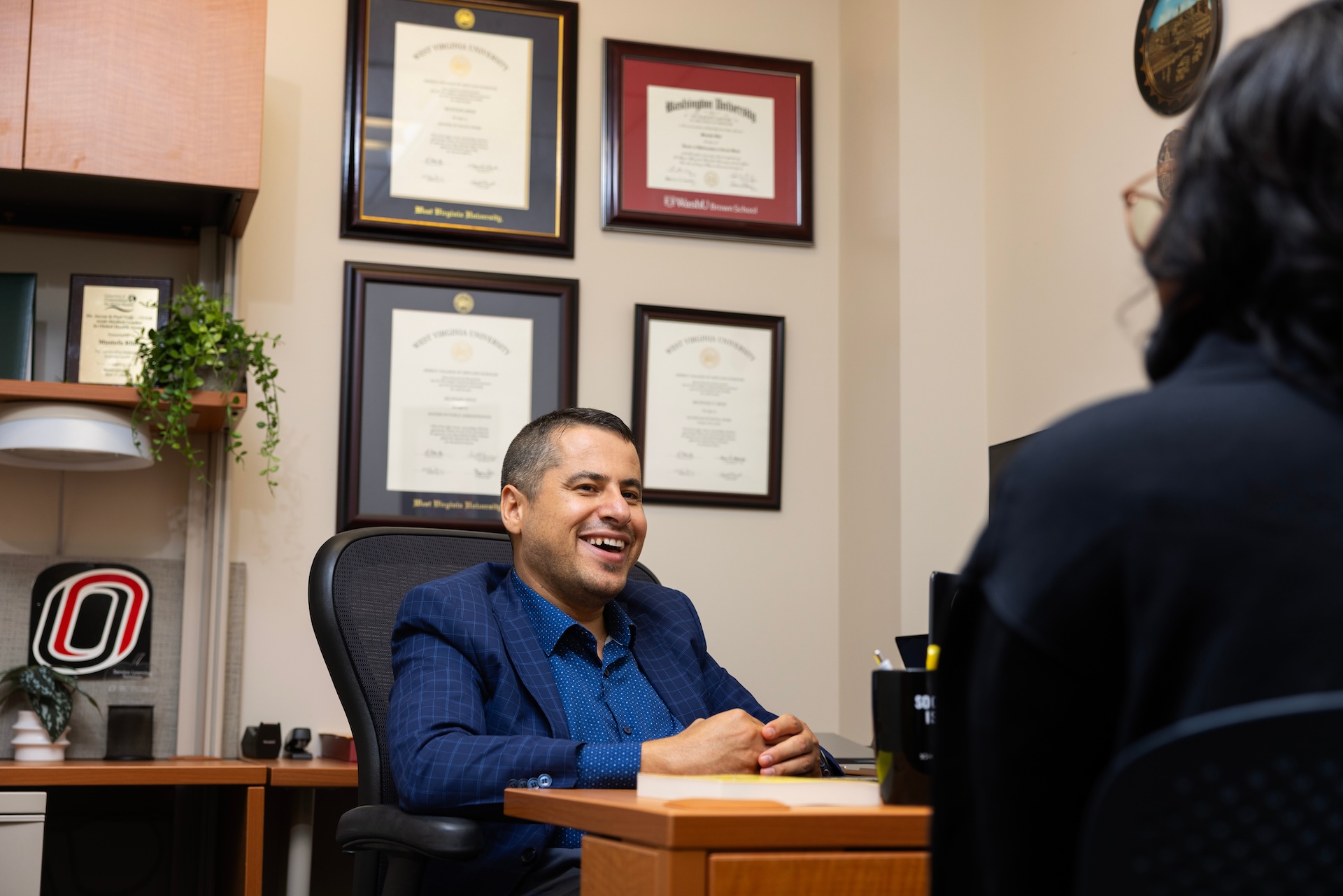
“For refugees that come here, we all have dreams of contributing, but oftentimes we get bombarded with misinformation that the only thing available for us is Supplemental Security Income (SSI), and that’s how our life should go, and I just didn’t accept that,” Rfat said. “But not every refugee and immigrant with disabilities will have the power to advocate, to fight for, to negotiate, to convince a social worker to believe in them, that they really want to work.”
Unique experiences and common hurdles
One of the hardest obstacles to overcome is where to find help.
For Negash Aman, a blind refugee from East Africa who asked to use a pseudonym to protect his safety, that challenge began as soon as he was dropped off at his new home in Chicago in 2017. A refugee resettlement agency gave him one takeout meal and a phone that shut off after one month. He had no idea where the grocery store was, how to get around the city, or who to call if he needed help.
“It’s like life was starting from scratch, and I was trying to adjust all by myself,” said Aman. “There was no one I knew. There was no one I could call if I needed any assistance or if there was an emergency.”
The first few months in Chicago were a struggle for Aman, but because he could understand English and was able to use the internet—two significant barriers that Aman acknowledged many refugees can’t easily overcome—he was able to submit an application to the Illinois Division of Rehabilitation Services and have a counselor assigned to help him.
Aman’s counselor connected him with Rooshey Hasnain, a clinical associate professor in the Department of Disability and Human Development at the University of Illinois Chicago through a university project called Partners with Refugees in Illinois Disability Employment (PRIDE). Hasnain, an immigrant and daughter of refugees, co-created the federally funded program that ran from 2016-2020. The program’s model was based on her research of the challenges that refugees with disabilities face and gaps in the system that perpetuate these challenges.
“Many of the mainstream disability systems are not aware of immigrant-refugee lived experiences of disability, and many of our immigrant and refugee-serving agencies are doing wonderful work but are not aware of disability resources,” said Hasnain.
Más información

PRIDE offered Aman access to training that focused on leadership and education. He was accepted into a nine-month fellowship program and went on to receive his master’s in rehabilitation counselling at Northeastern Illinois University.
Aman also had Medicaid support early on, which he said, “means a lot when you are new. You never know how long it takes you to transition.”
Aman worries about the refugees who will lose access to Medicaid under the new rules. PRIDE no longer operates, and changes to federal refugee programs have meant there are fewer options for assistance.
“The refugee journey is unique to every individual,” said Aman. “We cannot predict what happens after a minute or after a day. You don’t really know, and there is not any safety net. So in the absence of Medicaid or any programs that are meant for refugees, it really puts you in a very difficult situation.”
Those working to bridge the gaps
While PRIDE ended, Hasnain still works closely with other organizations supporting refugees with disabilities, including Agents of Hope Training and Information Center, which works to help refugees exit the welfare system through employment, education, and supportive services. She also works with the Language Access unit at the Illinois Department of Central Management Services, which helps to create a pathway for every Illinois resident, regardless of background, culture, language, or mode of preferred communication, to access all state services.
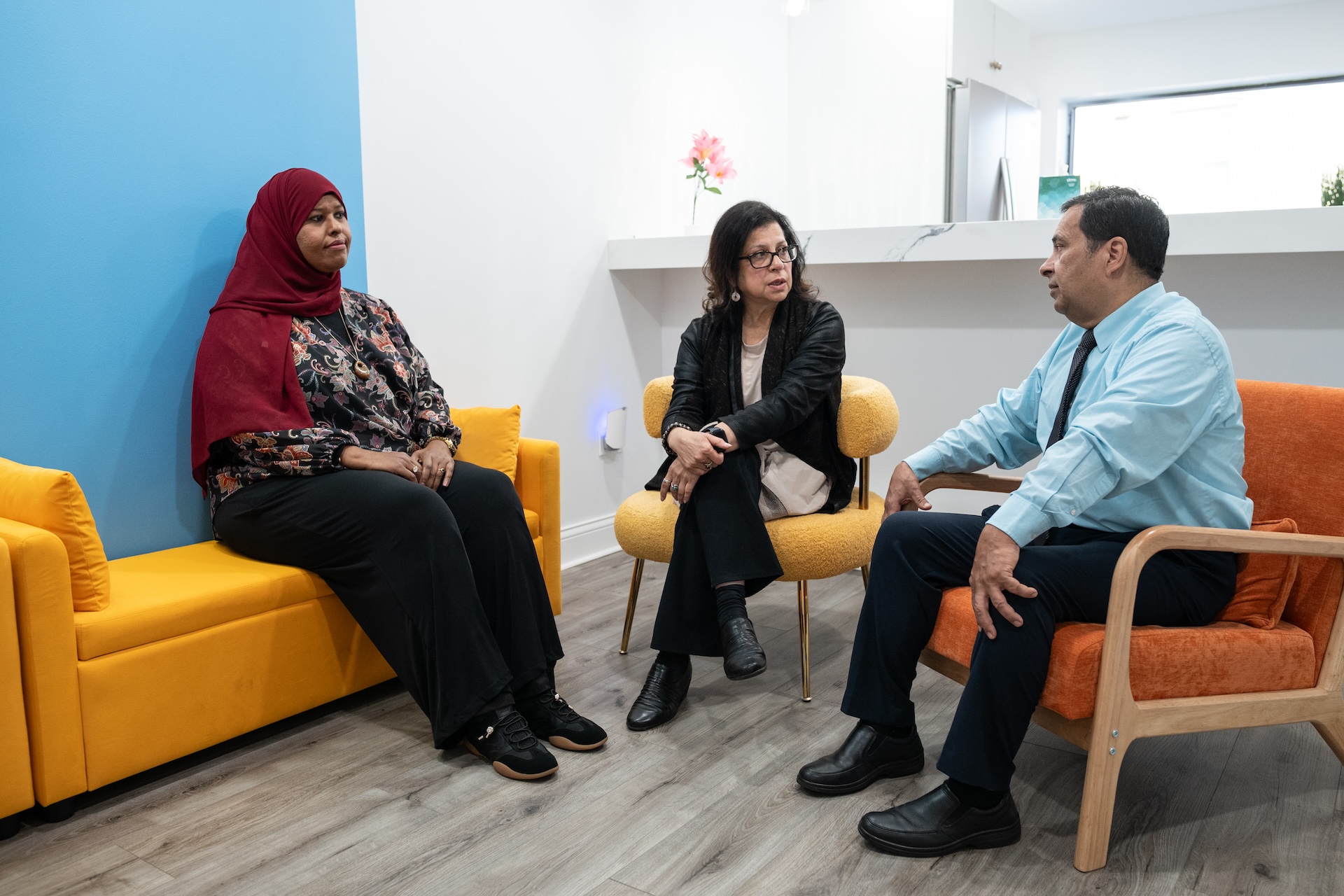
Though resources are scarce, the leaders of these organizations say they are working together to ensure refugees with disabilities have a way forward.
El Coalición de Illinois para los Derechos de Inmigrantes y Refugiados, (ICIRR, por sus siglas en inglés), has an arm of service called the Immigrant Health Access Initiative (IHAI) that is designed to help immigrants and refugees participate in the healthcare system without fear. They’ve been working to connect individuals without healthcare to Federally Qualified Health Centers (FQHC), which offer low- or no-cost options and will see patients who do not have medical insurance.
Kalie Riemer, community health manager at the Chicago-based resettlement agency RefugeeOne, oversees an intensive case management program providing extended support for refugees with chronic medical conditions or disabilities and their family members.
Most refugee resettlement programs aim to help refugees reach self-sufficiency as quickly as possible, often within a few months, according to Riemer. Initiatives like the federally funded Preferred Communities Intensive Case Management Program offer extended support for qualifying individuals, with a typical service period of one to two years. But, Riemer notes, those applications can take up to a year or longer to be processed.
“Insurance companies and benefits agencies require extensive medical documentation, and most refugees arrive with very little of that,” Riemer said. “So that can make the application for disability benefits take longer because they need more time to acquire medical evidence.”
Riemer says that in a typical year, RefugeeOne is able to serve around 50 refugees through the intensive case management program, and often sees a backlog of applicants waiting for help.
“Each case requires a lot of creativity and persistence in trying to get them into care and access resources as soon as possible,” said Riemer. Oftentimes that means resettlement agencies are either calling smaller providers, who may have more availability, or driving clients to neighboring suburbs.
However, the needed support is not always available, even when working with these organizations.
“We try to advocate for the things that are within our clients’ rights and that they should have and are entitled to, and sometimes we’re told that it’s just not available, which is really frustrating,” said Riemer.
Challenges mount, but assistance will continue
While agencies and organizations focusing on assisting refugees with disabilities are doing their best to help, these types of support systems have limited reach. Rfat says that one solution to the inequity of services is to encourage collaboration between agencies to recognize policy gaps and help to standardize support.
Riemer sees this as a consistent obstacle at RefugeeOne.
“So much of our work is to fill the gaps of our fragmented healthcare system, and we know those systems are set up in a way where you really have to advocate for yourself to get the care that you need,” said Riemer. “That’s a struggle for all of us, even the average American, let alone someone who’s unfamiliar with the systems and doesn’t speak English.”
Rfat emphasized that simply informing individuals about resources could also massively improve the circumstances of many refugees.
As Aman’s and Rfat’s journeys demonstrate, when individuals are fortunate enough to have access to the necessary support, the results can be life-changing—and, as Aman shares, they also result in great things for the economy at large.
“People do not come here to be a burden to the country’s economy — they just want to be productive members of society, and it is well-documented that the refugee community has contributed a lot to the economy of the country as well,” said Aman. He then went on to reference research by the Department of Homeland Security that stated the fiscal impact of refugees from 2005 to 2019 was upwards of $123 billion.
Hasnain’s research and subsequent projects have supported immigrants and refugees with disabilities for over 16 years, helping connect individuals with education, mentorship and careers. From her first project’s launch in 2010 called Asians with Disabilities Outreach Project Think-Tank (ADOPT) to her work with PRIDE and the Career Opportunities and Leadership (CO-LEAD) Program, she’s seen how sharing stories like Rfat’s and Aman’s are key to driving awareness of the hurdles refugees with disabilities face.
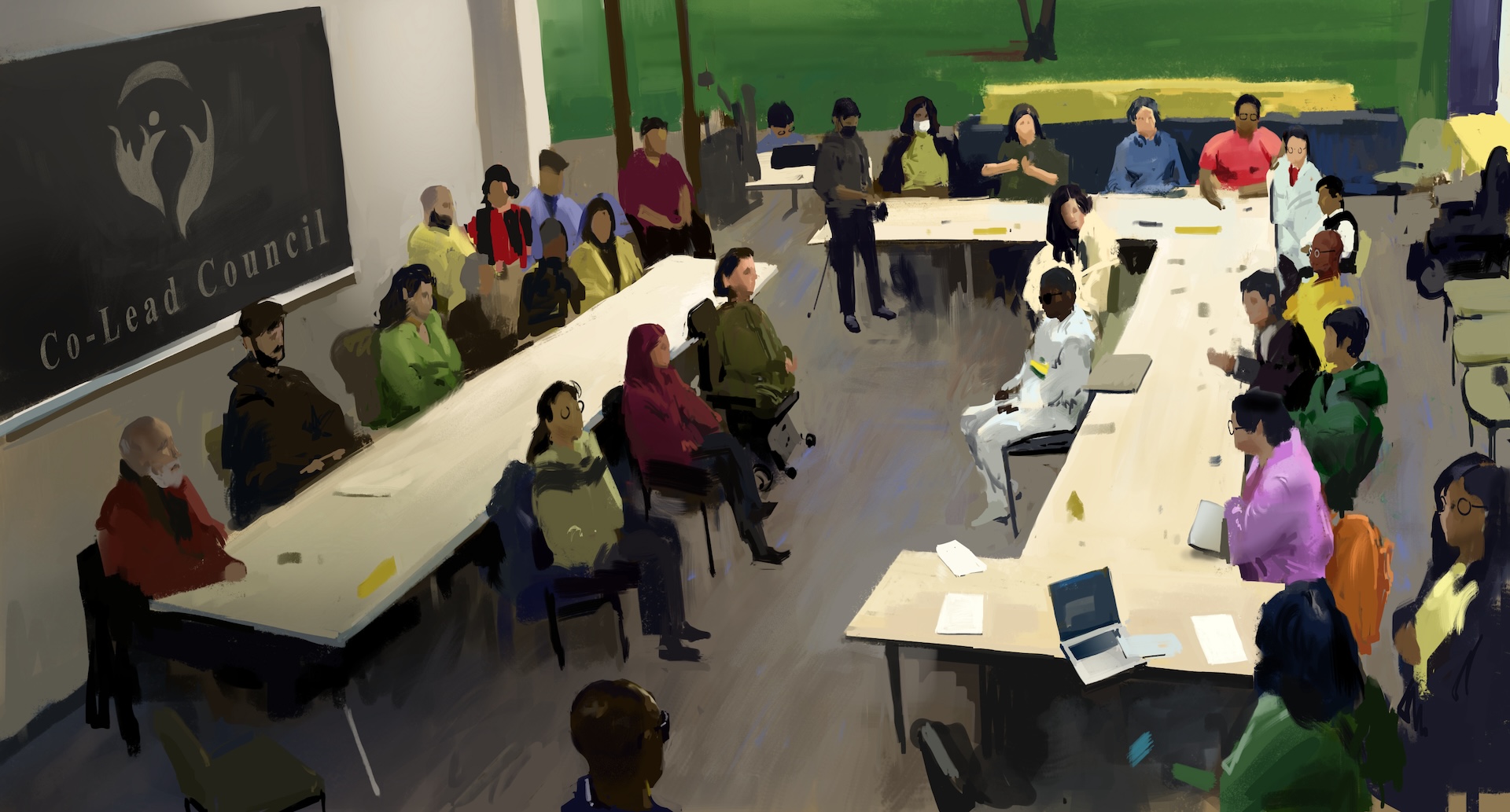
And as funding cuts continue, Hasnain said she’ll remain dedicated to finding ways to support refugees and immigrants with disabilities despite current policy constraints. “Staying welcoming to all individuals, families, and communities across Chicago and Illinois remains essential as we all work toward the best possible quality of life and well-being for all.”
Riemer says these cuts have left those providing social services and care for refugees with a heightened sense of stress and anxiety.
“We’re extremely concerned about the changes,” said Riemer. “Our clients with disabilities and medical conditions rely on Medicaid not just for health insurance, but for a significant number of their other resources. They use Medicaid-funded transportation resources in some cases to get to appointments. They receive daily care from a caregiver through a Medicaid-funded home services program. These are resources that people depend on for their survival.”
RefugeeOne has hundreds of clients that are set to lose coverage on Oct. 1, but Riemer says the work of refugee assistance agencies will persist. She and her team have continued to inform clients of the impending changes and help individuals find options for continuing care once they are uninsured. They are encouraging their clients with jobs to enroll in their employer-provided health plan when available, and for others, Riemer and her team are helping to connect them with Federally Qualified Health Centers and Cook County Care Link, among other resources.
Riemer noted, “we don’t have all the answers yet of how these changes will be implemented and what exactly that’s going to look like, but we know we’re going to continue to support our clients.”
Chelsea es una reportera contribuyente de Borderless Magazine.
Borderless Magazine has chosen to use aliases for some of the interviewees to protect their safety and privacy. For questions, please contact us at [email protected].