 Departamento de Educación de EE. UU. / CC BY 2.0
Los Consejos Escolares Locales siguen siendo la manera más directa en que los residentes del lado oeste pueden influir en las decisiones de sus escuelas locales. Pero la participación sigue siendo un desafío.
Este artículo fue publicado originalmente por 15 West, una redacción impulsada por residentes y voluntarios que presta servicio al West Side de Chicago y a los suburbios vecinos.
En noviembre, los votantes de Chicago ayudarán a dar forma al futuro de las Escuelas Públicas de Chicago (CPS, por sus siglas en inglés) al elegir a los miembros de la primera Junta de Educación de la ciudad compuesta en su totalidad por representantes electos.
Pero para los padres y miembros de la comunidad que buscan influir en las decisiones de su escuela local, una de las oportunidades más importantes se presenta cada mes.
La mayoría de las Escuelas Públicas de Chicago —excepto algunas escuelas chárter— tienen Consejos Escolares Locales (LSCs, por sus siglas en inglés), un grupo de padres, maestros, estudiantes, personal y miembros de la comunidad que ayudan a recomendar y evaluar a los directores, aprobar los presupuestos escolares, y transmitir las inquietudes de la comunidad directamente a los líderes de la escuela y del distrito.
Noticias que ponen el poder en el punto de mira y a las comunidades en el centro.
Suscríbase a nuestro boletín gratuito y reciba actualizaciones dos veces por semana.
Los LSC desempeñan un papel especialmente importante en los vecindarios del West Side, donde las disparidades en el tamaño de los distritos de la junta escolar de Chicago son más pronunciadas.
Según un análisis de los datos de inscripción, de CPS correspondientes al vigésimo día del ciclo escolar 2025-26, el Distrito 5 abarca 100 escuelas que atienden a 35.593 estudiantes en vecindarios como Austin, East Garfield Park, West Garfield Park y North Lawndale —más escuelas que cualquier otro distrito. En comparación, el Distrito 4, que incluye varios vecindarios del lado norte y noroeste, cuenta con 34 escuelas que atienden a unos 23.000 estudiantes.
Debido a que cada distrito de la junta escolar está representado por dos miembros de subdistrito, cada miembro de la junta del Distrito 5 representa aproximadamente a 50 escuelas, mientras que cada miembro de la junta del Distrito 4 representa a unas 17.
Ese desequilibrio convierte a los Consejos Escolares Locales en una de las maneras más directas para que los residentes del West Side influyan en las decisiones que afectan a las escuelas de su vecindario.
Los funcionarios de CPS reconocen que lograr que las reuniones sean accesibles sigue siendo un desafío constante.
El especialista en relaciones con los LSC, Marcus Pittman, dijo que los consejos están obligados a publicar las agendas de las reuniones por adelantado en virtud de la Illinois Open Meetings Act, y CPS ocasionalmente recibe quejas de residentes que no estaban al tanto de las fechas de las reuniones o de las agendas.
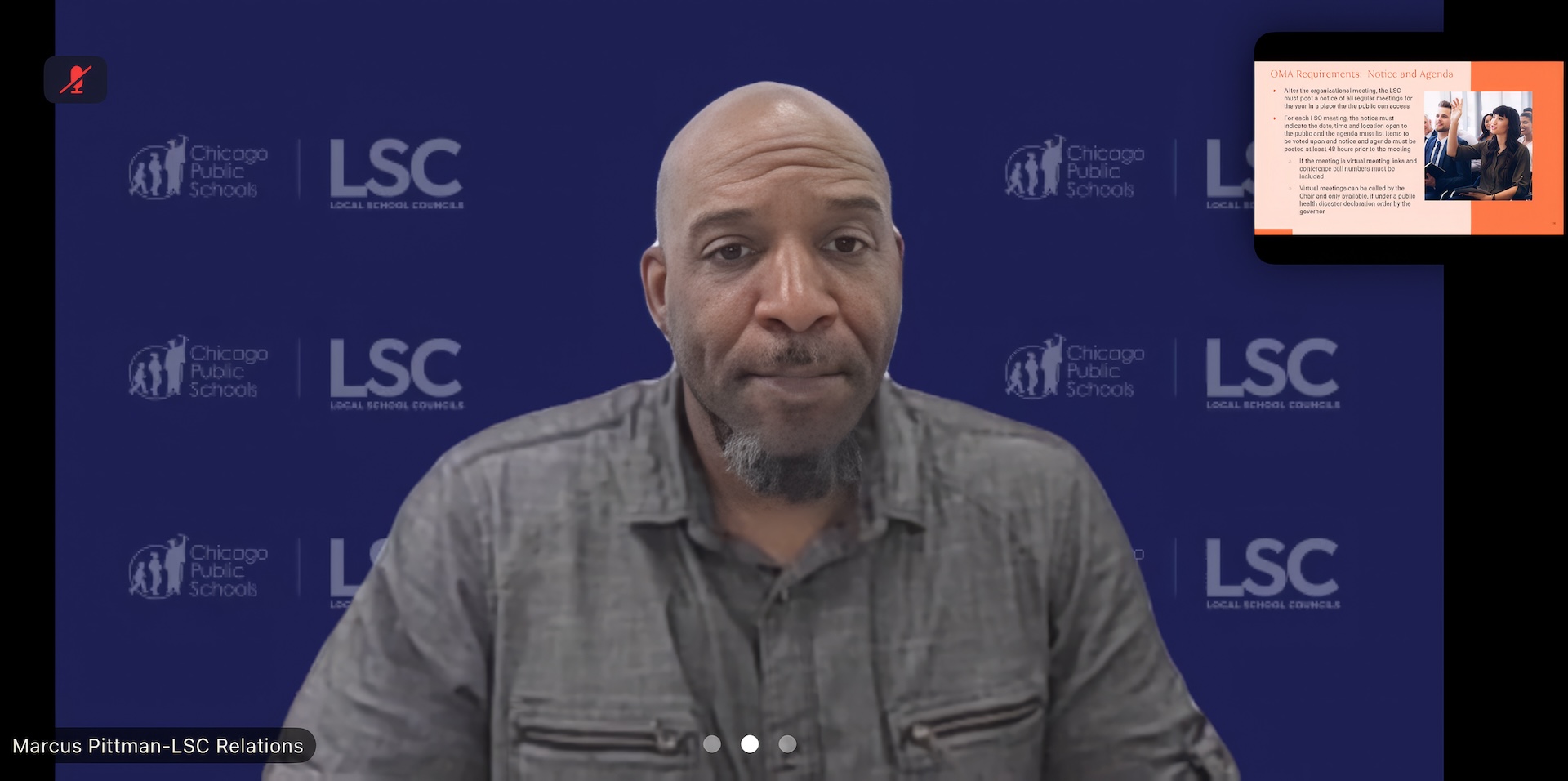
“De hecho, a veces recibimos quejas sobre reuniones secretas que se llevan a cabo y no todos se enteran,” dijo Pittman.
Durante las visitas escolares, Pittman dijo que una de las primeras cosas que revisa es si las agendas de las reuniones están publicadas donde el público pueda verlas fácilmente. Si las agendas no se publican adecuadamente, los consejos pueden tener que cancelar o reprogramar las reuniones. Publicar la agenda, afirmó, “es responsabilidad del presidente.”
Aun cuando las reuniones se convocan debidamente y están abiertas al público, a muchos LSC todavía les cuesta ocupar los puestos vacantes.
El Distrito 5 por sí solo cuenta con 36 escuelas que tienen puestos vacantes para representantes de padres y de la comunidad en el LSC. Los residentes pueden usar el mapa de miembros del LSC de CPS para identificar vacantes y aprender cómo participar.
Las próximas elecciones del LSC se llevarán a cabo en la primavera de 2028, pero los candidatos pueden comenzar a presentar la documentación para postularse a partir de octubre de 2027.
Quienes estén interesados en formar parte del Consejo Escolar Local de su escuela no necesariamente tienen que esperar hasta la próxima elección. Cuando queda vacante un puesto reservado para padres o miembros de la comunidad, los residentes elegibles pueden ocupar el cargo si cuentan con la aprobación de los miembros actuales del LSC mediante una votación.
Además, los residentes no tienen que unirse a un LSC para hacer oír sus voces. Cualquiera puede asistir a la reunión mensual de cada escuela, donde se abre el espacio para comentarios del público. Bernard Clay cree que los residentes deben asistir a las reuniones y hablar durante los comentarios públicos porque “es la mejor forma de democracia.”
“La mayor idea errónea sobre los LSC es que no hacen nada,” dijo Clay.
Mientras Chicago se prepara para tener su primera junta escolar totalmente electa, los LSC siguen siendo una de las formas más directas para que los miembros de la comunidad participen en la educación local. Y si más padres asistieran a las reuniones, dijo Clay, “se sentirían empoderados y sentirían que pueden lograr un cambio.”