 Max Herman/Borderless Magazine
Los defensores y los expertos dicen que Illinois debe abordar nuevas cuestiones jurídicas sobre el alcance con el que la ley estatal puede prevalecer sobre la autoridad federal.
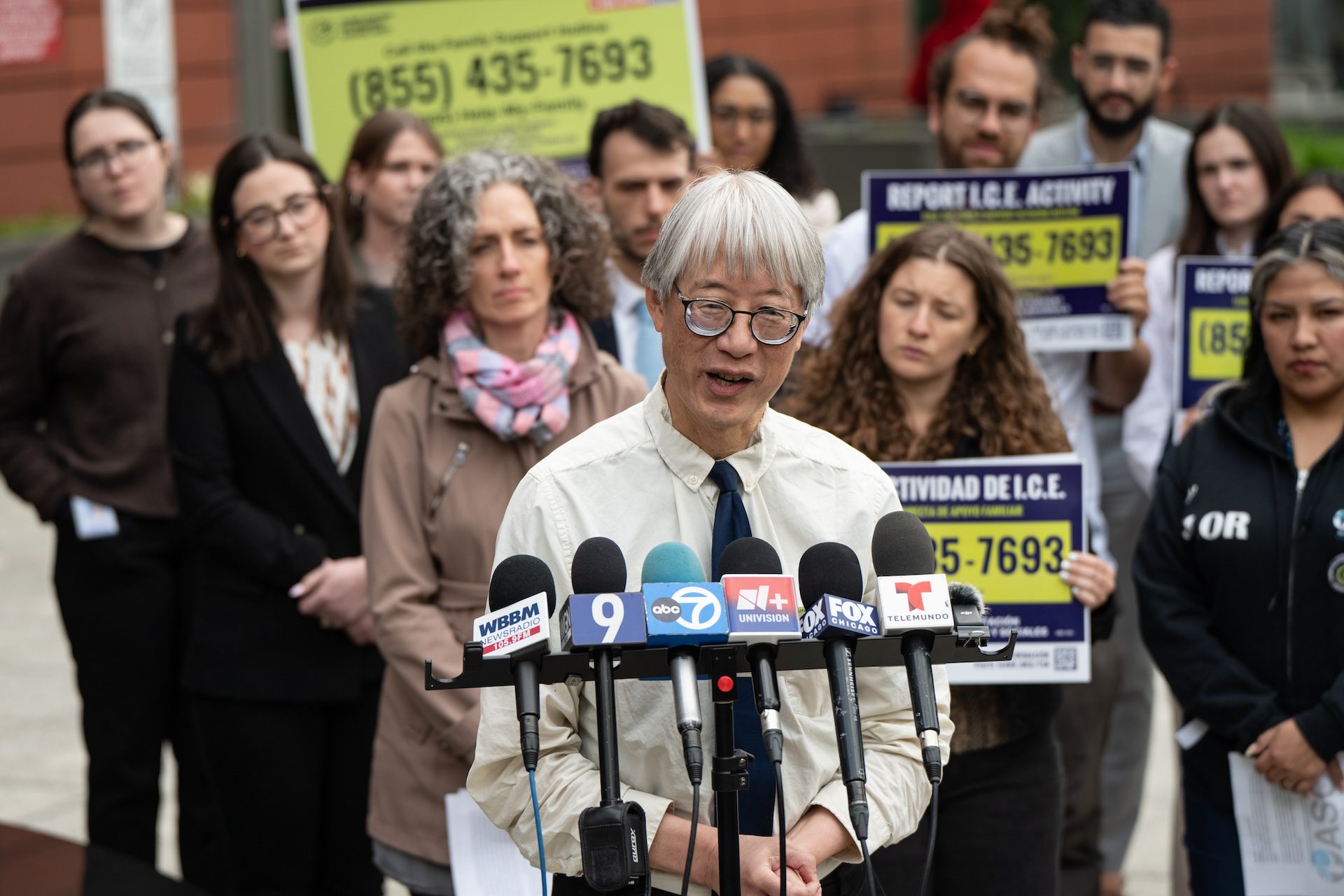
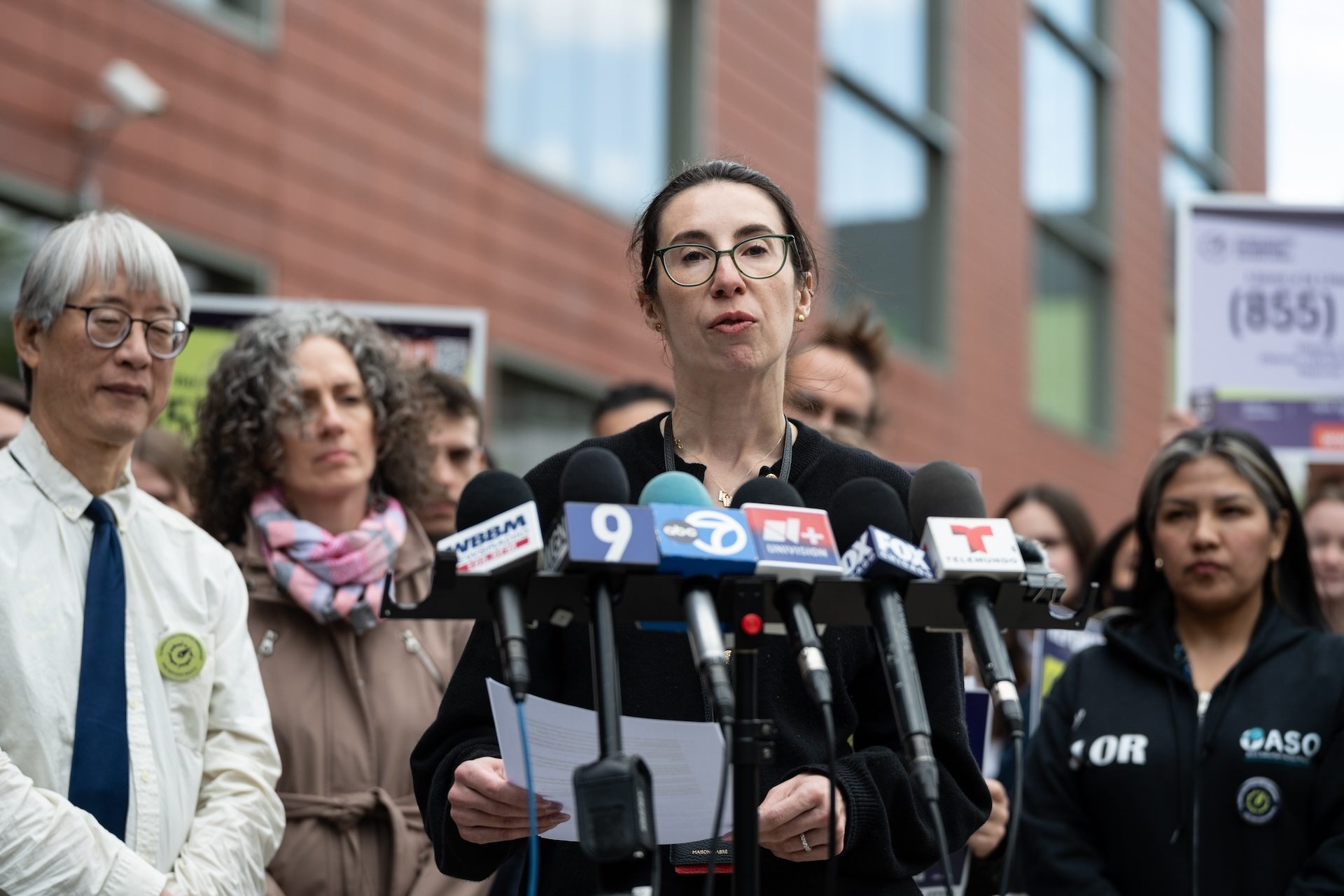
A principios de mayo, fuera del tribunal de violencia doméstica en el centro de Chicago, funcionarios del condado de Cook y defensores de los derechos de inmigrantes se reunieron para denunciar lo que describieron como una creciente presencia de autoridades federales de inmigración en los tribunales.
El mensaje era sencillo, pero no nuevo: los tribunales deberían estar fuera del alcance del Servicio de Inmigración y Control de Aduanas (ICE, por sus siglas en inglés).
“Todos deberían tener su día ante el tribunal,” dijo Fred Tsao, asesor jurídico sénior de políticas de Illinois Coalition for Immigrant and Refugee Rights (ICIRR, por sus siglas en inglés).
Noticias que ponen el poder en el punto de mira y a las comunidades en el centro.
Suscríbase a nuestro boletín gratuito y reciba actualizaciones dos veces por semana.
En los últimos meses, los arrestos de inmigrantes en los tribunales se han vuelto más frecuentes, ya que los agentes federales desafían la legislación estatal destinada a prevenir tales arrestos. Según la ley actual, cualquiera arrestado por ICE en un tribunal puede demandar por daños civiles — un recurso que los expertos legales dicen que se basa en leyes federales preexistentes.
Sin embargo, esa medida se está poniendo a prueba mientras los arrestos de inmigrantes continúan a pesar de los esfuerzos del estado para proteger los tribunales.
Más recientemente, los defensores de derechos de inmigrantes dijeron que agentes del ICE estuvieron presentes en cuatro juzgados del condado de Cook el 7 de mayo y arrestaron a dos personas que se dirigían a audiencias judiciales el 18 de mayo. La presencia del ICE en lugares sensibles genera miedo e impide que las personas se presenten ante el tribunal, dicen los defensores.
“Los sobrevivientes de violencia de género, en particular, ya enfrentan barreras para acceder a recursos,” dijo Trisha Teofilo Olave, quien trabaja con sobrevivientes inmigrantes de violencia en el National Immigrant Justice Center. “El temor de ser secuestradas por agentes federales al asistir a una audiencia en un tribunal estatal está agregando otra capa de miedo y aumentando aún más las barreras para acceder a la justicia.”
Cuando el presidente Donald Trump regresó al cargo, revocó una política de 2021 del Departamento de Seguridad Nacional (DHS, por sus siglas en inglés) que había designado escuelas, hospitales y tribunales como “lugares sensibles” donde, por lo general, se restringían las operaciones de control migratorio. Los agentes federales ahora tienen una mayor autoridad para realizar arrestos en esos entornos.
En diciembre de 2025, el gobernador JB Pritzker promulgó la Ley Access, Safety and Participation Act (CASPA, por sus siglas en inglés), la cual prohíbe las acciones civiles de control migratorio en un radio de 1.000 pies alrededor de los tribunales. La legislación más amplia también exige a los hospitales que se prepararen para posibles interacciones con agentes federales y extiende protecciones a inmigrantes en universidades y guarderías.
“Con mi firma de hoy, estamos protegiendo a las personas e instituciones que pertenecen aquí en Illinois,” dijo Pritzker en un comunicado de prensa en ese momento. “Dejar a su hijo en la guardería, ir al médico o asistir a sus clases no debería ser una tarea que altere la vida.”
La legislación ha enfrentado resistencia legal por parte del gobierno federal. El Departamento de Justicia presentó una demanda impugnando la ley CASPA poco después de que fuera promulgada, argumentando que era un “intento inconstitucional para regular a los agentes federales del orden público,” según un comunicado de prensa.
A pesar de la demanda, CASPA permanece en efecto. Sin embargo, la legislación no ha cumplido su objetivo de proteger ubicaciones sensibles de acciones de control migratorio.
Desde febrero, la Oficina del Defensor Público del Condado de Cook ha confirmado al menos 13 arrestos de personas que asistían, se dirigían o salían de procesos judiciales, incluso en el Cook County Domestic Violence Courthouse.
“Estas personas que acuden a los tribunales de nuestro condado lo hacen de buena fe,” dijo la comisionada del condado de Cook, Jessica Vásquez (Distrito 8). “Ellos van a ejercer su derecho al debido proceso, y protegerlos a ellos y su capacidad para acceder a esta oportunidad es increíblemente importante para nosotros.”
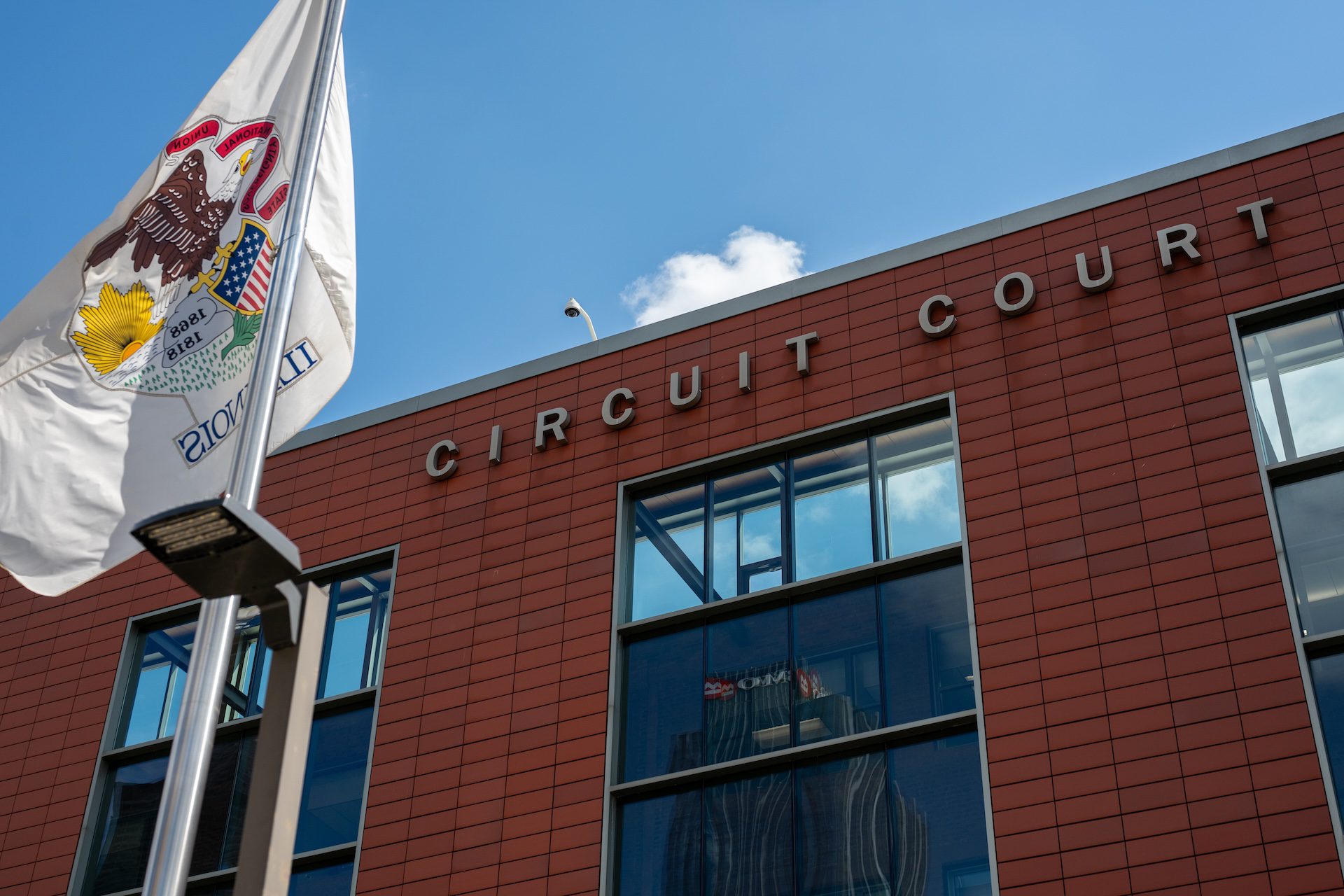
Según un portavoz de la oficina del gobernador Pritzker, la ley CASPA permite “indemnizaciones por daños civiles por detención ilegal,” lo que significa que aquellas personas que hayan sido arrestadas por un agente federal en violación de la ley podrían tener derecho a una indemnización de 10.000 dólares si se encontraban asistiendo a un proceso judicial en un tribunal estatal.
Martin Klein, abogado legislativo del Mexican American Legal Defense and Educational Fund (MALDEF, por sus siglas en inglés), dijo que la ley se enfoca en individuos que presentan demandas por violaciones de sus derechos —en lugar de otro mecanismo de aplicación de la ley— porque CASPA se basa en la ley federal existente. MALDEF fue una de las organizaciones patrocinadoras de CASPA.
Klein dijo que CASPA se fundamenta en la Ley Federal Tort Claims Act (FTCA, por sus siglas en inglés), que permite a las personas presentar demandas civiles contra funcionarios o empleados federales para obtener una compensación financiera por conducta indebida.
“Queríamos asegurarnos de que lo que hicimos fuera efectivo y realmente útil para los individuos, y por eso el remedio se basa en la FTCA, porque la FTCA es ley federal,” dijo Klein. “No se puede argumentar que sea un recurso que vaya más allá de lo permitido por la Constitución.”
Más información

La ley de Illinois es similar a las protecciones de acceso a los tribunales promulgadas en Nueva York y Colorado, con diferencias menores en las definiciones, dijo Klein.
Sin embargo, expertos legales dicen que la aplicación de la ley por parte del estado sigue siendo una cuestión abierta.
Alexa Van Brunt, del MacArthur Justice Center, dijo que las acciones de los agentes federales han planteado nuevas preguntas legales sobre la jurisdicción y el alcance con el que la ley estatal puede abordar la acción federal bajo la Constitución. La cláusula de supremacía regula la autoridad de la ley estatal sobre la ley federal y viceversa.
“Este es realmente terreno desconocido,” dijo Van Brunt.
Klein dijo que CASPA declara que los tribunales tienen la autoridad para emitir reglas para hacer cumplir la ley, y que la forma en que eso se aplica en práctica puede variar de un tribunal a otro.
“Lo que no hace es detallar, paso a paso, todos los requisitos específicos que deben implementarse en el tribunal,” dijo Klein. “Eso queda a cargo de los propios tribunales.”
La oficina de Pritzker no respondió a las preguntas sobre qué medidas está tomando el estado para hacer cumplir su prohibición de arrestos del ICE en los tribunales.
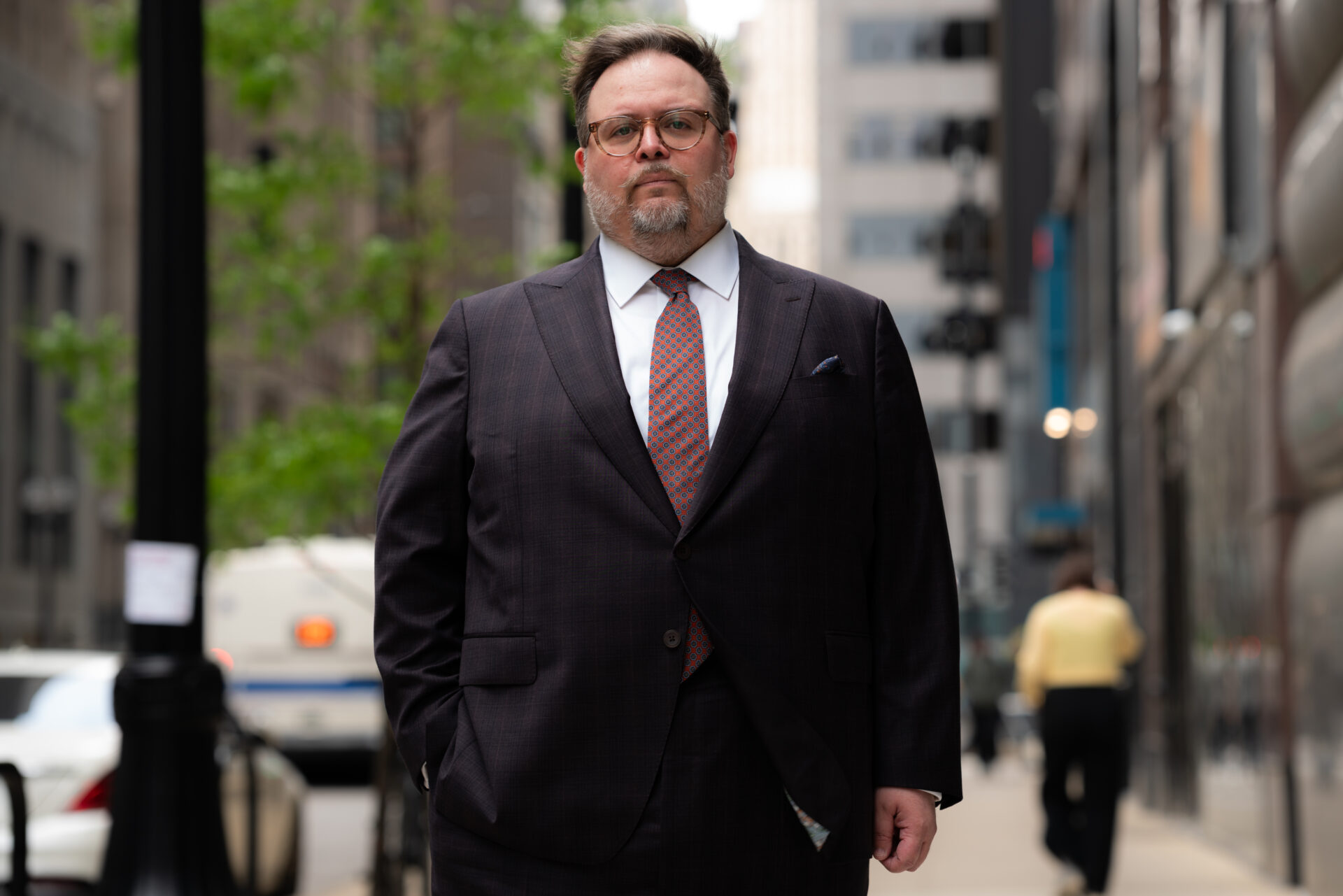
Katie Pelech, supervisora legal en la Oficina del Defensor Público del Condado de Cook, dijo que en sus 13 años de práctica legal antes de la administración Trump, nunca había visto que se llevara a cabo operaciones de control migratorio en los tribunales de esta manera.
“Fui testigo de un solo arresto de inmigración en un juzgado a lo largo de toda mi carrera,” dijo Pelech.
Se han seguido realizando arrestos, dijo, incluso después de que los casos son desestimados. La práctica también ha interrumpido procedimientos en curso y ella dijo que uno de sus clientes fue deportado antes de que su caso judicial se resolviera.
Los abogados como Pelech han tenido que redirigir su enfoque en asesorar a los clientes sobre los riesgos migratorios en los tribunales — lo que dificulta la preparación de los casos. También presenta nuevos desafíos para los inmigrantes en el acceso a su derecho constitucional de presentar sus casos ante un tribunal o buscar protección contra la violencia doméstica, dijo.
“Cualquier carga que esto nos imponga es insignificante en comparación con la amenaza que enfrentan nuestros clientes,” dijo Pelech. “Pero es simplemente difícil ver esto y querer ayudar, y tener formas limitadas en las que podamos hacerlo.”
La oficina de la defensoría pública recomienda audiencias judiciales virtuales cuando sea posible para quienes están preocupados por las medidas de control migratorio.
A medida que los agentes de inmigración continúan realizando tareas de control migratorio en violación de las leyes estatales, los defensores buscan maneras de navegar un nuevo terreno legal y proteger el acceso de los inmigrantes a los tribunales y a la atención médica.
ICIRR organiza capacitaciones semanales de “Conoce Tus Derechos” y de respuesta rápida para miembros de la comunidad.
“El miedo es claramente el objetivo de esta administración en este momento,” dijo Diego Morales, organizador de respuesta rápida de Pilsen Unidos por Nuestro Orgullo. “Su objetivo es aterrorizar a la gente, aterrorizarnos a nosotros, aterrorizar a nuestras comunidades. Pero estamos contraatacando.”