 Camilla Forte/Borderless Magazine/Catchlight Local/Report for America
La Ley de Santidad y Privacidad en la Salud Médica es un paso para que los inmigrantes se sientan más seguros al acceder a servicios médicos en hospitales, dicen los defensores, pero persisten las preocupaciones sobre si los agentes federales cumplirán con estas políticas.
Después de que Sahida Martínez le preguntara a una familia por qué no habían llevado al hospital a un padre con diabetes cuando algo andaba mal con su dedo del pie, ellos respondieron que era porque tenían miedo del Servicio de Inmigración y Control de Aduanas (ICE, por sus siglas en inglés). Para cuando fue, su dedo del pie tuvo que ser amputado, recuerda Martínez.
“Este es un caso,” dijo Martínez. “¿Cuántos casos hay en nuestra comunidad que se encuentran en la misma situación?”
Noticias que ponen el poder en el punto de mira y a las comunidades en el centro.
Suscríbase a nuestro boletín gratuito y reciba actualizaciones dos veces por semana.
El temor de ser arrestado por el ICE está muy extendido en Chicago, especialmente en el Suroeste, donde Martínez lidera un grupo de promotoras de salud, o trabajadores de salud comunitaria. Basándose en más de una década de experiencia conectando a residentes con recursos de salud a través de la organización local de servicios sociales Enlace Chicago, ha notado que el miedo al ICE ha impedido que muchos busquen tratamiento en los hospitales.
Para ayudar a combatir el miedo a la aplicación de las leyes de inmigración en lugares sensibles y establecer regulaciones más sólidas que protejan el acceso de los inmigrantes en tribunales, hospitales y universidades, los legisladores de Illinois propusieron el proyecto de ley H.B.1312 el año pasado. El proyecto fue promulgado como ley en diciembre y, entre otras disposiciones relacionadas con el ICE, exige que los hospitales de Illinois implementen políticas que regulen las interacciones del personal con las autoridades de inmigración para proteger la privacidad médica de los pacientes.
“Toda persona en Illinois merece acceso a atención médica sin temor,” dijo el Dr. Sameer Vohra, Director del Departamento de Salud Pública de Illinois (IDPH, por sus siglas en inglés) en diciembre. “Esta nueva ley refuerza el compromiso del IDPH para construir un Illinois más saludable y seguro para todas las familias y comunidades.”
Ahora, mientras los hospitales se preparan para situaciones que pondrán a prueba sus políticas, algunos miembros del personal médico y defensores se preguntan si las normas internas son suficientes para proteger a los pacientes frente a la autoridad federal.
“Es muy difícil con alguien que tiene un arma y dice [que es] un agente federal,” dijo José Sánchez, director ejecutivo de Humboldt Park Health. “¿Qué vamos a hacer?”
Más información

Nueva ley busca limitar la presencia del ICE en hospitales
La Ley de Santidad y Privacidad en la Salud Médica exigió a los hospitales desarrollar, para el mes de marzo, políticas para las interacciones con los agentes de control de inmigración. También requirió que los hospitales designaran a un miembro del personal como persona de contacto para interactuar con los agentes y mantener un área de espera separada para los agentes que realizan trabajos de inmigración.
La ley no prohíbe la presencia de agentes del ICE en instalaciones hospitalarias.
La legislación es similar a un proyecto de ley aprobado en California el año pasado que restringe a los hospitales compartir el estatus migratorio de un paciente y exige que las instalaciones de atención médica designen áreas privadas donde la aplicación de la ley migratoria no se pueda llevar a cabo sin una orden judicial.
Illinois y California se encuentran entre los pocos estados con leyes que abordan la aplicación de la ley de inmigración en los hospitales, según Meghan Carter, abogada sénior del Legal Council for Health Justice. Carter ayudó a redactar la provisión hospitalaria del proyecto de ley H.B.1312.
“Realmente no había muchas muestras” para inspirarse al redactar la Ley de Santidad y Privacidad en la Salud Médica, dijo Carter.
El IDPH ha estado supervisando la implementación de la ley de privacidad de la atención médica y tiene la autoridad para multar a los hospitales que no cumplan con sus regulaciones. Más de 200 hospitales de Illinois supervisados por el IDPH han presentado políticas en cumplimiento con la ley, y ningún hospital ha sido multado, al 30 de marzo, según registros obtenidos a través de una solicitud de Libertad de Información de Borderless.
Un portavoz del IDPH no respondió a una solicitud de comentarios sobre cuántos hospitales han cumplido con otros requisitos de la nueva ley, como la exhibición de información multilingüe sobre derechos de inmigración en áreas accesibles para pacientes y visitantes.
Carter dijo que los requisitos de la ley de privacidad de la atención médica se basaron en el marco de Illinois Coalition for Immigrant and Refugee Rights (ICIRR, por sus siglas en inglés) sobre cómo debería ser un hospital acogedor.
“El diseño de la ley es asegurar que los hospitales estén equipados para responder a oficiales federales u otros de inmigración si acuden a las instalaciones hospitalarias,” dijo Carter. “Desafortunadamente, debido a la ley federal, no podemos decirle al ICE qué hacer, pero podemos equipar a los hospitales para que respondan al ICE.”
La Operación Midway Blitz prepara el escenario para la nueva ley
Los defensores de la inmigración que participaron en la redacción de la ley habían estado trabajando en ella desde finales del verano del año pasado, según Luvia Quiñones, directora sénior de políticas de salud para ICIRR.
Pero cuando comenzó la Operación Midway Blitz en el otoño, Quiñones dijo que ICIRR escuchó informes de funcionarios electos, organizaciones que sirven a inmigrantes y los propios hospitales de que agentes del ICE habían estado entrando a hospitales y “recorriendo los pasillos.” Esto dejó al personal inseguro de qué hacer, y Quiñones dijo que la actividad adelantó el cronograma para la legislación.
“Afortunadamente, hubo mucho interés entre los legisladores,” dijo Quiñones.
En octubre del año pasado, agentes del ICE estuvieron estacionados en Humboldt Park Health durante siete días mientras vigilaban a un hombre herido durante su arresto, según el concejal Jessie Fuentes (distrito 26), a quien se vio en video siendo esposado por agentes del ICE en el hospital.
“Por precaución, [el hombre que resultó herido] fue trasladado al hospital [Humboldt Park] para recibir tratamiento médico,” compartió un portavoz del Departamento de Seguridad Nacional (DHS, por sus siglas en inglés) sobre la situación de octubre.
El portavoz dijo que Fuentes fue “escoltado fuera con esposas,” pero que nunca fue arrestado.
Sánchez, el director ejecutivo del hospital, dijo que los agentes siguieron al hombre herido en cada paso de su tratamiento, a pesar de las leyes de privacidad médica. Sánchez dijo que los agentes no estaban realizando arrestos de inmigración en el hospital.
“Solo el médico tratante o el clínico [puede] tener acceso a tu atención médica — es una ley de privacidad en la atención médica,” dijo Sánchez. “Rompieron la regla.”

Fuentes dijo que la presencia de los agentes infundió miedo y pánico entre otras personas que buscaban ayuda en el hospital.
“Estaba asustando a los pacientes, impidiendo que acudieran a la clínica,” dijo Fuentes. “Lo que no queríamos era que la gente tuviera miedo de enfrentar una crisis o una emergencia médica.”
Cuando se le preguntó si los agentes de inmigración violaron la privacidad médica de un hombre en Humboldt Park Health, un portavoz del DHS dijo por correo electrónico que los agentes “solo entrarían a un hospital si hubiera un peligro activo para la seguridad pública.”
“El ICE no realiza operativos en hospitales — punto,” compartió el portavoz. “Por supuesto, si tenemos a un detenido que necesita ser llevado al hospital para recibir atención médica, tenemos oficiales que los acompañan para su monitoreo, la seguridad del personal y del público. Este es un procedimiento estándar para todas las fuerzas del orden.”
Los hospitales comienzan a implementar nueva política
Hospitales como Sinai Chicago, Cook County Health, University of Illinois Hospital, Rush Medical Center y Northwestern Memorial han creado políticas que describen cómo responderá el personal durante las interacciones con agentes de control de inmigración.
Según la política de Cook County Health (CCH, por sus siglas en inglés), que incluye el Hospital John H. Stroger, las fuerzas del orden externas, como el ICE, en los “departamentos de emergencia o trauma de CCH,” deben notificar a un oficial de policía o de seguridad de CCH “tan pronto como sea razonablemente factible después de su ingreso a las instalaciones de CCH.”
“Según nuestra política, todos los agentes de las fuerzas del orden deben registrarse con nuestra policía o equipos de seguridad del hospital cuando ingresan al campus en su capacidad oficial,” dijo Imani Harris, gerente de comunicaciones de Cook County Health, en un correo electrónico. “Instalamos señalización en las entradas de nuestras instalaciones en septiembre de 2025 para dejar eso claro.”
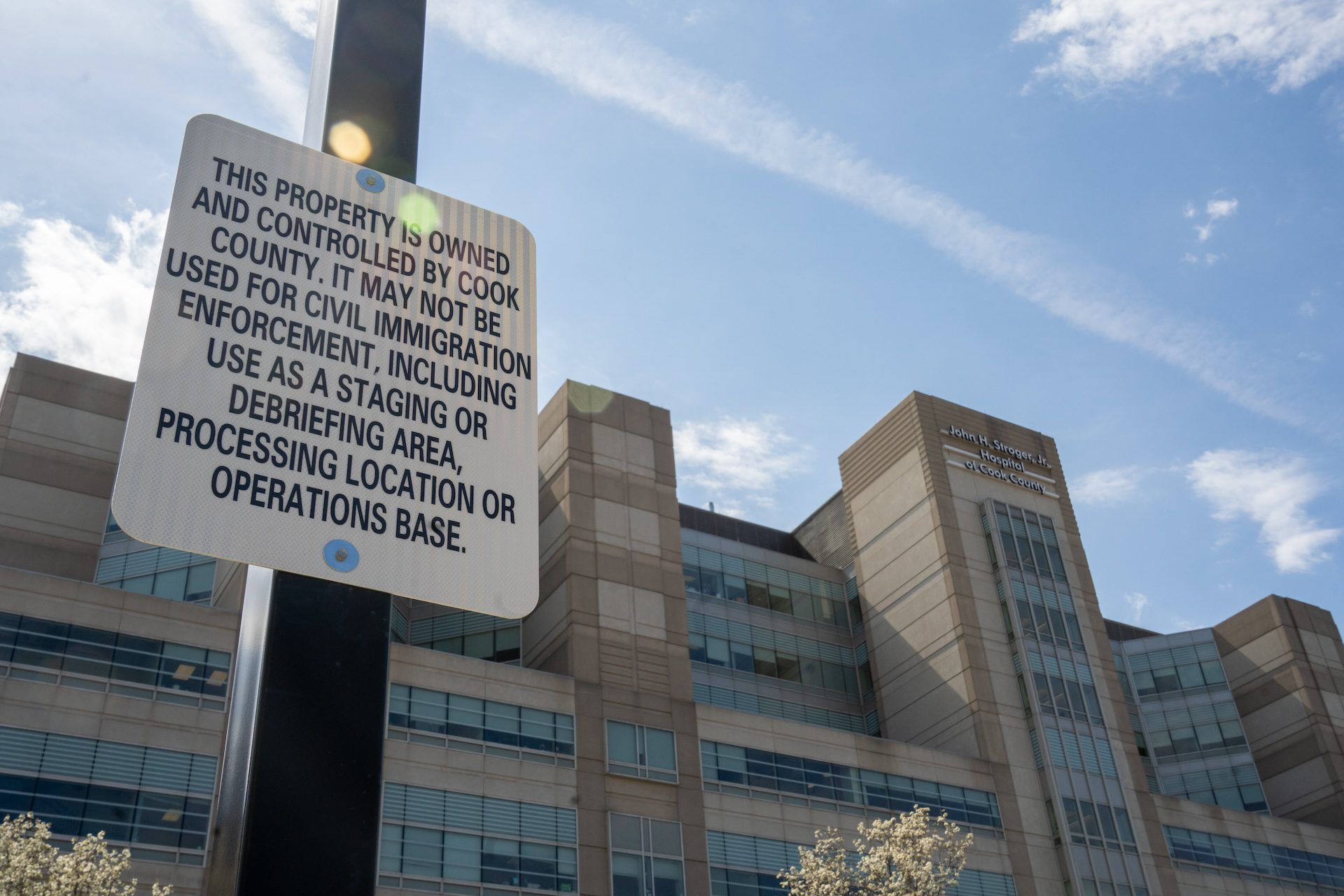
Según solicitudes de acceso a información pública, muchos hospitales del área de Chicago comparten protocolos similares para designar al personal que interactuará con las fuerzas del orden, de acuerdo con la nueva ley de privacidad de la atención médica.
Sin embargo, algunas políticas son más específicas y detalladas que otras. Sinai Chicago, por ejemplo, requiere que un abogado interno revise las órdenes judiciales presentadas por agentes del orden para determinar si se permite su entrada en áreas privadas del hospital.
Sinai Chicago también requiere que el departamento de recursos humanos capacite al personal sobre el cumplimiento de su política relativa a las fuerzas del orden.
Un portavoz del IDPH dijo que están en proceso de revisar las políticas presentadas por los hospitales y “continuarán trabajando estrechamente con los proveedores de atención médica para mantener seguras y saludables a las comunidades de Illinois.“
Sánchez dijo que Humboldt Park Health ha desarrollado un protocolo de respuesta, o árbol de decisiones, que describe cómo debe responder el personal a la presencia del ICE, dependiendo de la hora del día y si los agentes tienen una orden judicial. Sin embargo, dijo que la supervisión efectiva de los agentes del ICE finalmente recae en el gobierno federal — no en los hospitales.
“Tenemos un sistema muy sólido,” dijo Sánchez. “Pero eso no significa necesariamente que [los agentes del ICE] sigan la política.”
Además de las protecciones de ubicaciones sensibles, la aprobación del proyecto de ley H.B.1312 permitió que cualquier persona iniciara una demanda no penal contra un agente que “a sabiendas incurra en conducta que viole la Constitución de Illinois o la Constitución de los Estados Unidos” durante la aplicación civil de las leyes de inmigración.
Expertos legales que analizan la ley han dicho que la disposición, titulada Ley Bivens de Illinois, se alinea con la larga tradición de los Estados Unidos de que los gobiernos estatales y federales “se controlen y equilibren mutuamente para mantener a todos alineados con la Constitución.”
Sin embargo, los profesores de derecho Vikram David Amar y Jason Mazzone de la Universidad de Illinois en Urbana-Champaign escribieron en un artículo de noviembre que, entre otros problemas con la Ley Bivens, la ley federal prevalece sobre las leyes y constituciones estatales, y que los funcionarios federales no pueden ser “gravados por una regulación estatal no deseada” si sus acciones no violan la Constitución de los Estados Unidos.
“Hay porciones de la ley más amplia de la cual forma parte la Ley Bivens que, casi con seguridad, no sobrevivirán a un desafío constitucional federal,” escribieron Amar y Mazzone en noviembre.
En cuanto a los hospitales que puedan infringir la Ley de Santidad y Privacidad en la Salud Médica, Carter dijo que los miembros de la comunidad pueden presentar una queja ante el IDPH por teléfono, correo electrónico, en línea o por fax.
Según el sitio web del IDPH, las quejas se investigan según su prioridad, lo que puede tomar días o meses, dependiendo de la naturaleza, el alcance y la gravedad de las acusaciones contenidas en la queja.
El IDPH no respondió a una solicitud de comentarios sobre si se han presentado quejas desde marzo.

A medida que los hospitales implementan sus planes y el IDPH revisa las políticas propuestas, Martínez, inmigrante ella misma, dijo que teme lo que sucedería si animara a alguien a ir a un hospital y esa persona fuera arrestada por el ICE.
Sin embargo, dijo que tener la Ley de Santidad y Privacidad en la Salud Médica le da a ella y a otros defensores la oportunidad de contraatacar si los hospitales no la cumplen.
Cada ley, dijo, es otra forma en que ella y otros trabajadores de la salud comunitaria pueden abogar por el acceso de la comunidad a la atención médica.
“Para las promotoras, [es] como una herramienta nueva,” dijo Martínez. “Esta es mi herramienta para luchar contra esta situación con ICE en nuestra comunidad.”
Katrina Pham es la reportera enfocada en la participación comunitaria de Borderless Magazine. Envíe un correo electrónico a Katrina a [email protected].