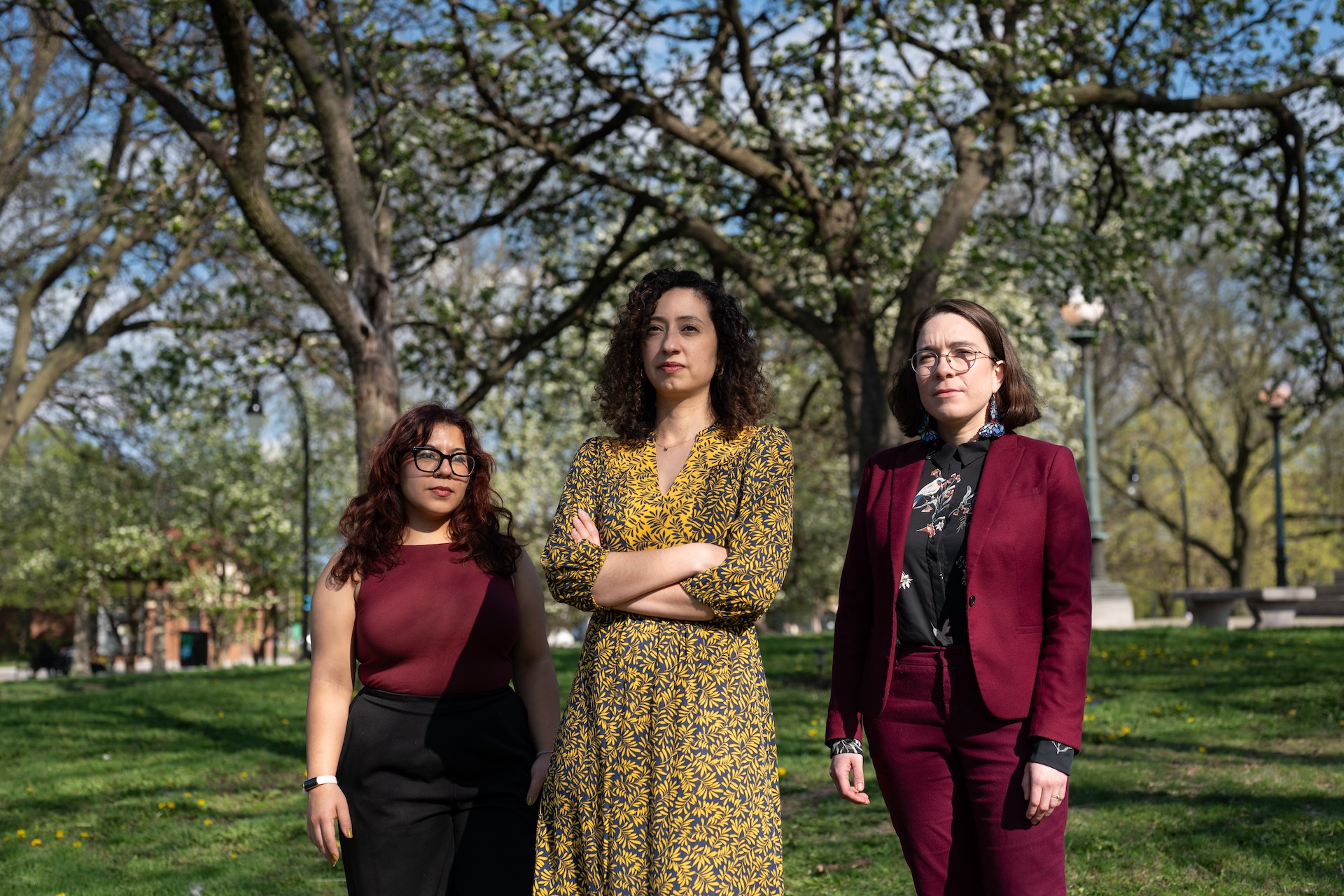
 Max Herman/Borderless Magazine
A network of rapid responders and tow truck drivers is stepping in to safeguard abandoned vehicles after the owners were detained on their commutes, easing the financial strain families face when their loved ones are detained.
Editor’s note [07/30]: *Maritza has chosen to use a pseudonym to protect her safety and privacy. For questions, please contact us at [email protected].
When Maritza found the white SUV last year, the engine was still running. She could hear the loud music spilling out onto the street in Chicago’s Avondale neighborhood.
Just moments earlier, Immigration and Customs Enforcement (ICE) agents had arrested the car’s owner, taking him away after he dropped his child off at school.
The agents left the car, however. And that’s when Maritza, a rapid responder with the Northwest Side Rapid Response Team, went to work.
Noticias que ponen el poder en el punto de mira y a las comunidades en el centro.
Suscríbase a nuestro boletín gratuito y reciba actualizaciones dos veces por semana.
Inside the SUV, Maritza found a stack of papers next to a child’s car seat.
“It felt very sacred, because he was just doing something that all of us do, ” said Maritza, who asked to use a pseudonym to protect her identity.
Flipping through the papers in the backseat, Maritza pieced together a name and address for the arrested man and drove the car back to his home.
His wife — who had been speaking to her husband on the phone during his arrest — was preparing for her own court appearance that morning. She was grateful that the car was returned safely to the family.
It’s the kind of moment that’s become routine for the Northwest Side Rapid Response Team, a volunteer group of more than 200 residents mobilizing when their neighbors are detained by federal immigration agents in Chicago.
As part of its efforts, the Northwest Side Rapid Response Team has formed partnerships with tow truck drivers across Chicago to safeguard the belongings of detainees who had to abandon their vehicles and ease the financial burden of towing.
“We see the mental toll it takes on everyone,” Maritza said.
More than six months since the peak of Operation Midway Blitz, the mental and financial toll lingers for families still reeling from ICE’s enforcement in Chicago.
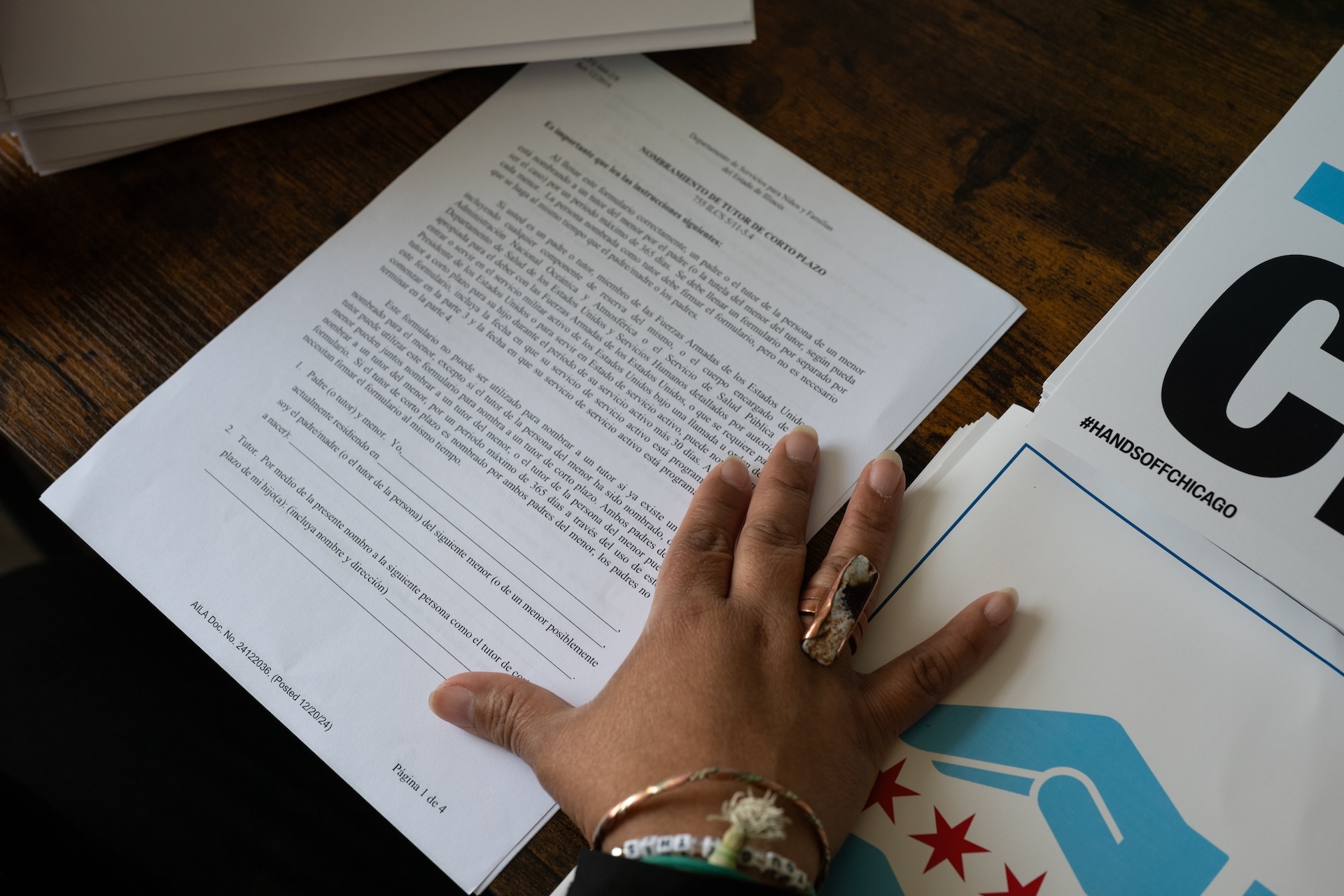
Finding a way to help at a time of crisis
By the end of December 2025, nearly 4,500 immigrants had been detained as part of the federal government’s Operation Midway Blitz. About 85% of those arrested by ICE had no criminal convictions, according to an Illinois Accountability Commission analysis.
As ICE arrests increased last fall in the Chicagoland area, community groups noticed a pattern of encounters involving people being detained during their daily routines, including commutes to work and school drop-offs — sometimes turning deadly.
- En septiembre, 38-year-old Silverio Villegas-Gonzalez was pulled over by agents in Franklin Park, and later shot and killed before the car he was driving crashed into a truck.
- In October, Jaime, a father of four was arrested after agents followed his car into his condo parking lot in suburban Chicago, according to Borderless’s previous reporting.
- In July, Lorenzo Salgado Araujo, an immigrant from Mexico, was shot and killed in his vehicle by an ICE officer in Houston while driving his construction crew to a job site.
Jessica Vasquez, a co-chair of the Northwest Side Rapid Response Team and a Cook County Commissioner of the 8th District, said the network realized they needed to find ways to help get detained individuals’ cars back to their families after they were detained in or near their vehicles.
“When the first instance occurred, we just started putting two and two together,” Vasquez said. “We knew this was going to be a tactic that they were going to continue to use.”
In an effort to retrieve abandoned vehicles and safeguard personal belongings, the informal partnership between tow truck drivers and the rapid response group began, with drivers volunteering their time and services.
Más información
For most of these volunteers and tow truck drivers, this work was personal.
“A lot of them come from our community,” Vasquez said. “They see what’s happening, and they are sympathetic.”
Many of the drivers are immigrants themselves, or business owners with ties to immigrant communities. When rapid responders arrive at a scene, they search the car for paperwork, canvas the neighborhood door-to-door, and try to locate the owner’s family. If a car needs to be moved, a trusted driver gets the call.
Responders, in some cases, are the first to tell a family that their relative has been detained, according to Vasquez.
“Sometimes families find out because we’re contacting them,” Vasquez said, “asking if they’re aware of what happened and if we could bring their vehicle to them.”
Partnerships like these have enabled support beyond simply retrieving vehicles and returning them to their owners. In some cases, the rapid response group has been able to determine where someone was sent by speaking with elected officials.
Vasquez says this process has helped them better advocate for a person’s release, especially when detainees are sent to ICE facilities outside of Illinois.
“We are able to confirm that an individual is apprehended, we’re able to understand why they were apprehended, and we’re able to connect the family and attorney to advocate for their release and monitor where they’re going if they’re not released,” Vasquez said.
The mental and financial toll
A tow in Chicago can cost between $100 to $250 or more, depending on the type of vehicle, the distance of the tow and the time of day.
But for families navigating a detention, that’s rarely where the financial strain ends.
Immigration bonds alone can reach $100,000 under the current administration, according to Lupe Perez, board president of the Midwest Immigration Bond Fund (MIBF). The bond must be paid in full before someone is released. Then, there’s the cost of a flight home if they’re sent to another state.
When an individual has been detained for weeks or months, they risk losing their job.
“If they are a primary breadwinner, we’re talking about lost wages, utility, rent that the family has had to come up with,” Perez said. “If they were detained in their vehicle and their vehicle gets towed, they need to come up with towing costs.”
These costs add up, Perez said, especially for detainees released out of state who may have to cover the cost of a flight home and replace documents — such as Employment Authorization Documentation or a Social Security Card — that ICE often doesn’t return after they’re released. She said replacement documents can often cost anywhere between $400 to $600.
“The family is unable to recoup that,” Perez said. “Costs [are] associated with arrest, legal representation, just being a primary breadwinner, and costs associated with detention.”
One 2016 study from the Journal on Migration and Human Security found that when an undocumented resident is detained, their household’s income could fall by around 47%.
Maritza echoed the ripple effects they’ve witnessed on the financial burden on families when someone is detained and ultimately deported.
“It’s pretty heart-wrenching,” she said.
For some, situations like these can be mentally strenuous. Deirdre O’Connor has needed to move her brother’s car to find another parking spot every week since last September, when he was denied entry to the U.S. despite having a Green Card.
While her brother is back in Ireland, O’Connor has followed a city ordinance that states a car can be reported abandoned and towed if it remains in the same spot for a consecutive seven days.
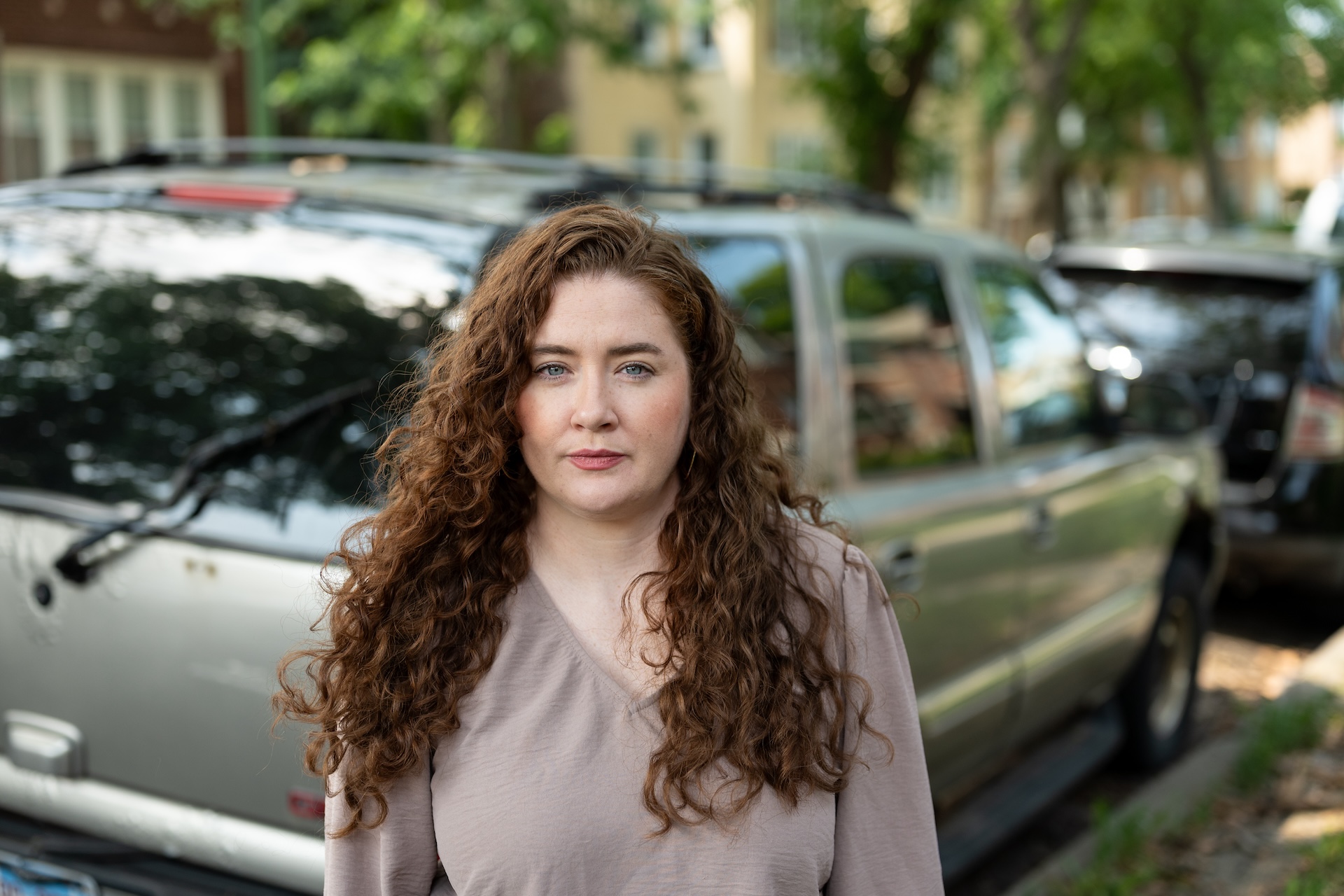
O’Connor says that due to the age of the car, it typically must be jumped each time she needs to move it, and she has received several tickets and fines over the last year.
She notes that, as someone who works in an alderman’s office, she has an understanding of these ordinances and the resources to move the car when need be. But others do not.
“Our office has had so many instances where people are really struggling and it is important for us as a community that we aren’t nickling and diming working folks and people who are trying to get by day by day,” she said. “There really should be something in place that allows leniency in times of extreme hardship.”
A drive to change policy
Elected officials have also taken notice. Some have been considering how to use city resources to alleviate the hardship caused by people being detained and their cars being abandoned.
In February, Alderman Andre Vasquez (40th) introduced a bill to the City Council aimed at providing relief for abandoned vehicles of those who are detained by immigration enforcement.
Pooja Ravindran, the chief of staff of the Chicago Committee on Immigrant and Refugee Rights (CIRR), said the bill would ban towing fees for instances in which immigration officials brake-check other cars or detain individuals and leave their cars abandoned.
“If the person is detained or their loved ones cannot drive a car or does not have a license, the car really can’t be moved,” Ravindran said. “What would it look like for the city to proactively use its towing authority to tow a car that has been impacted by this and store it for a period of time, and when a person can collect it, they don’t have to pay fees?”
CIRR is currently in talks with various city departments, including the Department of Streets and Sanitation and the Chicago Police Department, as well as other local elected officials and organizations, to garner support for the bill, which Ravindran says would be a practical way for the city to use its resources to help. Still, the bill has more hoops to jump through over the next several months before being enacted.
“This is something that could practically have an effect on people and making sure they don’t lose their assets.”
Even with support, it may take several months for the bill to be enacted.
In the meantime, Maritza says the Northwest Side Rapid Response Team will continue to support immigrant families.
“I do this work as a part of healing myself and understanding that I need to be part of creating a solution to the pain that my family has continued to experience in the city and this country,” she said.
Tara Mobasher es reportera y redactora del boletín de Borderless Magazine. Envía un correo electrónico a Tara a [email protected].