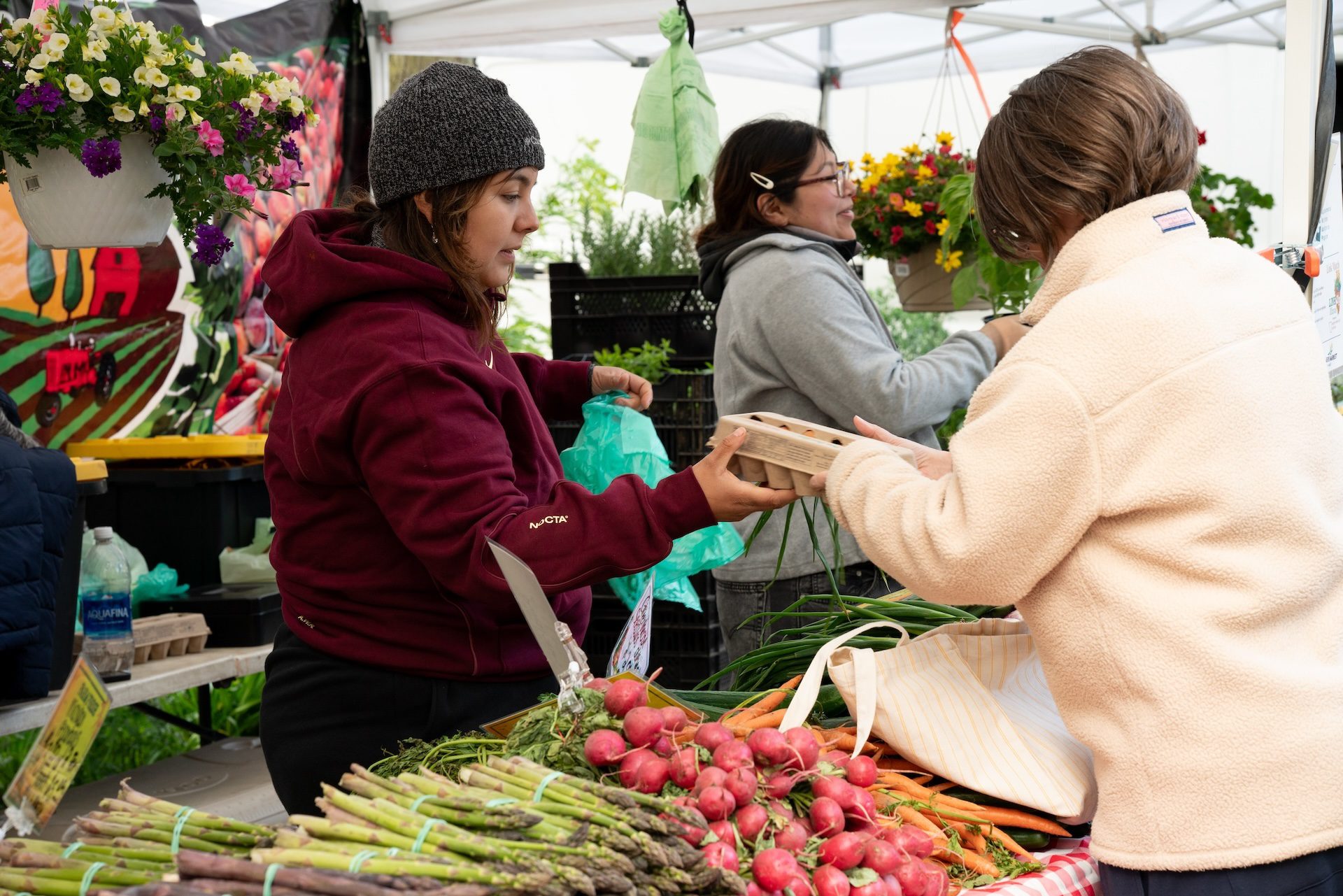
 Camilla Forte/Borderless Magazine/Catchlight Local/Report for America
Algunos vendedores de mercados de agricultores se preparan para una caída en sus ingresos este verano, tras recortes de fondos y cambios en los criterios de elegibilidad del SNAP que dejaron a muchos inmigrantes sin acceso a la asistencia alimentaria.
Los veranos son la época más ocupada del año para Stephanie Rodríguez, copropietaria de Los Rodriguez Farms con su familia en Eau Claire, Michigan.
Es temporada de mercados de agricultores, y eso significa que la familia a menudo carga sus camionetas con productos tan temprano como las 3 a.m. para conducir dos horas hasta los mercados en el área metropolitana de Chicago.
Venden en 11 mercados de agricultores del área de Chicago, lo que genera casi todos los ingresos de la granja. Aproximadamente un tercio de sus ventas provienen de clientes de bajos ingresos que utilizan beneficios federales de asistencia alimentaria para comprar alimentos en Los Rodriguez Farms.
Este año, le preocupa que la cuota de mercado disminuya — y con ella, las ventas totales.
Noticias que ponen el poder en el punto de mira y a las comunidades en el centro.
Suscríbase a nuestro boletín gratuito y reciba actualizaciones dos veces por semana.
Con la temporada de mercados de agricultores en marcha, algunos agricultores y vendedores de alimentos locales que aceptan como pago los beneficios del Programa de Asistencia Nutricional Suplementaria (SNAP, por sus siglas en inglés), como Stephanie, anticipan que los recientes cambios en los criterios de elegibilidad que afectan a inmigrantes y hogares de bajos ingresos, y los recortes de fondos, podrían disminuir sus ventas este verano.
Los cambios dejaron a miles de inmigrantes sin derecho a recibir asistencia alimentaria federal, lo que llevó a algunos agricultores y vendedores a temer que los cambios pudieran provocar una disminución en el número de clientes que representan una parte importante de sus ingresos.
El aumento de la inseguridad alimentaria y la presión económica
SNAP proporciona beneficios de alimentos a familias de bajos ingresos. En Illinois, más de 1 millón de hogares reciben beneficios de SNAP y 125.000 reciben WIC, un programa federal de nutrición para mujeres, bebés y niños elegibles.
Pero cambios recientes en los requisitos de elegibilidad del programa SNAP han reducido el número de personas que reciben asistencia alimentaria.
Unos 120.000 residentes de Illinois — de los cuales 16.000 eran inmigrantes y refugiados con estatus legal protegido — han perdido los beneficios del SNAP debido a los nuevos cambios en la elegibilidad, según el Greater Chicago Food Depository. Otros han perdido los beneficios del SNAP debido a requisitos de elegibilidad laboral más estrictos implementados por el gobierno federal.
El año pasado, la ley “One Beautiful Bill Act” del presidente Donald Trump modificó los requisitos de elegibilidad para el SNAP y recortó los fondos federales destinados a este programa en $186 mil millones hasta el año 2034 —una reducción de aproximadamente 20%— con el fin de financiar parcialmente los recortes fiscales establecidos en la nueva ley.
En los seis meses posteriores a la aprobación del proyecto de ley en julio de 2025, la participación en el programa SNAP a nivel nacional disminuyó en aproximadamente 3 millones de personas, lo que representa alrededor del 8%.
Sin embargo, los defensores advierten que podrían avecinarse más recortes. Una nueva ley agrícola "Farm Bill" podría recortar otros $6 mil millones del SNAP y $200 millones del WIC, de aprobarse.
Elaine Waxman, investigadora principal de la división de impuestos y apoyos de ingresos en el Urban Institute, dijo que espera que la disminución de participantes en el número de participantes del SNAP repercuta de inmediato en la economía local. Los beneficios del SNAP suelen gastarse cerca de casa— en tiendas de abarrotes, con productores locales y en transporte. Cada dólar distribuido a través del SNAP genera aproximadamente $1,5 en actividad económica, según un informe del USDA de 2019.
“Si los [vendedores] tienen un porcentaje significativo de clientes del SNAP, como muchos de ellos lo tienen, entonces es muy preocupante, de la misma manera que cualquier otro cambio en la economía te haría temer perder clientes,” dijo Waxman.
Waxman también dijo que espera que la inseguridad alimentaria aumente este año, impulsada por el aumento de los costos de los alimentos y un menor número de beneficiarios del SNAP, según las tendencias que ha observado en los últimos años. Uno de cada cuatro adultos reportó inseguridad alimentaria en sus hogares durante los últimos años, según una encuesta sobre inseguridad alimentaria realizada por Waxman.
Waxman dijo que la reducción de los beneficios podría afectar lo que compran los beneficiarios del SNAP, y que algunos recurrirían a alimentos más baratos, más densos en calorías y menos nutritivos.
El esfuerzo por contrarrestar la presión
Con el fin de alentar a los beneficiarios del SNAP a comprar alimentos saludables, hace 15 años se creó el programa Link Match para aumentar su poder adquisitivo en determinados mercados de agricultores de todo el estado. Los beneficiarios del SNAP pueden utilizar sus prestaciones para obtener vales por el doble de la cantidad que deseen gastar y usar esos vales para comprar frutas, verduras, hongos y plantas productoras de alimentos en mercados o supermercados participantes.
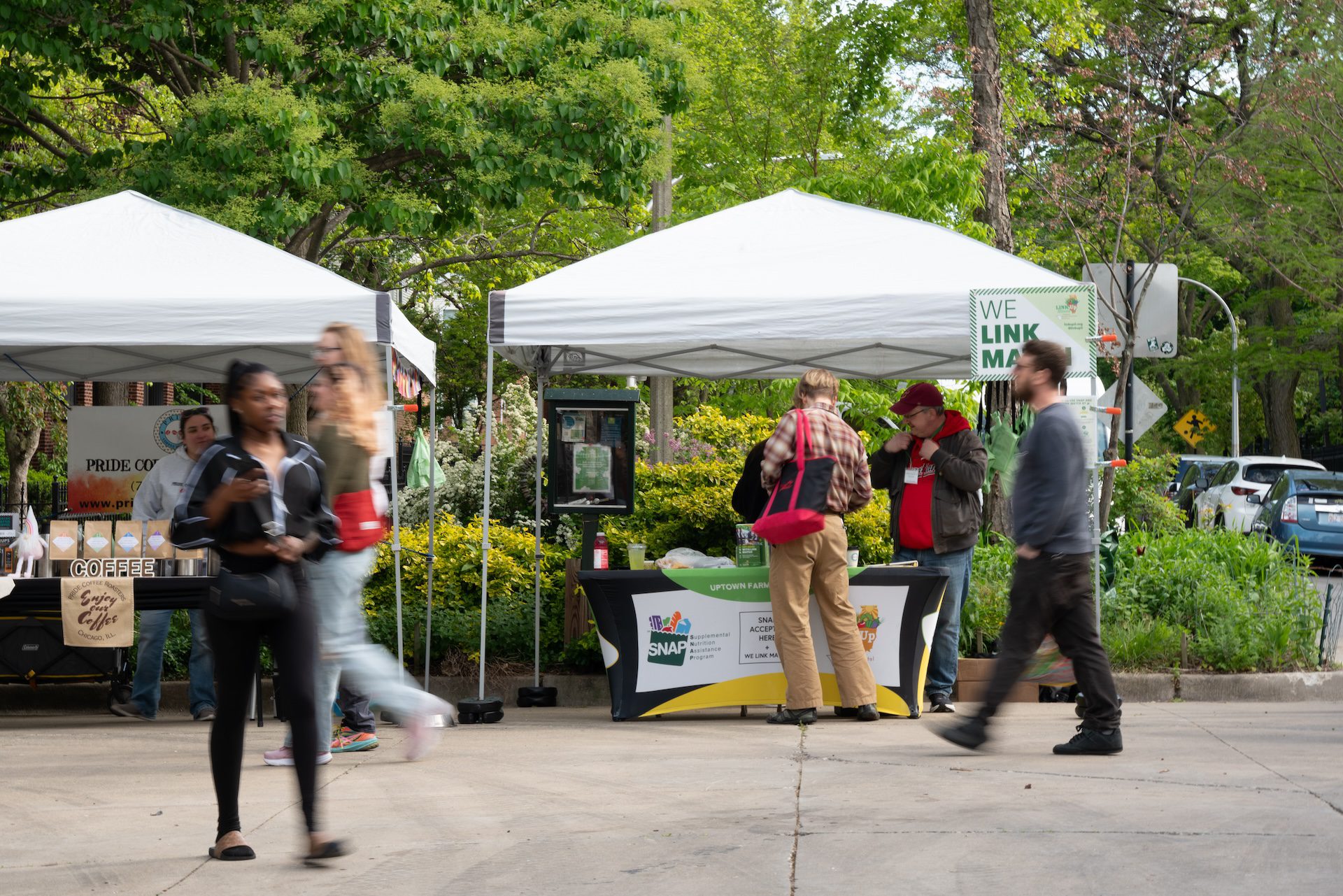
El año pasado, los beneficiarios del SNAP canjearon más de $2,2 millones en Link Match, una cifra superior a los aproximadamente $1,4 millones del año anterior.
Green City Market, con sucursales en West Loop y Lincoln Park, lleva a cabo una iniciativa llamada "Green City Market For All," que triplica el valor de los beneficios de los usuarios del programa SNAP —con una bonificación de hasta $25— para incentivarlos a comprar alimentos nutritivos y cultivados localmente.
Ella Wischnewsky, gerente de acceso a alimentos en Green City Market, dijo que la cantidad de participantes del SNAP que utilizan Link Match en Green City Market en mayo de este año, en comparación con mayo del año pasado, se ha mantenido estable, mientras que las bonificaciones obtenidas a través de Link Match han aumentado ligeramente.
A pesar de un ligero repunte en las distribuciones de Link Match, Wischnewsky anticipa una disminución en la participación total de beneficiarios del SNAP este año debido a los cambios en el programa.
“Muchos de nuestros clientes actuales han expresado su temor a perder beneficios y su frustración al navegar por el proceso de exención,” dijo Wischnewsky. “Inmigrantes, residentes mayores de Chicago y familias han perdido la oportunidad de usar Green City Market For All. Nuestros vendedores dependen de este programa.”
Para los vendedores que ofrecen alimentos elegibles para Link Match — frutas, verduras, champiñones y plantas productoras de alimentos — ese crecimiento en los canjes se ha traducido directamente en mayores ventas, según comentaron varios vendedores a Borderless.
Por lo general, más de un tercio de las ventas de Andrew’s Heirlooms en los mercados de agricultores de Chicago provienen de compras realizadas por clientes que utilizan Link Match — en ocasiones, esta cifra llega al 45% a finales del verano, a medida que aumenta la afluencia de gente al Uptown Farmers Market, según Melissa Greene, quien administra la granja junto con su esposo.
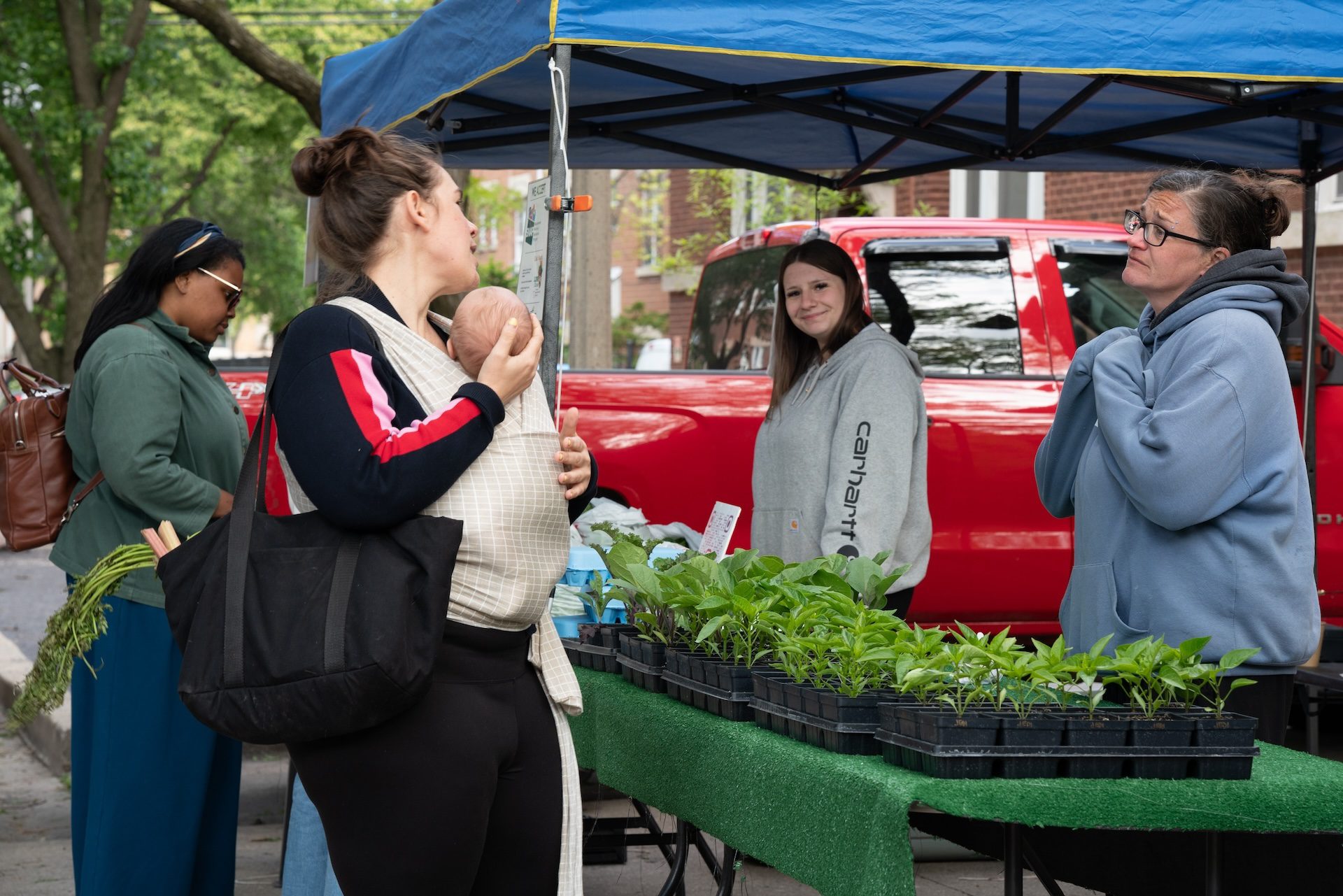
Thomas Eich, de Kankakee Valley Homestead, dijo que, por lo general, las compras más altas de Link Match se registran en los Green City Markets de Lincoln Park y el West Loop, las cuales representan alrededor del 15% de sus ventas totales en dichos mercados.
En comparación, los vendedores que aceptan SNAP pero no forman parte de Link Match le dijeron a Borderless que las ventas de SNAP suelen representar 10% o menos de sus ingresos totales en los mercados.
“Antes de que comenzara ese programa, no veíamos que se utilizaran mucho los beneficios del SNAP, pero ahora, desde que lo implementaron el año pasado, con el programa Link Match y la forma en que duplicaban el monto, más gente se mostró entusiasmada por ir de compras,” dijo Rodríguez.
‘Es una época realmente difícil’
Si bien Link Match ayuda a impulsar las ventas de los vendedores participantes, algunos temen que los cambios en la elegibilidad aún puedan reducir su base de clientes.
“Ya sea que se vean directamente afectados o que simplemente tengan miedo de lo que vendrá, estamos viendo un impacto allí,” dijo Matthew Ruffi, gerente sénior de programas de Link Up Illinois, que administra el programa Link Match, y propietario del Uptown Farmers Market. “Luego, si sumas a eso el aumento general de los precios de los alimentos, es una época realmente difícil.”
Rodríguez ya está viendo ese impacto.
La última vez que cobró los pagos del SNAP correspondientes a tres semanas, el total fue aproximadamente un 25% menor de lo habitual.
“El año pasado solíamos recibir muchos de esos clientes de Link Match, y este año es como que los recibimos, pero no tanto,” dijo.
En respuesta a ello, Illinois está tomando medidas para ayudar a hacer frente a la inseguridad alimentaria en medio de los cambios en el programa SNAP. El estado está invirtiendo $70 millones para crear el programa Families Receiving Emergency Support for Hunger (FRESH, por sus siglas en inglés). Este programa otorgará un pago único de emergencia de $400 a 120.000 personas que ya han perdido el SNAP debido a los cambios federales en los requisitos de elegibilidad.
Ruffi en el Uptown Farmers Market y Jeffrey Tabels, quien administra el Lincoln Square Farmers Market, están contentos de ver tanto caras conocidas como nuevas en sus mercados este verano. Aún así, Ruffi dice que es demasiado pronto para saber el impacto que los cambios en SNAP han tenido en los agricultores y vendedores en los mercados de agricultores en lo que va de temporada.
Rodríguez ha estado tratando de generar más concientización por su cuenta. “He estado pensando en poner carteles... de que aquí aceptamos Link y SNAP,” dijo, señalando que ya ha hecho algunos para su puesto.
Aydali Campa es miembro de Report for America y cubre temas de justicia medioambiental y comunidades inmigrantes para Borderless Magazine. Envía un correo electrónico a Aydali a [email protected].