 Camilla Forte/Borderless Magazine/Catchlight Local/Report for America
Released from detention facilities hundreds of miles away with no phone or money, Chicago immigrants are depending on a growing patchwork of volunteer organizations to make it back to their families.
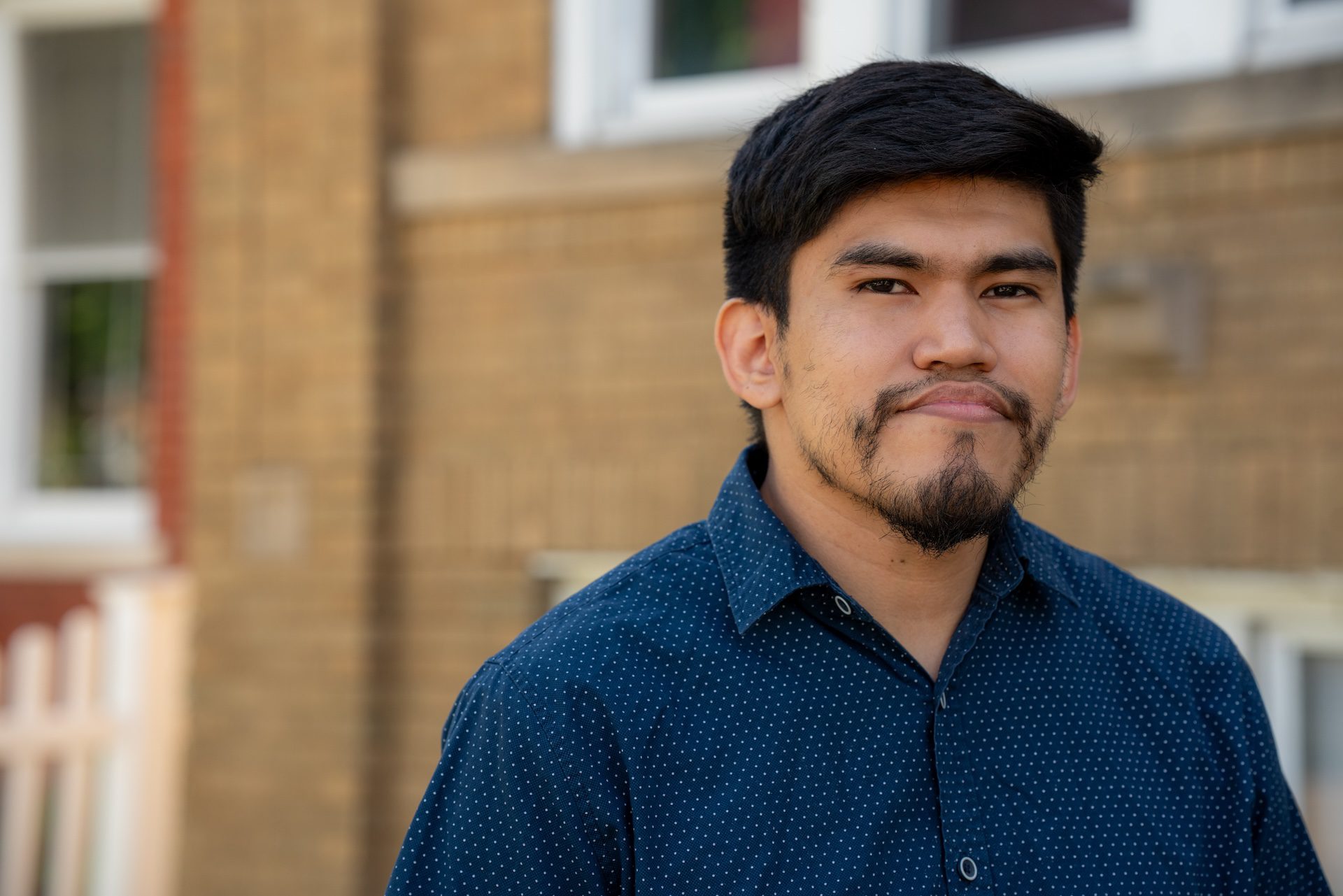
On the eve of his 26th birthday, Jose Garcia received the news that he’d be released from immigration detention in Kentucky.
Shortly after leaving the facility, he was gifted a vanilla birthday cake by a family helping him get back to Chicago. The gesture marked the end of Garcia’s detention in a facility with troubling conditions. It also marked the start of a new challenge: returning to a home hundreds of miles away.
In the hours after his release, he remembers three or four families supporting his journey from Madisonville — where he was detained — to Louisville so he could finally take a six-hour bus back to Chicago. Having people to talk to, he said, helped his release feel less traumatizing as he reacclimated to life outside of detention.
“Once you get out of there, it does feel weird,” Garcia said. “I was just numb. I didn’t know how to feel, honestly, you just can’t believe that you’re actually free.”
News that puts power under the spotlight and communities at the center.
Sign up for our free newsletter and get updates twice a week.
As President Donald Trump’s administration and the Department of Homeland Security (DHS) detain and deport hundreds of thousands of immigrants across the country, some are now winning their release through individual petitions or judge rulings. For others, a judge has ordered their release after the federal government violated a consent decree limiting warrantless arrests in Illinois and some nearby states.
For many Chicagoans, release from detention isn’t the end of their challenges.
Illinois law bars immigration detention facilities within its borders, so federal authorities transfer detained Chicago-area immigrants to out-of-state facilities. When immigrants are released, they’re often stranded with no cash or transportation in areas far from their families and support networks.
However, grassroots organizations have been building coalitions across state lines to connect newly released immigrants with the resources they need to get back to Chicago.
For Garcia, this emerging support network made him feel less alone as he navigated a new reality — a reality in which dozens of recently released detainees now find themselves.
A state without immigration detention centers
In the fall, Garcia was on his way home from his night shift at a local restaurant when he was stopped and pinned to the ground by two federal agents before being taken into custody. A bystander captured his arrest and posted it on Facebook. During the encounter, Garcia said federal immigration agents never presented a warrant for his arrest.
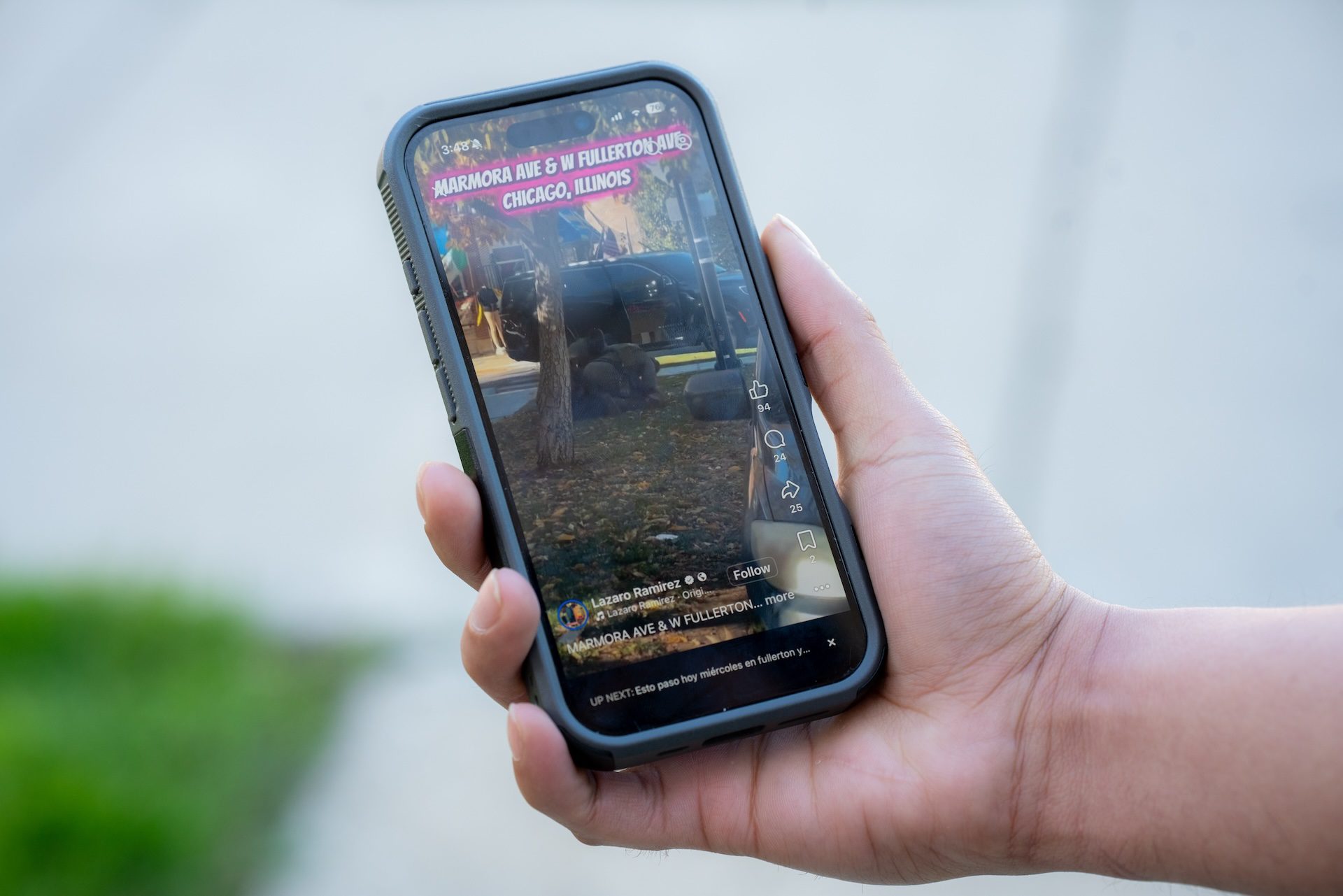
Garcia, who has lived in Chicago since he was two years old, was among the 4,500 people arrested during Operation Midway Blitz, the vast majority of whom had no criminal convictions, according to the Chicago Sun-Times.
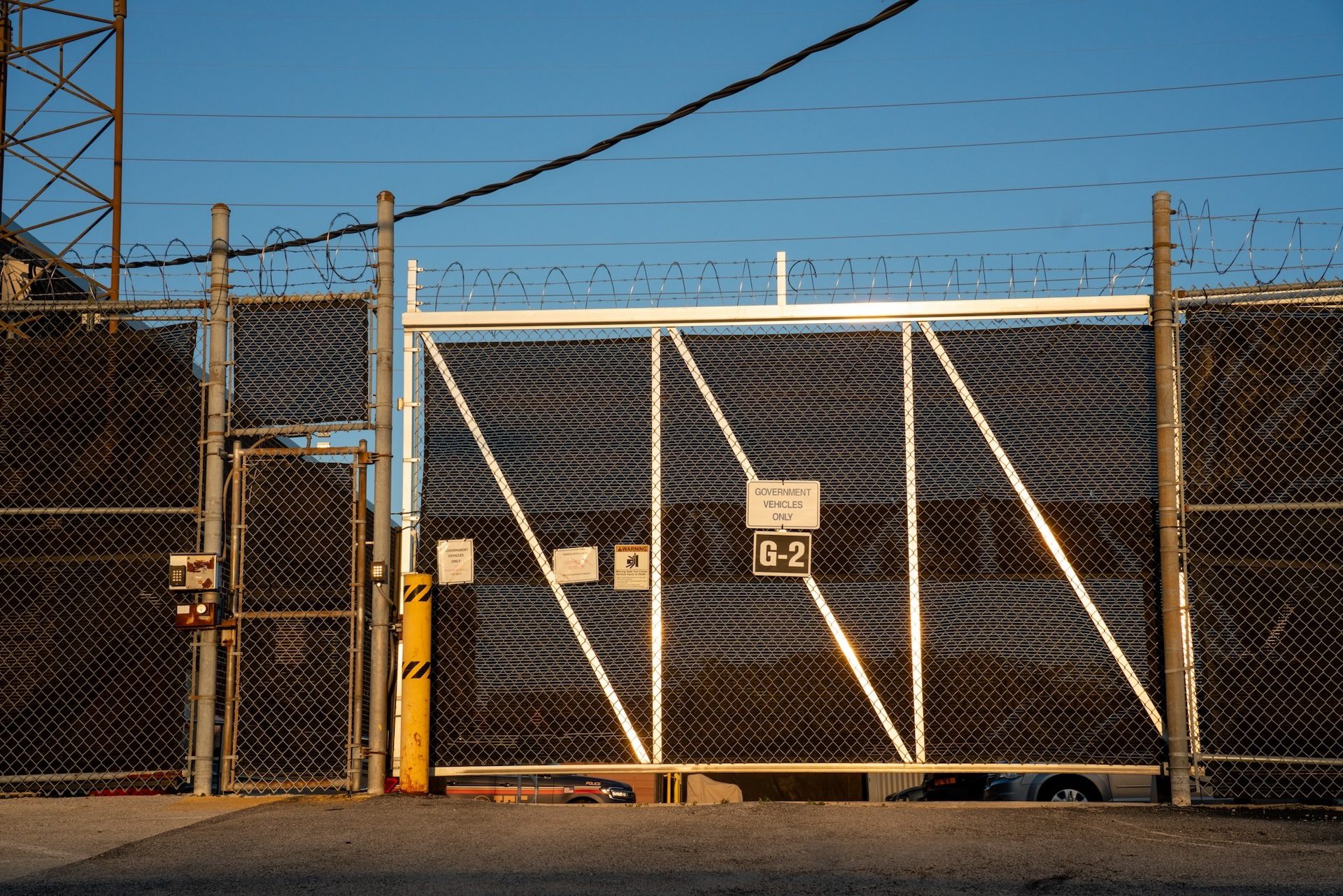
Many of those detained were funneled into the Immigration and Customs Enforcement (ICE) processing facility in Broadview, which immigrants, lawyers and advocates have decried for its overcrowded and unsanitary conditions that arose under the pressure of arrests during Operation Midway Blitz. Immigrants are held at Broadview while awaiting transfer to out-of-state detention facilities.
The ICE building in Broadview is the only facility of its kind in Illinois due to the state’s efforts to end immigration detention. During Trump’s first term, Gov. JB Pritzker signed a law that banned immigration detention centers in the state. In 2021, he signed the Illinois Way Forward Act that ended partnerships between local jails and ICE.
Because Illinois law prohibits detention facilities within its borders, any Chicago-area immigrant who is detained is transferred to facilities in other states such as Kentucky, Indiana or Michigan.
Antonio Gutierrez, strategic coordinator with Organized Communities Against Deportations (OCAD), said the Way Forward Act was the “first abolitionist act at the state level” against immigration detention. The challenge after the legislation passed, however, was that people who would have been detained in Illinois were being transferred out of state to places like Indiana or Michigan, they said.
In recent months, Gutierrez said OCAD has seen people being sent even farther away to facilities in Texas and Louisiana.
Immigrants sent to these states face immigration judges who may be less likely to offer immigration relief than those in the Chicago area. According to the data gathering organization Transactional Records Access Clearinghouse (TRAC), immigrants with lawyers in Chicago were granted asylum more than four times as often as those in Houston.
Garcia was taken to Broadview, where he was kept for four days without being given his seizure medication, he said. The processing facility was overcrowded, no soap was provided and there wasn’t enough food, he added.
“That’s their technique,” Garcia said. “They want us to go mentally unstable so we can self-deport.”
Garcia’s experience echoes those described in a federal lawsuit filed against DHS by the American Civil Liberties Union (ACLU), which accuses the agency of subjecting detainees to poor and unsafe conditions at Broadview. Immigration attorneys and immigrants who had been detained at Broadview reported in the lawsuit that detainees were not receiving medical treatment for injuries and illness, and were being coerced to sign documents to self-deport.
After Broadview, Garcia was transferred to a facility in Indiana and ultimately Hopkins County Jail in Madisonville, Kentucky — the worst of the three facilities, he said.
The jail staff routinely placed people in solitary confinement for not eating or other mental health challenges, he said, and isolation was presented as a solution for his seizure concerns after he asked staff for the correct dose of his medication.
Read More of Our Coverage

Under a 2019 copy of ICE detention standards, medication must be distributed as instructed by health professionals during detention, and provided to people upon release. Garcia told Borderless he did not receive the proper dosage of his seizure medication at the jail, and received no medication at all when he was released. He is supposed to take it every twelve hours, or his condition can become life-threatening, he said.
After he was released, it took more than 12 hours before he had access to his medication.
DHS did not respond to requests for comment on its detention standards or Garcia’s case at the time of publication.
Creating “layover” spaces for immigrants
In late January, Garcia learned that a court approved his lawyer’s habeas petition for release. He was surprised, but happy.
His lawyer connected him with a local organization, Calor Humano, to help facilitate his journey home. From there, Garcia said multiple families supported him. One bought him a meal and drove him to Louisville. Another bought him a lottery ticket, and another bought him a cake for his birthday.
“It was fun just talking to people and about my experience,” Garcia said. “It was making it less traumatizing.”
The number of people in ICE custody has reached record levels under the Trump administration, and the death rate for detained immigrants is the highest it’s ever been. But data from TRAC shows that between January and April this year, the number of people being held in immigration detention decreased from the record-high of 70,000 to roughly 60,000 — though it’s unclear what percentage of that decrease came from releases, deportations or voluntary departures.
“Even under this administration and all their illegal tactics, from our perspective, we’re still getting people released,” Gutierrez said. “Getting detained by ICE is not the end.”
The Castañon Nava consent decree was reached in 2022 to settle a class action lawsuit alleging the arrests of two Chicago men were “fueled by racial profiling,” according to the National Immigrant Justice Center (NIJC), which represented the men in court.
The consent decree has become a pathway to release for some detainees whose arrests violated the settlement. NIJC reviews DHS arrest records to identify violations.
As of late March, roughly 95 people had been released as a result.
NIJC Senior Litigation Attorney Allena Martin said that initially, the consent decree did not include any guidelines on whether DHS should inform lawyers or loved ones of a person’s release, making coordination with those released from detention a challenge.
Now, under a court order in the Castañon Nava cases, DHS is required to give NIJC 12 hours‘ notice before releasing someone. Prior to that order, however, the government had “continually refused” to assist with logistical matters related to people’s releases, according to Martin. Even after the order was issued, there have still been instances in which the government gave no notice of someone’s release, Martin added.
The challenge of coordinating releases is compounded by the fact that NIJC may not always have access to a person’s family or attorney’s contact information. Having little time and information to prepare for someone’s release has made it difficult for family and loved ones to coordinate their pick-up, Martin said.
Gutierrez said the federal government should be responsible for returning people to their families — especially in Castañon Nava cases, where it has essentially acknowledged it wrongly detained them in the first place.
“When ICE is claiming that this person should not have been detained … even when we get that acknowledgment, they still are not held accountable in any way about bringing that person back to their families,” Gutierrez said.
These releases — such as through the habeas corpus ruling in Garcia’s case or the Castañon Nava consent decree in other cases — have prompted organizations in the Midwest to build support networks for recently released immigrants.
OCAD has been one of the main facilitators for these connections with out-of-state organizations. When local attorneys notify OCAD that people are being released, they coordinate support for immigrants by working with organizations such as Calor Humano in Kentucky and Ashrei Foundation in Missouri.
Gutierrez said the organization has been working to expand connections with groups out of state to better respond to those being released from detention.
Local organizations may pay for hotels for newly released immigrants, while someone travels from Chicago to pick them up, they said. In some cases, volunteers have met each other halfway, sparing either side a longer drive to the release location.
Welcoming people with open arms is the goal of their work, according to Will Mendoza, a volunteer with Calor Humano. The group is an offshoot of Louisville Showing Up for Racial Justice (LSURJ)’s Community Defense Network, where volunteers monitor a 24/7 rapid response hotline, conduct immigration patrols and support immigrant neighbors.
So far, Mendoza said the organization has supported at least 30 people — the majority of whom are from Chicago or Illinois.

When people are released from detention, they don’t often have phones or phone chargers, appropriate clothing for the weather, or may experience other difficulties getting home due to language barriers, Mendoza said. Calor Humano aims to fill those gaps while also helping people who are recently released feel more comfortable.
“Especially if you don’t speak English, it’s really hard to put together that you are being released until you’re almost outside of the building,” Mendoza said. “They rely on us because they have to.”
Though rewarding, the work can be frantic, Mendoza said. It’s hard to know or plan for when people will be released, as it varies case by case, he acknowledged. Even if they learn when someone is being released, Mendoza said delays could still pop up and make it harder to arrange people to be available for when someone steps out of the detention center.
While the work has been rewarding for his mental health, managing volunteer work alongside his full-time job poses challenges.
“A nightmare of mine is getting a call, where … the volunteers, or everyone who’s available, are tapped out and having to tell someone that we can’t help them,” Mendoza said. “We haven’t had to turn down a request yet, and it’s my greatest hope that we keep that way.”
The federal government’s lack of notice for releases has also made the work challenging.
Sara Ruiz, of the Missouri-based Ashrei Foundation, said the opaqueness of ICE’s processes is by choice. Still, the volunteers who choose to help immigrants released from detention are trying to help people feel loved and “not invisible.”
Ruiz called the process of transferring and isolating detainees deliberately cruel, saying the burden falls chiefly on those moving through the system, but also on the communities that feel compelled to respond — sometimes in the middle of the night.
She describes the work of helping people get home as creating “sort of layover space for folks moving nationwide.”
Building this grassroots network of support for situations that can vary on a case-by-case basis is sort of like “building the plane as we fly it,” Mendoza said.
Despite the challenges, Mendoza said it has been rewarding to build a network united around bringing people home.
“There are those who care, who aren’t okay with what’s going on,” he said. “We get them home.”
A life changed
When Garcia got back to Chicago, he wanted to rest after the long trip. But his father insisted on taking him out to eat. His friends also reached out, offering support and a place to stay if he needed it. It had been almost three months since he had been home.
“It was my birthday,” Garcia said with a smile, recalling the day he made it back to Chicago. “I got to see my dad and my mom. That was awesome.”
However, Garcia’s time in detention has left a mark.
He spends more time indoors. Events he used to enjoy aren’t the same, and he’s more aware of his surroundings. He’s been working with an attorney to apply for legal status.
Before he was detained, Garcia volunteered at a food pantry in the Austin neighborhood. Now, being around people can feel unsettling. He’s even heard of people threatening to call ICE on each other, he said.
At Broadview, he recalls staff telling him to leave the country and saying threats to make him and others feel “less-than.” It was weird, he said, that staff of the same race or ethnicity as him were treating him that way.
“It feels weird being around people sometimes,” Garcia said. “Because you don’t know what their actual intentions are.”