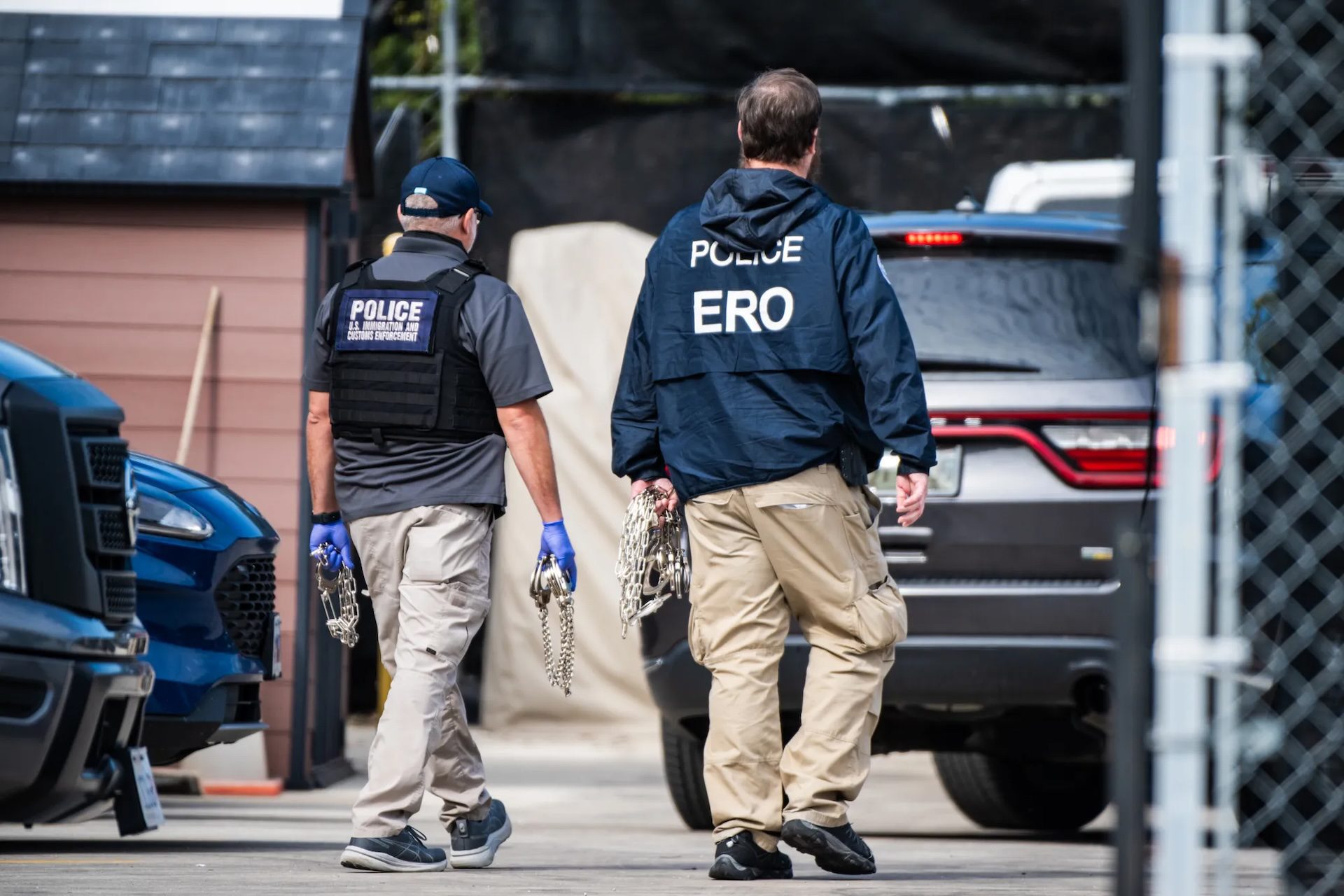
 Colin Boyle/Block Club Chicago
Immigration arrests and sightings of ICE agents have increased in recent weeks. “This is a time when the community needs to come together to protect ourselves,” an organizer said.
This story was originally published in Block Club Chicago, a nonprofit newsroom focused on Chicago’s neighborhoods. Sign up for its free daily newsletter.
CHICAGO — Reports of arrests and sightings of immigration agents in Chicago have increased in recent weeks, representing a surge in enforcement activity since the end of Operation Midway Blitz, organizers said.
In June, legal advocates received 170 referrals for immigration-related legal assistance, up from about 100 in May, according to data from The Resurrection Project. In May, local groups verified around 45 immigration arrests, almost double the number reported in April, with numbers continuing to increase during June, said Evelyn Vargas, leadership and development organizer for Organized Communities Against Deportations.
“There has been an uptick in arrests in the street and an uptick in courthouse arrests, including traffic and domestic violence court. It seems like agents are targeting specific individuals, but we’re not clear on how they choose,” Vargas said.
News that puts power under the spotlight and communities at the center.
Sign up for our free newsletter and get updates twice a week.
Organizers believe these numbers undercount the actual number of arrests, Vargas said. Nationwide, immigration arrests increased recently to 10,000 in five days, the New York Times reported last week.
Since the end of Operation Midway Blitz in December, and since the end of other large-scale operations in cities like Minneapolis, immigration agents have turned to more discreet arrest tactics, but they continue to have a presence across Chicagoland, organizers said. That presence has felt more pronounced recently, they said.
On Tuesday, U.S. Immigration and Customs Enforcement agents were reported in Gage Park, Pilsen, Humboldt Park and Albany Park, arresting at least three people, according to rapid response groups’ online reports.
Many immigration arrests in recent months appear to be targeted, organizers and immigration lawyers said. That’s in contrast to Midway Blitz, when street arrests of day laborers, landscaping workers and street vendors made up some of the 4,500 people arrested during the campaign.
Last month, agents detained a man after crashing into his car during a high-speed chase in Dunning. Days before, neighbors and organizers sounded alarms after ICE agents crashed their car into a bystander’s car before wrestling a man to the ground and arresting him in Albany Park.
Some of the recent arrests have taken place at local courthouses, where noncitizens show up for hearings or to seek court services.
Read More of Our Coverage
For months, immigration agents have arrested people before or after their court hearing despite a state law and court order that ban these types of arrests. Agents have repeatedly attempted to enter courthouses despite Cook County Sheriff’s officers handing them copies of these laws and asking them to leave, the Cook County Defender’s Office previously said.
Arrests during immigration check-ins have also been reported, though there is no clear explanation as to why some noncitizens are being detained, organizers and immigration attorneys said.
Many of those detained had no criminal arrests or convictions, or were parents of U.S. citizens, said Diana Rashid, director of legal defense at the Resurrection Project.
It has also become common to see families, not just one person, arrested when attending an ICE check-in, immigration attorneys said.
A request for comment on ICE’s recent activity in Chicago was not immediately answered by the Department of Homeland Security.
It is likely many arrests in recent months were made without a judicial warrant, a practice widely used during Operation Midway Blitz, said Mark Fleming, associate director of litigation for the National Immigrant Justice Center.
The group reviewed arrest records for hundreds of immigrants detained during the fall operation and estimates that thousands of arrests were unlawful because agents did not have a valid judicial warrant at the time of the arrest.
Those arrests could have violated the Castañon Nava consent decree, which limited such arrests. But many of those detained were deported or pressured into agreeing to be deported before the group could seek their release, Fleming said.
“ICE is going to very persistently encourage people to take voluntary departure and sign away their rights. I would really encourage people take the time to consult with an attorney to understand what their rights are and any relief that may be available,” Fleming said.
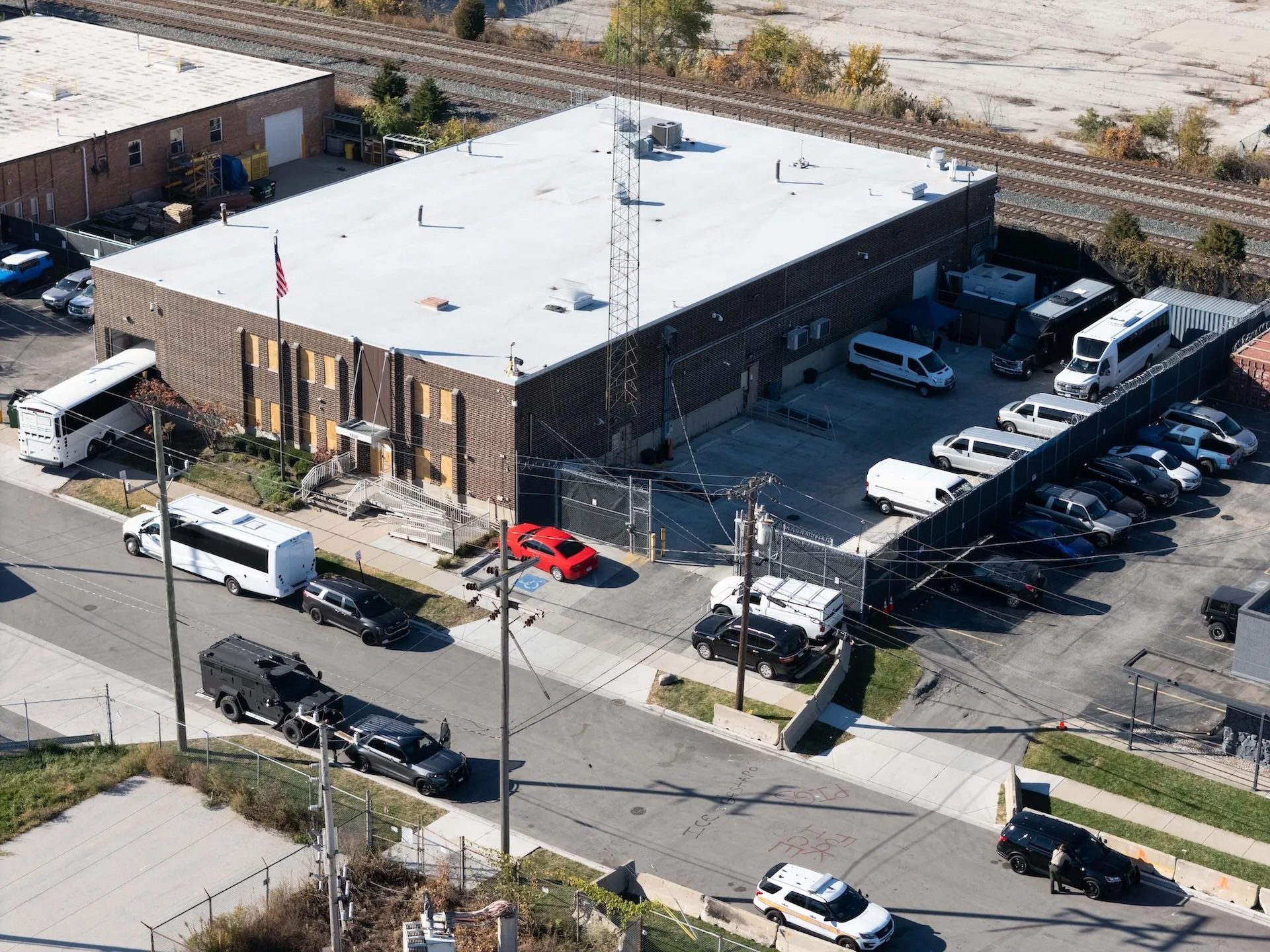
In May, religious leaders with the Coalition for Spiritual and Public Leadership regained access to the immigration processing center in Broadview for daily pastoral care visits following a lawsuit filed in November.
The number of people held at Broadview varies daily and is difficult to assess because religious leaders visit only those who request pastoral care. Still, it appears to be “nowhere near last fall,” said Sister Christin Tomy, of the Dominican Sisters of Sinsinawa and Dominican University. Conditions also appear to have improved, she said.
“The most essential part of what we do, I believe, is just listen. We listen to their stories, we let them talk about the traumas they’re going through. This type of care restores a bit of human dignity,” Tomy said.
Some of the people held at Broadview were just detained, while others arrived at the suburban facility while being moved from other detention facilities in the country, Tomy said.
Still, immigrants are navigating the trauma of being detained, sometimes in “the same abhorrent manner we were hearing about in the fall” or while complying with immigration requirements, she said. Many worry about their families and the consequences of being temporarily or permanently separated from them, she said.
“There’s something really soul crushing and dehumanizing about being detained, especially in the abrupt manner that many of these folks are,” Tomy said.
What Immigrants Need To Know
As immigration enforcement activities continue in Chicago, it is important that noncitizens who could be at risk of being arrested make plans, organizers said.
Organizers urge neighbors to know their neighbors, so they can notice if someone is arrested in the neighborhood, get in touch with their loved ones or offer support, Vargas said.
“This is a time when the community needs to come together to protect ourselves,” Vargas said. “Let’s get connected to our rapid response networks and mutual aid networks.”
Below are some precautions immigrants should take in the wake of recent ICE activity:
Document And Report ICE Activity
Organizers and immigration advocates continue to urge neighbors to report immigration arrests or ICE sightings to the Illinois Coalition for Immigrant and Refugee Rights hotline. The network also connects immigrants to local organizations that provide services and support for families across the state.
Call the Family Support Network at 1-855-435-7693.
The group also sends out text alerts to notify neighbors of confirmed ICE activity in their area, verified or reported by local rapid response teams. To sign up for alerts and get more information, visit icirr.org/fsn
Obtain Legal Guidance
Organizers and immigration attorneys recommend noncitizens or members of mixed-status families have a legal consultation with an attorney or accredited representative.
These screenings are key for noncitizens and their families to assess their cases and understand their options in case they are arrested instead of waiting until someone is in custody, Rashid said.
Advocates recommend not attending immigration check-ins or court hearings alone. Noncitizens are urged to attend with their attorney, if they have one, or seek a legal consultation and request accompaniment for their immigration check-ins or appointments.
If detained, a lawyer or volunteer can notify other attorneys, file petitions that could help with the person’s release or provide assistance. Organizers also recommend making sure a trusted person knows their assigned A-number, so they can track their case and find where they are being detained.
The Immigrant Legal Support Program offers workshops where immigrants can request accompaniment for an immigration check-in or court hearing. For more information, vist The Resurrection Project’s website or the program’s website.
Sign Up For Workshops
The Immigrant Legal Support Program offers workshops where noncitizens can speak with a legal representative who will provide hands-on support with reviewing their cases.
The network also offers specific workshops for asylum-seekers and those interested in applying for citizenship or Deferred Action for Childhood Arrivals (also known as DACA). More information is available here.
The Illinois Coalition for Immigrant and Refugee Rights, as well as local rapid response groups, offer Know Your Rights trainings and Migra Watch workshops, as well as printable Know Your Rights cards in multiple languages and detention safety plans. For more information, visit visit icirr.org/fsn
The city’s Committee on Immigrant and Refugee Rights also regularly hosts workshops and webinars about immigration policies, changes in immigration law and other relevant information. More information and a calendar of upcoming events are available here.
Consider Requesting A Virtual Hearing
Those required to appear in local courthouses could consider requesting a remote hearing after consulting with their attorneys, organizers said.
Under state law, remote hearings are available for many types of criminal proceedings, including status dates and non-evidentiary hearings.
But not all judges allow remote appearances, and remote hearings are not an option for certain court matters, including trials, a spokesperson for the Cook County Public Defenders Office said in an emailed statement.
“Our courts cannot function if victims, witnesses, and accused people stop appearing. For these reasons, the Law Office of the Cook County Public Defender has generally encouraged the use of remote appearances whenever possible and appropriate,” the statement reads.
“Because clients and their attorneys can also benefit from in-person meetings, we encourage clients to discuss and make decisions about attending court remotely in collaboration with their lawyer.”