 Camilla Forte/Borderless Magazine/Catchlight Local/Report for America
Christine Dussault witnessed CPS students and parents navigate challenges like COVID-19, immigration raids, language barriers and budget cuts throughout her career. Now, she’s using that experience to push for change.
Christine Dussault always knew she wanted to become a teacher.
As a child, she played with her neighbors’ kids, asking them to become a part of her make-believe classroom.
Later, Dussault turned those childhood dreams into a full-time career. She has worked for Chicago Public Schools (CPS) for nearly two decades, first as a bilingual teacher and later as a bilingual coordinator and interventionist.
News that puts power under the spotlight and communities at the center.
Sign up for our free newsletter and get updates twice a week.
Through conversations with students and parents about immigration raids, language access and school funding, she sought ways to support students’ success beyond day-to-day assignments in the classroom.
Now as a CPS psychologist and field canvasser, her goal is to improve the educational system she once served as a bilingual teacher.
Borderless Magazine spoke to Dussault about her experience as a former bilingual teacher in CPS, and what inspired her to advocate for students’ mental and emotional well-being beyond the classroom.
Education at a young age
I’m from a family of educators: my aunt, mom and dad worked in education. When I used to play with my neighbors’ kids, we would play school. I always wanted to be a teacher.
When I got older, I would ask my mom if I could correct the papers her second graders completed. I enjoyed learning about the different types of curriculums, the activities and the funny things kids said.
When I was in high school, I went to my mom’s classroom and she was teaching symmetry to her second grade class. She asked them what would be a perfect name for a line she drew. One student said “dotty” because of the dotted lines. It’s heartwarming moments like this that drew me into teaching.
Our nonnative English students have more of a repertoire for language and it’s inspiring how they navigate them. I wanted to improve my Spanish and better understand cultural dynamics, so I went to teach in Colombia.
I taught at an international school there for two years and knew I wanted to be a bilingual teacher. I’m originally from a small town and knew one of the only opportunities I would have to teach bilingual classes was in Chicago. I started teaching in CPS in 2008 in Chicago’s South Side.
I taught different elementary grades. Some of my students were still learning English and cognates. So when I taught them subtraction, one of them said that you have to rest the numbers. She took the Spanish verb “rest,” to say “subtract” in English, as a way to learn and play with the language.
I think that working in CPS has taught me to understand what resources our students need to thrive and what changes need to be made.
Read More of Our Coverage

I noticed that CPS’ Transitional Bilingual Education (TBE) focused on a regression model. The students in the schools I worked in would sometimes enter as Spanish dominant until they were exposed to English and were provided with some help in their native language.
As their English grew, which is measured on a statewide test, they learned with less Spanish instruction. That’s why I call it regressive. They lose the opportunity to learn in their native language.
In 2017, I became the bilingual and dual language coordinator for my school. As a coordinator, I focused more on early childhood. I worked with the principal to start a dual language program. Only 49 schools in CPS have this bilingual model.
It’s a gold standard for language learning since it allows students to begin their education with the majority of their native language and slowly drops throughout the years until it is maintained with a 50-50 balance. It truly allows children to develop academic proficiency in languages.
As a coordinator, parents would share how their students only wanted to learn in English.
I would explain how speaking two languages was an amazing superpower. I wanted to increase their motivation. I want students to be thoughtful, creative and with access to languages and culture.
Education through crisis
During COVID-19, I was still a coordinator. I would check in on students and noticed attendance drops during remote learning. I would visit their houses and families, and heard about their struggles with accessing classes or food insecurity. Then, I would direct them to more resources.
My mom had directed me to an article on the Milwaukee Public Schools and how psychologists were organizing for a change in curriculum. They wanted the students’ learning to match better with their day-to-day experience. I immediately thought about my student’s learning environment during the pandemic.
They were sitting by a computer, reading about stories that were irrelevant to them and were not motivated. I think students are more interested in learning about their own culture, heritage and having the ability to see themselves in literature.
This past year, I was on sabbatical leave from CPS. But, I heard so many stories from teachers and my community about the effects of ICE raids. There were so many layers of trauma for our students.
Then, in July of this year, CPS announced changes to the budget that laid off teachers and created a hiring freeze. I think this is tragic because we need these opportunities to bring in talented teachers.Cuts like these are destabilizing for students and schools.
Because of everything that is happening with the current administration and its laws questioning sanctuary policies, I had to change how I described school to students.
For the majority of my career, I told them that school was a safe place for them. Now, I have to rephrase that into “we will do everything we can to make you safe” because I can no longer promise safety due to the uncertainty of the federal government.
We noticed huge drops of attendance during the raids because students were afraid, similar to COVID-19. People in my community stepped up and organized. They created a walking school bus and whistle brigades to protect our students. I would see them every morning as I exited the district to train as a psychologist.
I attended the Blended program at the Chicago School and took crisis training. I realized I want to continue working with communities and maintain conversations on how to better the school environment for students.
Seeking change
I think we need to expand on how schools can help the community. We need to expand our mental health care, be mindful of food deserts and make financially accessible programs.
Creating change within the education system is a marathon, not a sprint. It may feel like it’s not much of a change, but with consistency, it can be accomplished.
I believe my background with bilingual education can help remove barriers for supporting students with a different native language.
As a psychologist I hope to have the opportunity to influence the materials and content taught to all students.
Traditionally, psychologists in CPS are evaluators and are rarely involved with general education curriculum decisions. It is a job that will allow me to create an impact on children’s lives.
In training, I gained new knowledge on trauma, counseling and deescalating. I am really excited to go back as a psychologist and do something different.
I believe that possibilities exist and I would love to think about where this role can grow.
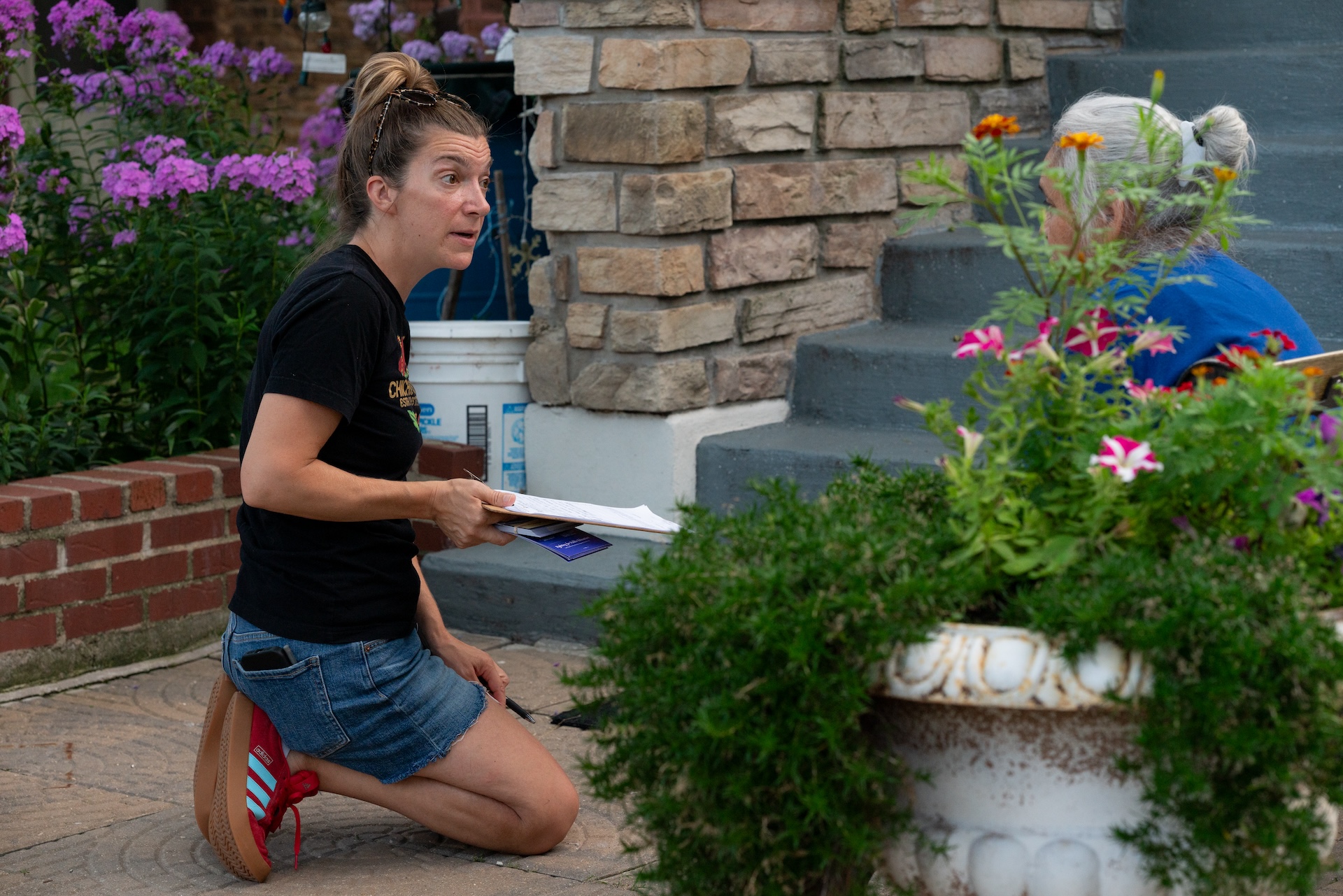
Because I care about my community — it feels like the best thing we can do is knock on doors, canvas, and discuss what changes the community needs. I really want to see the right people in office.
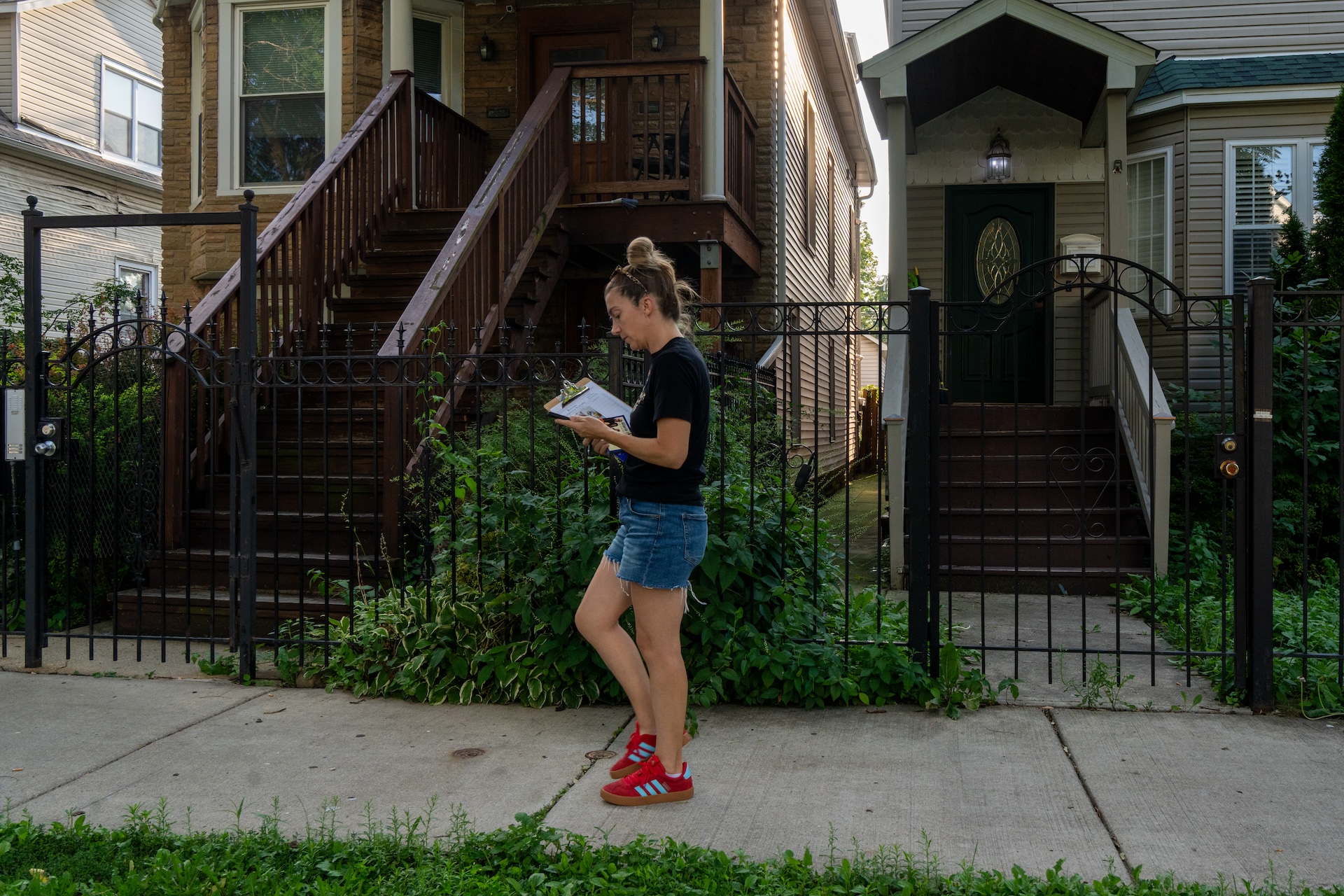
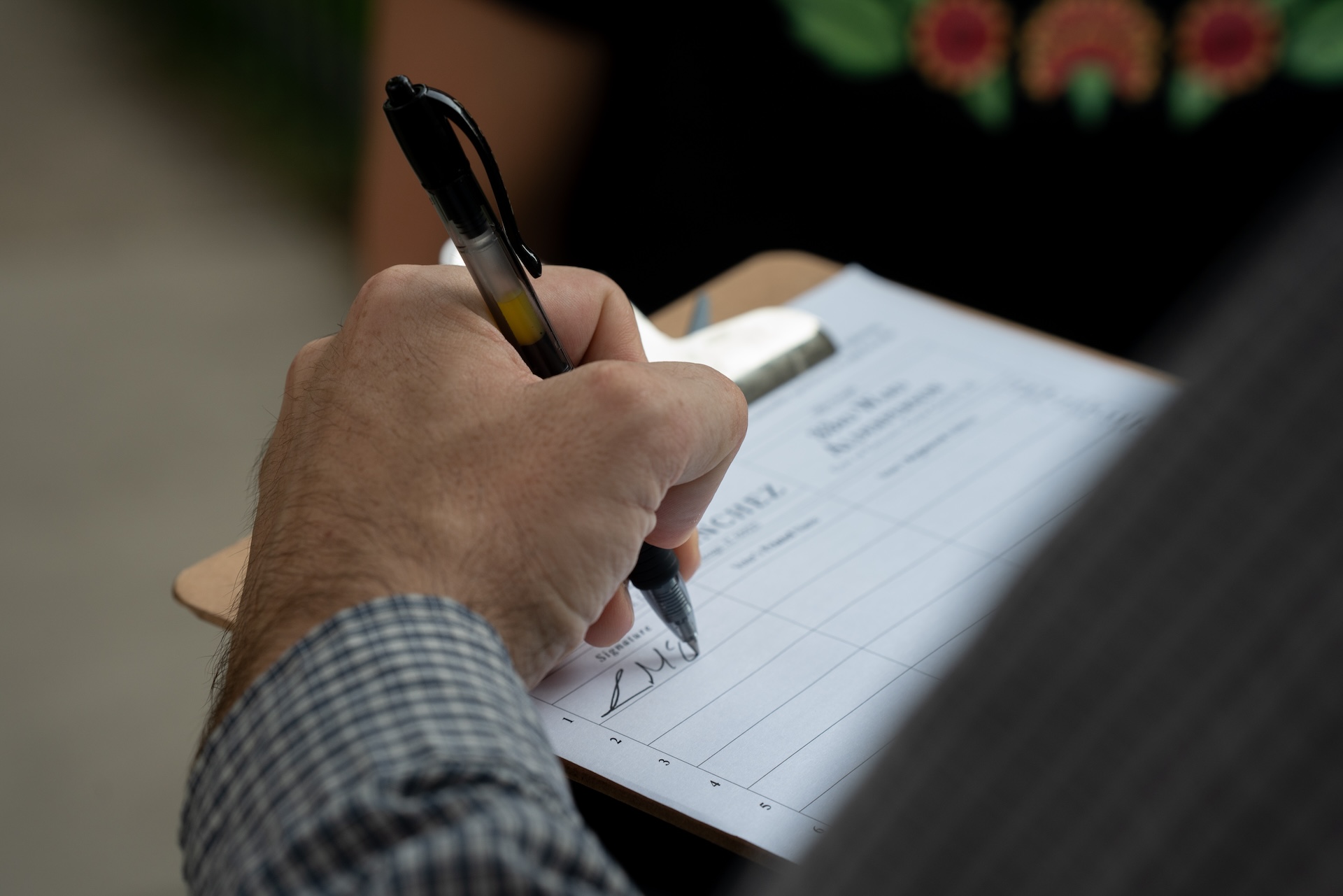
I have met so many people by knocking on doors and I always feel reassured when they feel the same way about the situations we are facing and try to brainstorm what actions the community can take.
People share their concerns about overcrowding classes and their experiences in CPS. The other day, I spoke with a parent whose child is transferring from a therapeutic school to CPS, so we discussed how any student joining CPS can have the appropriate support to succeed.
By discussing our issues and concerns we create community. Even two people can create an impact.
The story was produced with support from Press Forward — an initiative investing in local news and information — and uses Borderless Magazine’s collaborative as-told-to method. To learn how we make stories like these, check out our as-told-to visual explainer.
Samantha Monje is a Northwestern University journalism student and Pathways intern for Borderless Magazine. Contact Samantha at [email protected]