 Camilla Forte/Borderless Magazine/Catchlight Local/Report for America
The Cook County public defender’s office had already laid the groundwork to represent individuals in immigration cases, but an increase in detention under the Trump administration last year forced them to adjust.
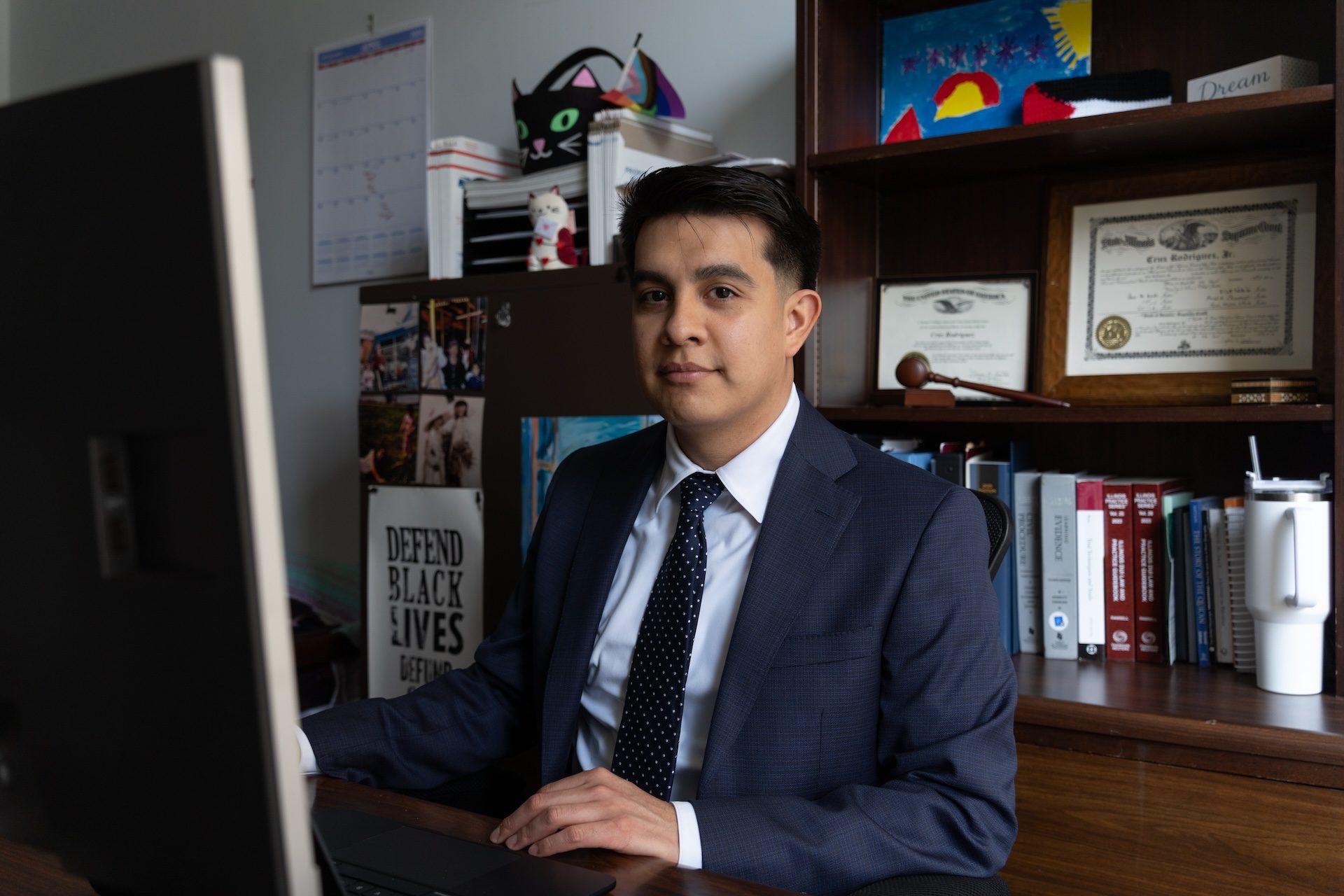
Two years ago, the Cook County Public Defender’s (CCPD) immigration division hotline received a handful of calls every week. Now, the office receives back-to-back calls from people seeking free legal guidance as they or their loved ones face deportation, according to Cruz Rodriguez.
Rodriguez is one of the division’s attorneys.
The people calling into CCPD — or referred by other immigration organizations — are trying to navigate a rapidly changing and complex immigration system.
News that puts power under the spotlight and communities at the center.
Sign up for our free newsletter and get updates twice a week.
It is a system he became familiar with as a child of a mixed-status family moving between states and as someone who helped represent immigrants along the U.S.-Mexico border.
“Those experiences have prepared me and have helped me gain a lot of skills as to vicarious trauma… trying to help someone else navigate a system that is making their trauma worse than they already came with,” said Rodriguez.
This year marks five years since the unit became a permanent division in the office, but the last year has tested him and the CCPD’s immigration division. President Donald Trump’s administration has added pressure on their system with the firing of immigration judges, a surge in detentions and rapidly changing immigration policy.
Now, as one of the largest government-backed programs providing free legal aid to non-citizens, the unit is still trying to keep pace with demand. It is trying to meet the moment by expanding operations and absorbing more cases, but the weight of the administration’s immigration enforcement agenda is bearing down. For immigrants they represent, the stakes could not be higher; the free legal representation can determine whether they face deportation or relief.
More than five years in the making
Rodriguez joined the unit two years ago and has been there through the sharpest surge in demand.
Illinois saw a more than 500% increase in arrests during the first five weeks after Operation Midway Blitz began in September 2025, the sharpest increase in ICE arrests of any U.S. state, according to the Marshall Project’s analysis of data obtained by the Deportation Data Project.
With more arrests, there is a greater need for legal help to seek deportation relief and navigate the immigration court system.
Unlike criminal defendants, noncitizens don’t have the right to a free government-appointed attorney in immigration court. They must find and pay for their own attorney, which can cost tens of thousands of dollars, or find one who will work for free.
Read More of Our Coverage
Cook County is home to more than 520,000 noncitizens.
In February, only one in three immigrants had an attorney when removal orders were issued, according to data compiled and analyzed by Syracuse University’s Transactional Records Access Clearinghouse.
Without counsel, their odds worsen. Detained individuals without legal representation are 10.5% more likely to receive an order of removal, according to an analysis by the American Immigration Council.
Tovia Siegel, director of immigrant justice at The Resurrection Project (TRP), said many people seeking representation are surprised to learn they won’t automatically receive a public defender like they would in criminal court.
“That’s why this program matters,” said Siegel. “It is providing more access to due process, more access to equity for people to be allowed to have their day in court and fight their case with a qualified representative.”
The Defenders for All Coalition, a group of more than 30 organizations including TRP, advocated for a dedicated immigration unit within the public defender’s office.
In collaboration with the coalition, the CCPD piloted a free representation program for individuals in the Chicago immigration court in 2020. A year later, a state law was enacted that made the unit a permanent division.
Supporters of the law told Borderless at the time that providing deportation defense through the public defender’s office serves immigrants who can’t afford an attorney and may have a legal right to remain in the country. The immediate focus was to represent detained immigrants and individuals whose immigration status was at risk due to a criminal conviction.
The CCPD’s immigration unit receives detained cases through referrals from its network of partner organizations, the Midwest Immigrant Defenders Alliance, or from the criminal division.
The 2021 law doesn’t require Cook County to provide a lawyer to every immigrant facing deportation or to allocate new state funds to hire more immigration attorneys.
Responding to change
Most recently, the division has focused solely on representing detainees at high risk of deportation.
After Trump was elected in 2024, the office and the Defenders for All Coalition began planning for an increase in detentions, according to Sharlyn Grace, deputy public defender for policy at CCPD.
“With the explicit plans coming out of the new administration, it seemed obvious that we would need to be prepared for much more unpredictable environments in immigration enforcement,” Grace said.
Their forecast was right. In 2025, they saw immigration judges being fired, an increase in detentions and detainees being moved away from their jurisdiction. This meant clients who would have appeared in the Chicago immigration court are instead appearing before the Memphis Immigration Courthouse or others across the country.
“The county had the foresight of knowing the tactics coming from the Trump administration would ramp up and jeopardize the safety and stability of residents by sending them to other states,” said County Commissioner Alma Anaya, who advocated for the unit and its expansion.
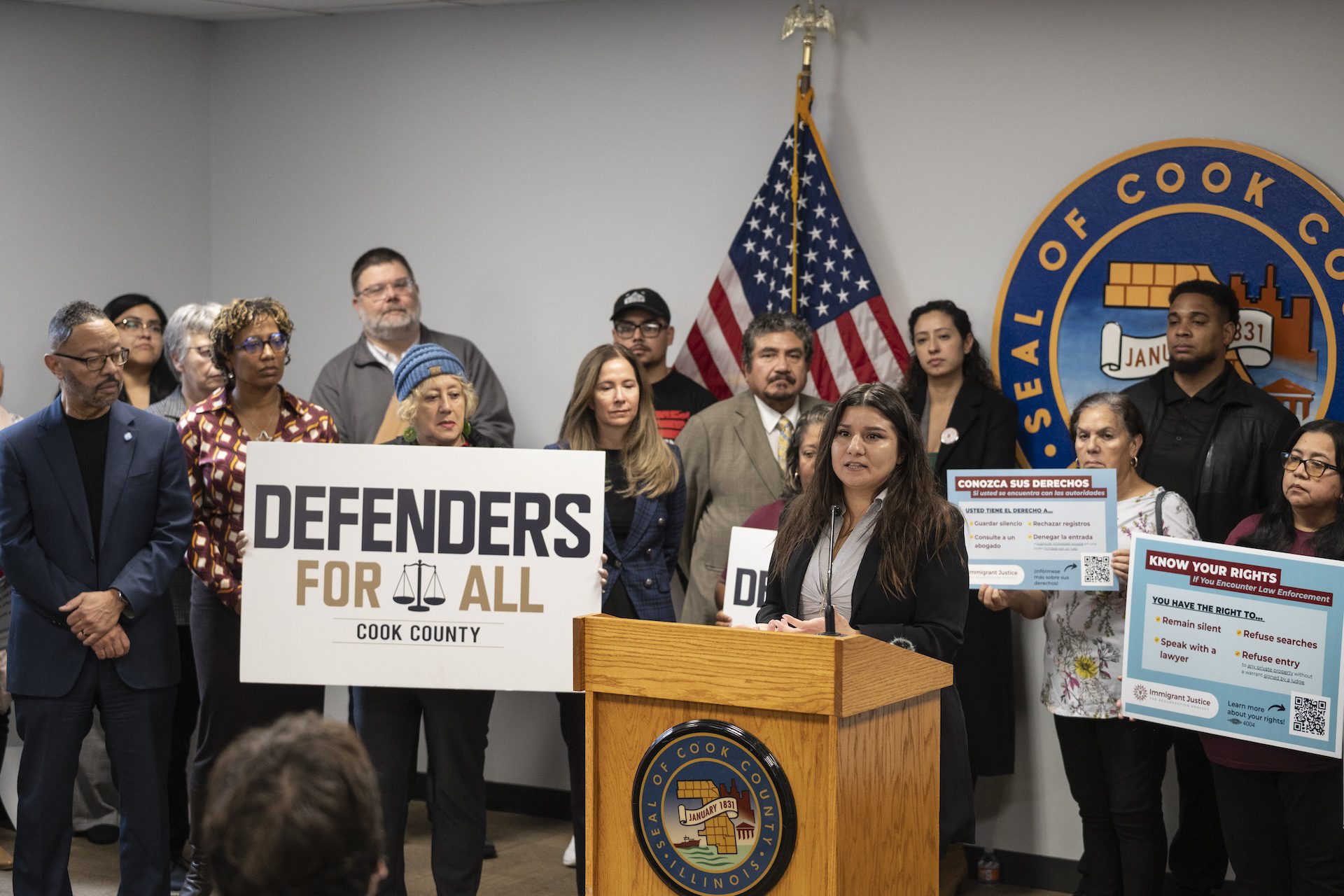
In response, the unit found they needed to change the law to allow attorneys to appear in immigration courts on behalf of Cook County residents outside of Illinois and regardless of whether they have a pending court case. Previously, the unit could only take cases already before Chicago’s immigration court.
Gov. JB Pritzker signed the changes into law in August 2025. In November, Cook County passed a budget that increased funding for seven additional attorneys in the division.
Since becoming a permanent division, the unit has grown from a staff of four to 11, eight of whom are attorneys, and represented about 220 clients in federal immigration court, according to CCPD.
“Even though we and all of the other [organizations] are not able to represent more than a minority of the folks that have been represented, there’s still a lot more representation than there would have been two or three years ago,” said Hena Mansori, the unit’s supervising attorney.
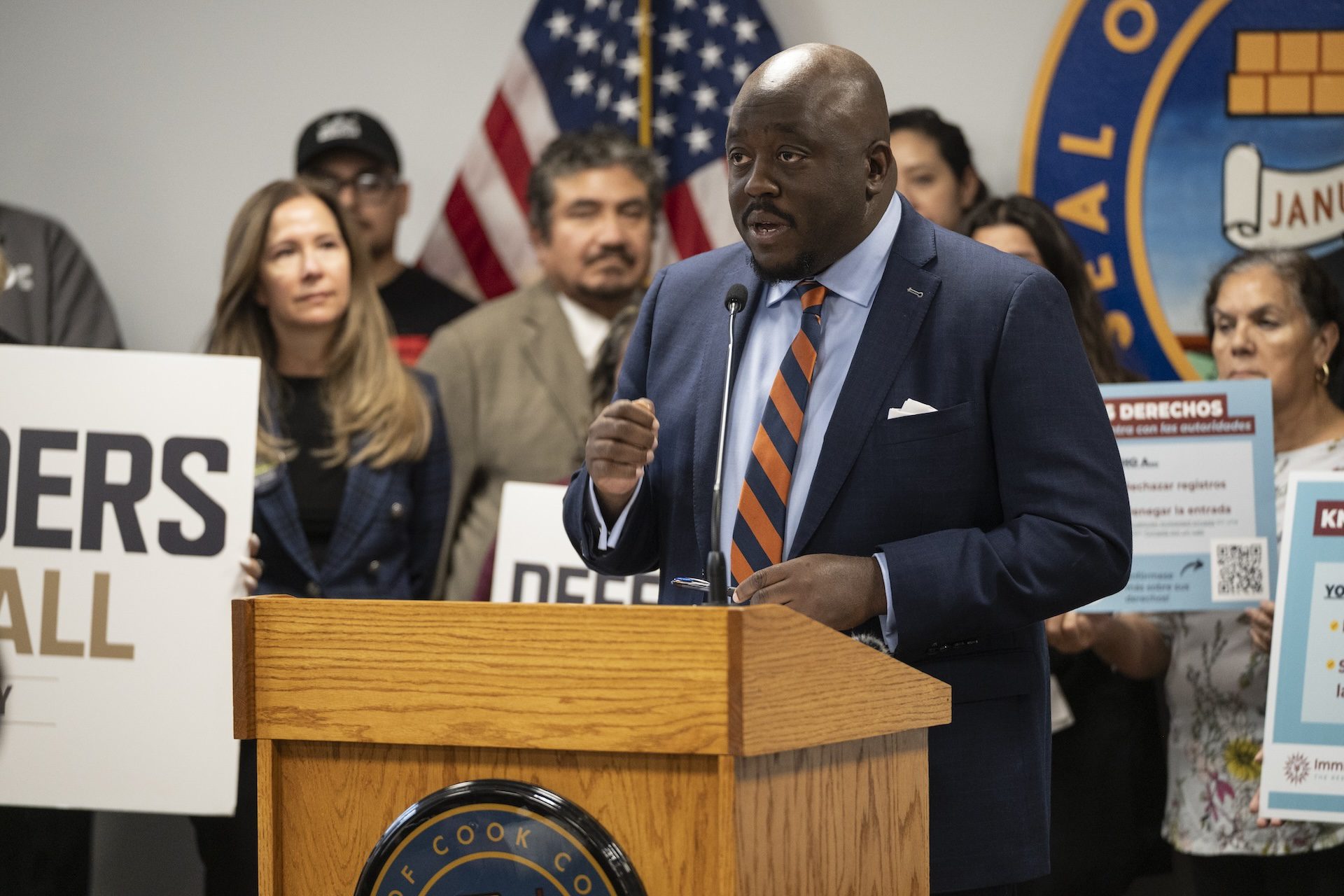
The goal is to have 12 attorneys by 2027, according to Cook County Public Defender Sharone Mitchell.
“Our immigration division is on track to become the largest provider of legal services to detained individuals in the region,” said Mitchell during a press conference in November.
The division’s aim to grow comes not only from increasing demand but also from constant changes in immigration policy, which keep the attorneys busy keeping up with the latest developments and explaining their impacts to clients.
For Rodriguez — a public defender in the immigration division — this might look like rushing to file bond motions, appearing before a judge in Memphis over Zoom the next day and then learning that the federal government paused relief, making the client no longer bond-eligible.
“It’s like this shift that keeps going back and forth, and it requires us as practitioners to always be unfortunately telling what appears to be confusing advice to clients,” said Rodriguez.
To help navigate these frequent immigration policy changes, the unit is also tasked with advising noncitizen clients about how a criminal offense may affect their ability to remain in the U.S. This advice, known as Padilla services, is mandatory for defense attorneys to let their clients know whether a guilty plea to a charge triggers the risk or certainty of deportation.
Rodriguez and others in the division advise in Spanish when needed. So far, they have consulted criminal defense attorneys representing noncitizens over 700 times.
A national model
Cases where the odds are stacked against the client have stuck with Rodriguez.
An individual Rodriguez worked with was denied representation by several attorneys who believed he didn’t have a chance to stay in the country due to his conviction.
However, the CCPD immigration division, which describes itself as “merit-blind,” represented him despite his conviction and won the case, canceling Rodriguez’s client’s removal.
“That’s something that has sat with me for a long time,” said Rodriguez. “That’s a positive outcome that I think represents what our office does.”
That is what makes the program unique, said Rodriguez, helping people fight their cases in both criminal and immigration court.
When the immigration unit was piloted about six years ago, only a handful of similar programs existed nationwide.
“There has always been a huge gap between the people who need representation and those who are facing deportation,” said Elizabeth Kenney, associate program director at the Vera Institute of Justice, a nonprofit research and policy organization focused on criminal justice reform.
CCPD’S immigration division is part of Vera’s network of jurisdictions that provide similar representation in different ways.
There has been a growing movement to close that gap over the past decade, with three jurisdictions funding this kind of work in 2016, and about 70 today, according to Kenney.
“I think the Cook County Public Defender’s [immigration] program has always been a really strong model,” said Kenney. “They’ve really stepped in and filled a huge gap for representation, particularly for people in detention, where representation is often most needed but hardest to find.”
Aydali Campa is a Report for America corps member and covers environmental justice and immigrant communities for Borderless Magazine. Send her an email at [email protected].