 Illustration by Jen Chavez for Borderless Magazine
 With new immigration directives arriving almost daily, Chicago attorneys say they’re spending more time tracking policy than preparing cases — and the lawyers fighting back say they’re running on empty.
Immigration attorney Sheila McNulty knew Guillermo would be deported to Mexico, but she wanted to at least help him see his family before he was forced to leave.
Guillermo had lived in the United States for nearly 30 years. He is married with two daughters, both born in the U.S. He had illegally crossed the border in 1999 and made a home in Chicago. Three years ago, he started a landscaping company here. But his luck turned when he went to pick up new trucks for his company last fall.
Immigration and Customs Enforcement (ICE) agents detained Guillermo as part of Operation Midway Blitz. He was sent to a detention center in Clay County, Indiana, five hours from Chicago.
News that puts power under the spotlight and communities at the center.
Sign up for our free newsletter and get updates twice a week.
McNulty filed a habeas corpus petition on behalf of her client, a procedure that would have allowed Guillermo to challenge his detention, but the petition was denied.
Guillermo was eventually released from detention at 2 p.m. on a Friday under the Castañon Nava settlement, which prevents ICE officers from making arrests and vehicle stops that violate statutory and constitutional limits. But no one was there to pick him up. McNulty’s team went into action, and connected him with a volunteer group that sent two women to get Guillermo. They drove him to Indianapolis, where his family was awaiting his arrival.
While detained, Guillermo started a prayer group. He gave McNulty and her staff gift baskets as a token of appreciation for his release. He wore a suit when meeting with a Department of Homeland Security agent in Chicago to see if ICE would grant him a 120-day extension before deportation.
Ultimately, Guillermo decided to return to Mexico on June 3 through the voluntary departure program.
Two years ago, McNulty said she would’ve been able to do more to help Guillermo remain in the U.S. But under the current President Donald Trump administration, lawyers often find they have few options to help deserving clients, and just keeping up on current policy is a struggle.
Guillermo’s case left McNulty reeling with emotion. She said she tried everything to keep him with his family, but nothing worked.
“It shows the cruelty of this law right now and the way we’re implementing it,” McNulty said.
A new day, a new policy
There have been dozens of changes and shifts in mandates during the current Trump administration, sometimes arriving weekly or even daily, affecting how immigration courts operate, according to the American Immigration Council.
On top of that, more than 70 new precedential decisions have been issued by the Board of Immigration Appeals, the highest administrative court for applying U.S. immigration law, since Trump took office last year.
The board, which is part of the executive branch and has members appointed by the president, essentially dictates how immigration judges decide cases by setting precedents on cases immigrants appeal. The pace of these changes has accelerated, leaving attorneys and advocacy groups scrambling to keep up.
When discussing immigration policies, Chicago-based immigration attorney Shannon Shepherd always tells her clients, “as things are today.” She reminds them that the policy could change at any moment.
Every time she sees a new email from the Executive Office for Immigration Review or the Board of Immigration Appeals, Shepherd asks herself, “What now?”
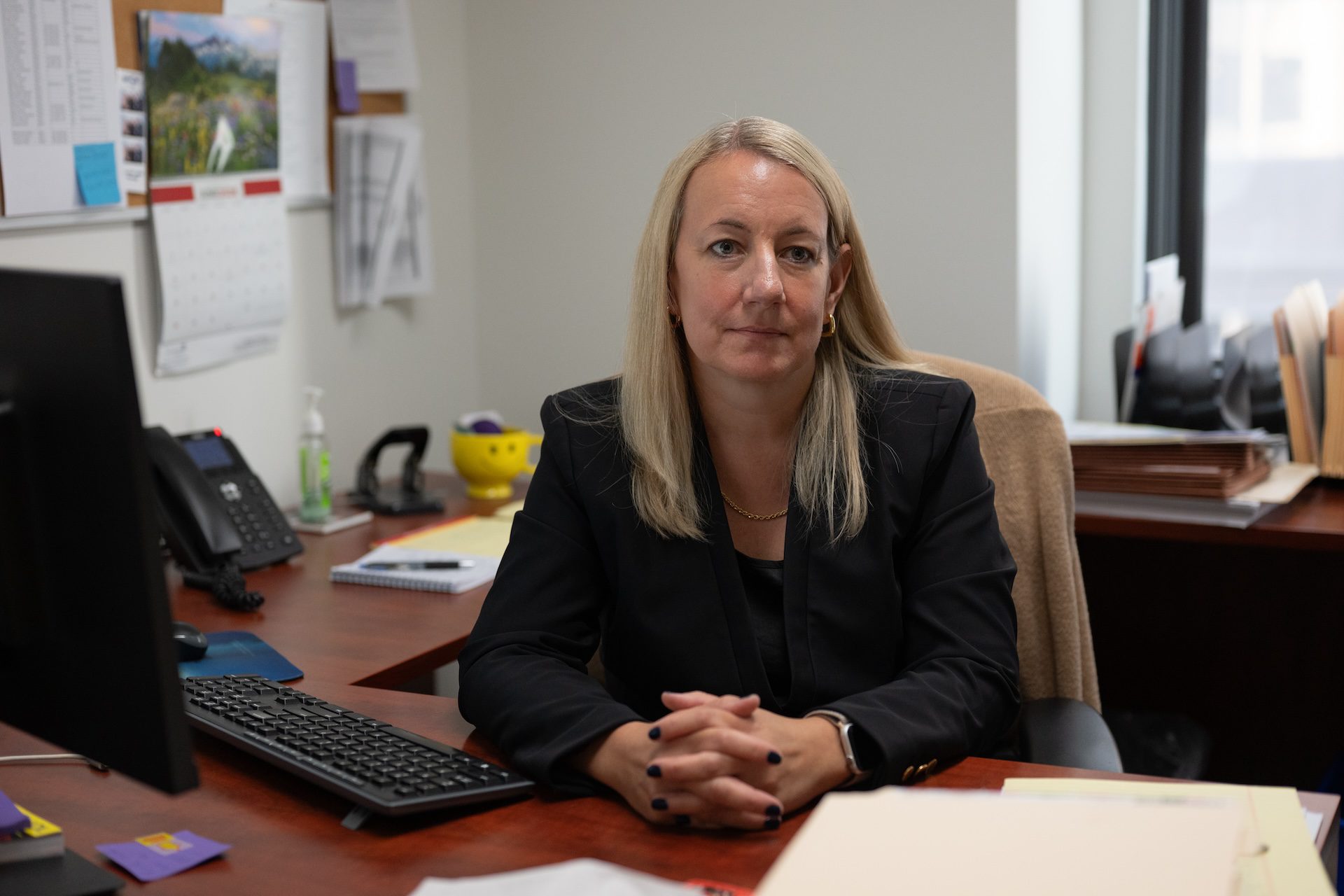
Immigration attorneys across the country have had to learn how to adapt to the constant changes and shifts. Shepherd said her strategy is to do the best she can with each case, double- and triple-checking everything she can before the individual hearings that determine an immigrant’s fate.
For Chicago-based Milla & Associates immigration attorney Eyzuri Segovia Sanchez, it’s been frustrating to spend so much time staying informed about new policy changes and shifts, especially since it means less time to prepare for individual cases.
“As an attorney, you want to make sure you are responsible to help each of your clients make an informed decision,” Segovia Sanchez said. “It’s difficult when the administration is constantly changing the policy or releasing policies they don’t really fully understand or haven’t really planned out to properly enforce. It makes it difficult for us to be proactive.”
Segovia Sanchez said she explains the risks that may arise before a decision is made on any of the lawsuits, sometimes asking clients for patience. She pointed to ongoing federal court battles over asylum restrictions at the southern border, where judges are still deciding whether some fast-track deportation policies are lawful. A ruling could determine whether certain immigrants are allowed to pursue asylum claims or are quickly removed from the country. But some people don’t want to wait, desperate for their cases to come to a decision. Segovia Sanchez said in those circumstances, she abides by her clients.
Andrea Ochoa, also with Kriezelman Burton & Associates, previously served as senior counsel, an advisory role, to the chief immigration judge at the Executive Office for Immigration Review(EOIR). As an agency within the Department of Justice, EOIR oversees the immigration court system.
Ochoa said the policy changes coming out of EOIR are a personal issue because she felt she was pushed out of the office due to how politicized it had become since Trump retook office, reversing the work she and her team had done to support immigrants.
“It was devastating to see some of the smartest and most committed judges, senior officials, and attorneys fired without cause,” Ochoa said.
Instead of letting the changes get to her, however, Ochoa said she just tries to understand the details of the new rules so she can best help her clients.
Steep bonds mean paying for freedom
One of the policy changes immigration attorneys are struggling with is the administration’s approach to bonds and detention.
In Yajure-Hurtado, a September 2025 case, the Board of Immigration Appeals reinterpreted immigration law to treat people who entered the United States without inspection as subject to mandatory detention. The practical effect of this change is that immigration judges no longer have the authority to hold bond hearings for many of these individuals. That change removes the basic procedural step that has traditionally allowed detainees to argue they are not a flight risk or danger to the community. So, instead of being released while their cases play out, immigrants are held in often prolonged detention without an individualized review from a judge, according to Clinic Legal Immigration Network.
The lawsuit Maldonado Bautista v. DHS directly challenged that framework, arguing that the Department of Homeland Security unlawfully stripped immigration judges of bond authority by reclassifying long-standing categories of detainees. A federal court agreed, holding in a February ruling that the government must allow individualized bond hearings. That ruling also vacated Yajure-Hurtado, as explained by the National Immigration Law Center. But because that ruling was stayed upon appeal in March, access to bond still varies widely. The net result is not just more people being held in detention for longer periods without bond, but also a system that is harder for attorneys to navigate and track.
On top of that, the courts have been setting bond amounts for people in detention at extremely high amounts. The minimum bond amount is $1,500, but Chicago immigration attorneys Borderless spoke to say they have seen their clients’ bond amounts steeply increase, or be denied bond altogether.

For many immigrants, a high bond is essentially a denial of bond, because they cannot afford the required amount.
Attorney Shepherd told Borderless that bond amounts often seem arbitrary. One of her clients was sent to an Indiana detention facility. After three weeks, Shepherd was able to secure the client’s release on a $3,500 bond through a habeas petition, a legal procedure that allows detained individuals to challenge their detention in court.
Shepherd recalled another client of hers who had a bond set for $12,500, the highest she’d ever seen in her years as an immigration attorney. According to TRAC data, the average bond posting was $5,000 from 2017 to 2024.
“The law should be applied equally everywhere. Immigration law should be the same in every state, so it’s frustrating that in one state my client has a $3,500 bond versus a $12,500 bond for my client in another state,” Shepherd said.
Attorney Brittni Rivera said she can’t remember the last time a client of hers was granted bond.
“I ask myself, ‘Have I done enough? Was everything I did enough?’ It’s a helpless feeling,” Rivera said.
A changed Board of Immigration Appeals
Driving a lot of the changes to the immigration court is EOIR’s Board of Immigration Appeals.
The main job of the Board of Immigration Appeals is to review decisions made by immigration judges and the government’s requests. The board has gone through personnel shake-ups and imposed rules mirroring the Trump administration’s more restrictive views on immigration, according to the Brennan Center for Justice.
Within his first month of taking office, Trump cut the Board of Immigration Appeals nearly in half. There are now 15 permanent members of the Board, 12 of whom were appointed during Trump’s first or second administration. Four temporary judges also help with the high number of appeals. They were all appointed during Trump’s two administrations.
From the start of 2026 through March 18, the Board of Immigration Appeals had sided with DHS against immigrants 90% of the time when immigrants appealed their immigration court decisions, according to NPR. In 2025, the Board of Immigration Appeals sided with DHS 97% of the time.
Shepherd said when clients ask her about their prospects before the board, she is honest. It can take years for your case to be addressed by the Board, since there are currently over 200,000 pending cases before the Board of Immigration Appeals. And, it costs about $1,030 to file an appeal with the Board.
While Shepherd notes that a person’s case is likely to be denied by the Board of Immigration Appeals, after going to the Board, they can appeal to the Court of Appeals for the Seventh District, outside of the immigration court system.
“Before Trump, there was at least a shot at the Board if a client had a good case and a good appeal,” said Shepherd. “Now it just feels like it’s hard to win at that level.”
The chaos plaguing the Board of Immigration Appeals – which Rivera calls “an interesting animal right now” – has continued in recent months.
On Feb. 6, the U.S. Department of Justice announced that the Board of Immigration Appeals was changing the deadline for appealing cases from 30 days to 10 days.
“Ten days is really not enough time when you’re talking about something that’s going to affect the rest of your life,” Rivera said. “This policy was designed to screw people over.”
Legal aid organizations sued, and a federal district judge blocked the policy on March 9, the day it was supposed to take effect.
Attorneys battling burnout
Attorney Rivera said she is “going nuts” trying to keep track of all of the immigration court changes, and she believes the Trump administration has sown chaos, in part, to make it more difficult for immigration attorneys to help their clients.
She is an attorney with Kriezelman Burton & Associates and said she feels bombarded and overwhelmed, frustrated that she receives an email or notification every day saying that there is now something else immigrants may not be eligible for.
“The landscape has changed to the point where immigration attorneys have to be on the defense 24/7 for a case, and it’s just not sustainable,” Rivera said. “It’s exhausting. It’s been a tough year.”
Burnout is a common feeling among immigration attorneys, especially during this administration. Thousands of immigration attorneys have quit since Trump retook office in January 2025, according to the American Bar Association.
Rivera encountered this feeling at the end of 2025 during Operation Midway Blitz when immigrant detentions were at an all-time high. She said her staff could not keep up with the ringing phones. Families were constantly messaging her, tasking her to squeeze their loved ones in. She was working after-hours and on weekends and wasn’t able to spend time in court because she was so busy meeting with people in her office.
Shepherd has been an immigration attorney for 20 years and has seen immigration court go through various changes. Still, she said this administration feels much different and much harder than anything she’s ever experienced.
“It’s one battle after another,” Shepherd said. “It seems like the administration was a lot more prepared this time around to shut things down and make things harder in court for immigration attorneys.”
Segovia Sanchez said the frequency of denials is defeating, especially when she knows all the correct steps were taken and her client has a strong case. Ochoa said she’s learned to pick and choose her battles, doing what she can to manage her time effectively.
But despite the challenges, the immigration attorneys Borderless spoke to expressed a desire to keep fighting for immigrant rights.
McNulty, Ochoa and Rivera, who work in the same law firm, often send each other photos of their clients reunited with their families and emails about the cases they consider wins. Rivera said it’s a reminder not to fall into a negative mindset, because the work her firm is doing is saving people’s lives.
“For all of the bad moments, horrible losses and disappointment, you still get wins even with the current administration,” Rivera said. “Even though the administration is trying to deport people, we’re still getting meaningful change.”
Shepherd recalls the case she had with a client detained in Kentucky – a 25-year-old woman who had been tortured in her home country. Shepherd had spent a lot of time with this woman, listening to her story and doing whatever she could to get her released. The case took a heavy emotional toll on her, and she was losing sleep due to constantly thinking about what other steps she could take.
But the young woman was released because a nonprofit provided the funds to pay her bond and she has returned home to her family. Shepherd met with her soon after she was released and was ecstatic to finally see her in person. Her client has an asylum hearing that is awaiting scheduling, but for now, Shepherd is just happy to see she’s finally out of the detention facility.
She considers that a huge win.
Madison Roth is a MSJ Candidate at Northwestern University Medill School of Journalism. This story was produced as part of a collaboration between Borderless Magazine and the Medill Investigative Lab-Chicago.