 Illustration by Jen Chavez for Borderless Magazine
 Amid rising ICE activity, Chicago Public Schools teachers organized on their own time to support undocumented students and families with legal resources, safe passage routes and emergency funds.
Across Chicago, high school students are navigating a new reality — one where the threat of Immigration and Customs Enforcement (ICE) follows them from home to school and back again, regardless of their citizenship status.
Teachers noticed it first in the small things: students distracted, eyes on their phones, bodies tense. Then came the absences.
News that puts power under the spotlight and communities at the center.
Sign up for our free newsletter and get updates twice a week.
As President Donald Trump’s deportation efforts increased throughout the city, teachers across Chicago Public Schools began forming sanctuary groups on their own time — organizing legal clinics, ICE watch patrols, and mental health resources. But the students they set out to protect haven’t just been passive recipients of that support. Many have found ways to move forward, even while living under fear.
Daniel, a sophomore at Curie who asked for his last name to be withheld, was distracted in his classes when Trump returned to office. He worried for his and his parents’ safety amid Trump’s deportation enforcement. Despite the worries, his counselor and school have helped in navigating mental health and economic difficulties.
As the ICE raids increased across the Chicago area, the economic situation for his family worsened as his parents weren’t able to work as much.
“There has been a point where my family has had some economic issues because with everything that’s been happening,” he said. “My parents haven’t had the most amount of work, and [my counselor] has contacted me directly about a scholarship fund.”
Meeting students and their families’ most immediate needs
For students at a Southwest Side High School, the shift was palpable when teachers began showing up differently. Sophie Bauer Schmidt Sweeney, a social studies teacher at Curie, coordinated with bilingual staff to launch regular sanctuary meetings and organized fellow teachers to sign up for ICE watch shifts outside the building.
Daniel mentioned that the sanctuary groups were most necessary since they gave students a better understanding of what to do during ICE presence, gave them a safe space and more compassion for one another.
“Sometimes teachers didn’t necessarily have to say anything. They would just have more compassion towards a student if they weren’t on top of things because it was known that everyone’s mental health was just not [the best],” he said.
These sanctuary groups have created a safe and open environment for students, so that when Daniel led a student protest approved by teachers, many students shared their feelings.
“These sanctuary groups are completely necessary for students because in the student-led protests we had megaphones and we let some students [give] speeches,” he said. “I think that these groups provide that space for students to let out all of their emotions.”
Read More of Our Coverage

While many felt too afraid to speak publicly, several described the watch shifts and Know Your Rights sessions as a turning point — a signal that adults in their building were paying attention.
“Students who are constantly being attacked by the government and constantly having to worry about the basic safety of themselves and their families are not able to access good education in the same way as a student who’s not worried about that,” Sweeney said.
Fellow Curie teacher Maria Chavez added that the sanctuary group extended its reach beyond the classroom through fundraisers and food drives to support students and their families when their needs were most immediate.
Roosevelt High School has followed in the footsteps of similar sanctuary groups. Johanna Tello, a teacher at Marine Leadership Academy and the parent of a student at Roosevelt, said the sanctuary groups have been helpful in calming her son’s fear and in warning the community about ICE interactions.
Her son, she said, has been in constant fear of his father, a legal permanent resident, being taken away by ICE. He has been asking Tello questions regarding ICE and has been worried by what he’s seen on the news and hearing stories of kids being separated from their parents.
The sanctuary groups have been reassuring multiple families.
“I talked to him about it, and I let him know that there were people [who] were helping and taking care of the community, not just our family, and that was helpful,” Tello said.
Despite support to alleviate his worries, the fear her son feels remains. It’s driven, in part, by ICE’s indiscriminate targeting of communities regardless of immigration status, she says.
“Very silent halls”
At Marine Leadership Academy, teacher Emily Porter watched attendance drop sharply as ICE activity intensified. Parents stopped letting their children take public transit. Students who left school to check on a family member sometimes didn’t return for days — or at all.
“They go to their trusted adult, they don’t come back to school. They disappear — and it’s all due to the fact that either someone has been apprehended and now the family can’t pay bills, don’t have a place to live, or they’re too scared to leave,” Porter said.
The absences told their own story.
Behind each one was a student weighing their education against their family’s safety.
Those days affected the whole school as much as they did at Curie.
“No one wanted to talk because everyone knew what was happening,” Daniel said. “It was just very silent in the halls and usually they’re very crowded, but on days [when] raids would happen, they would have [empty] space.”
At Lincoln Park High School, librarian and media specialist Andronike Giannopoulos said students of all backgrounds came forward with concerns, not just for themselves, but for friends, neighbors, and classmates.
“Our staff was also very concerned for our students, for our population, and our students of color who might be targeted because of their nationality or immigration status,” Giannopoulos said.
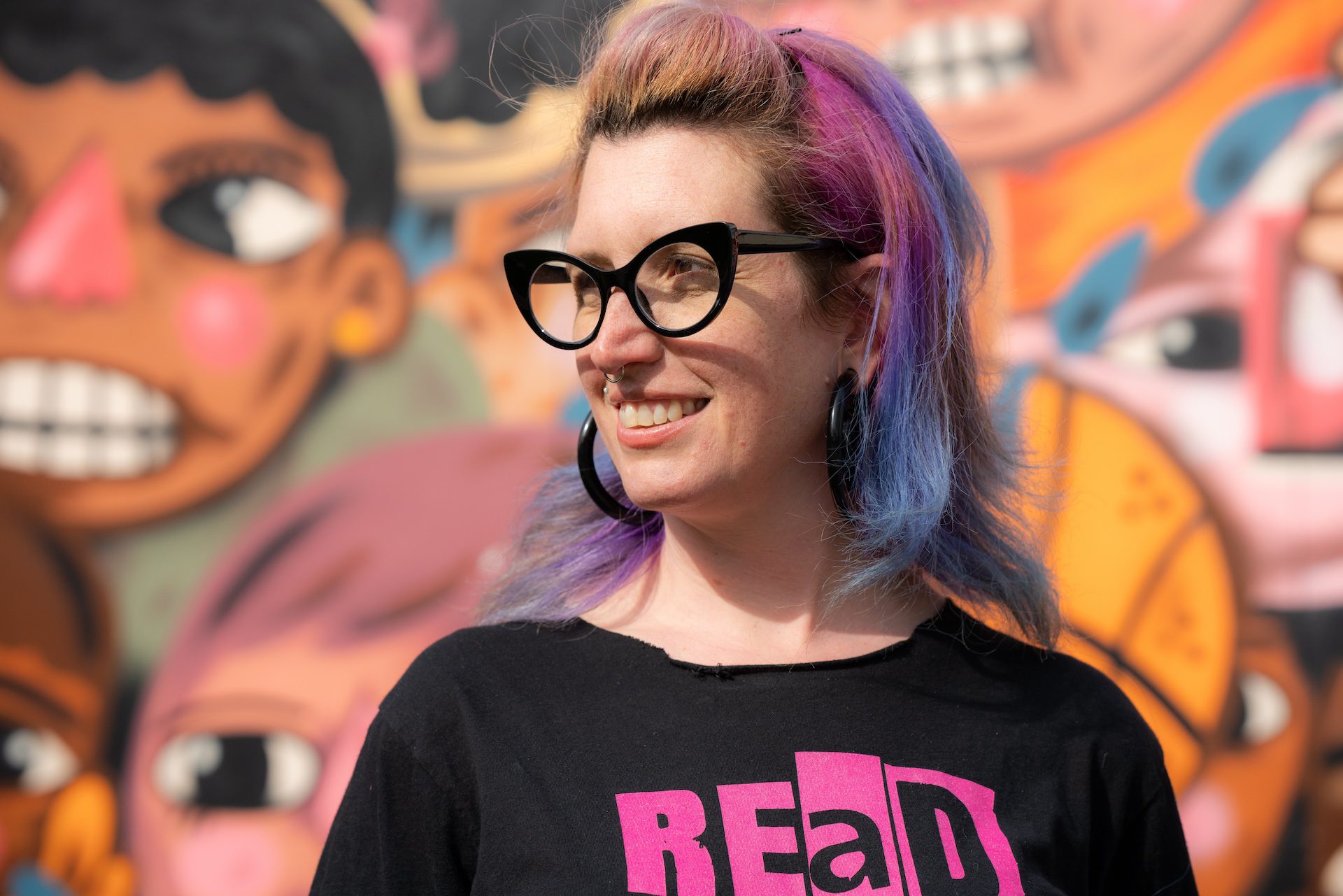
To help students physically get to school, Lincoln Park collaborated with parents to create safe passage routes. Students would stay in contact with staff while being picked up or dropped off by another family, bypassing CTA routes where they feared exposure to ICE.
The school also prioritized mental health support, bringing in counselors to work alongside students as they processed fear and uncertainty.
“It was really important to us to pull in mental health workers so that students get as much well-rounded support as possible, because they’re concerned about their family, their neighbors, themselves,” Giannopoulos said.
Building a compassion fund
At Von Steuben Metropolitan High School, staff formed a sanctuary team mirroring efforts at Curie and Lincoln Park, including ICE patrols, Know Your Rights seminars, and a compassion fund designed to ease the practical burdens fear creates.
“We’re trying to build a compassion fund so that we can support families in small ways, whether it’s through groceries or Uber gift cards,” said Elena Villarreal, a reading interventionist at Von Steuben. “Many families are scared to walk anywhere — by accessing Uber or groceries, they’re able to continue living their life without constant fear.”
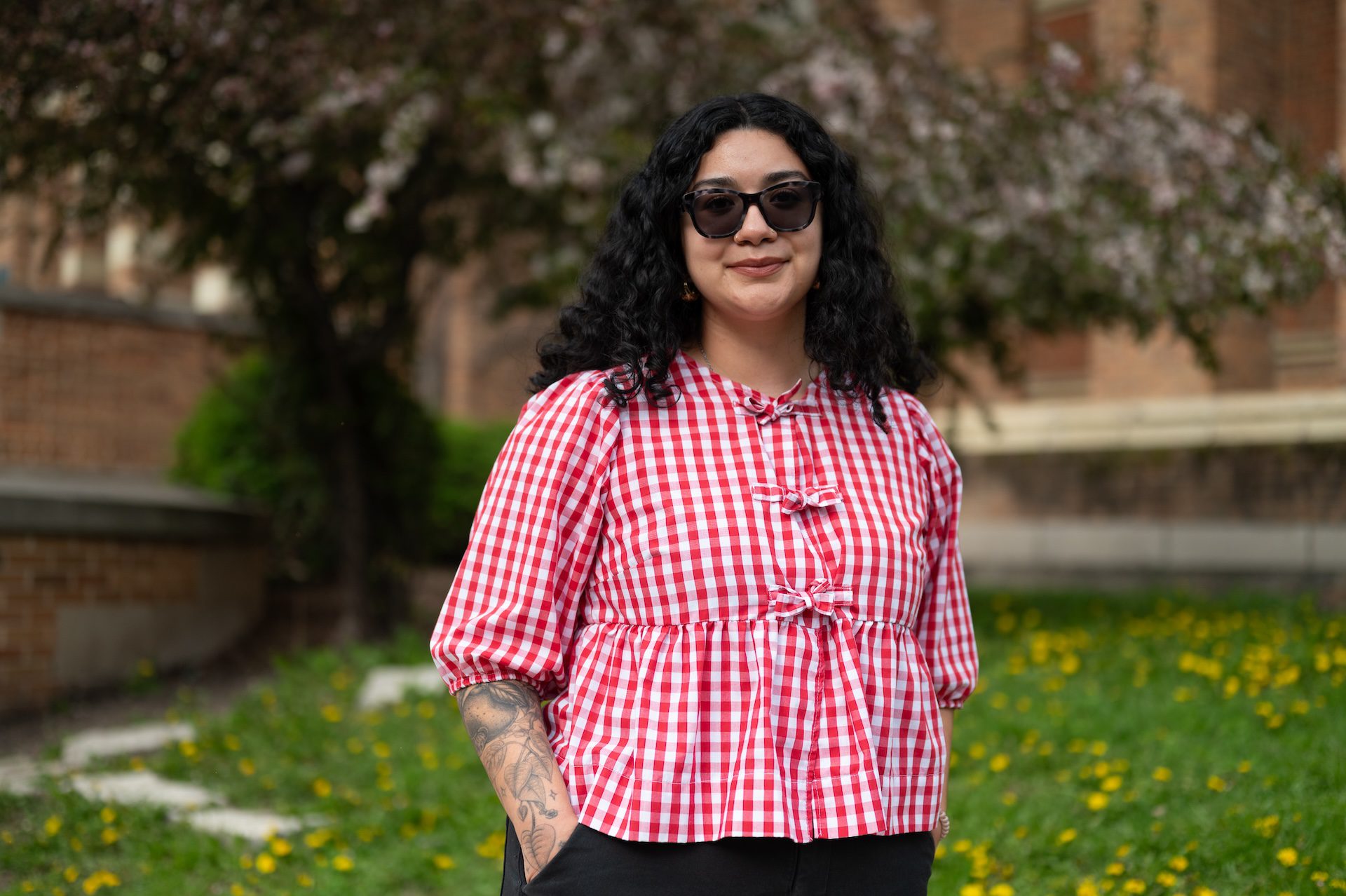
For students at Von Steuben, the fund was also their own creation: Digital Imaging students designed and sold posters — choosing the topic and content themselves — with all proceeds going directly to students and families affected by ICE.
The project gave students a way to channel fear into action and to see their own community reflected in them.
Across these schools, the throughline is the same: teachers organizing in the margins of their workday, and students finding footing in the structures those teachers built.
“We’re trying to figure out what the different needs of the community are right now, and how we can help address them,” Sweeney said, “and making sure that teachers have ‘know your rights’ information — and that students have that information too.”
Samantha Monje is a Northwestern University journalism student and contributing writer for Borderless Magazine.