 Camilla Forte/Borderless Magazine/Catchlight Local/Report for America
Experts say that, if passed, the Trump-backed bill could discourage voter participation and lead to flawed citizenship checks, impacting millions of eligible voters.
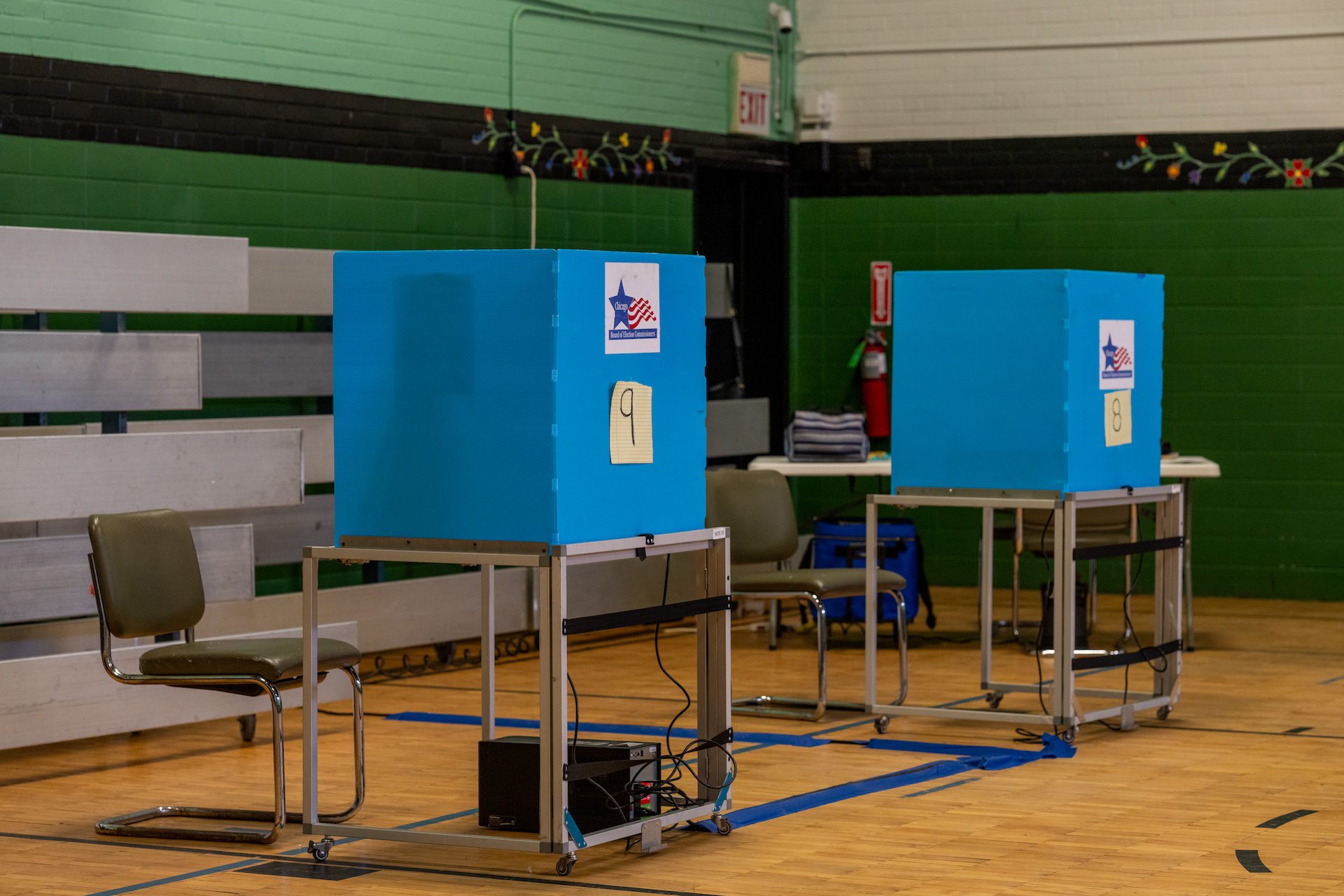
Millions of eligible voters could have a harder time casting their ballot under a bill backed by President Donald Trump and Republican lawmakers, experts say.
The bill, known as the Safeguard American Voter Eligibility (SAVE) Act or the SAVE America Act, would impose stricter voter registration requirements and limit mail-in voting if passed by the U.S. Senate.
Supporters of the bill say the requirements will reduce noncitizen voter fraud, while legal experts note that such fraud is extremely rare. Instead, they say the bill could add barriers for naturalized citizens casting their ballots.
News that puts power under the spotlight and communities at the center.
Sign up for our free newsletter and get updates twice a week.
“These illegal, over-broad attempts to restrict our rights are not the law yet, and so at every turn, we must assert our rights that we actually have now and keep defending them,” said Ami Gandhi, a civil rights attorney with the nonpartisan Chicago Lawyers Committee for Civil Rights.
Borderless spoke with voter rights organizations and legal experts about the changes the bill could bring if passed, as well as its potential impact on immigrant voters.
How could the SAVE America Act change the voting process?
Gandhi explained that the act, if passed, would:
- require voters to bring documentary proof of U.S. citizenship, such as a passport or birth certificate, while registering,
- require states to share voter registration information with the Department of Homeland Security (DHS)
- and end online voter registration.
The SAVE America Act, if passed, would also require all voters casting their ballot by mail to register to vote in-person and provide documentation proving their citizenship to an elections official.
How could this impact immigrant voters?
Gandhi said changes from the act could silence millions of eligible voters by creating barriers to voter registration — especially for immigrant communities and naturalized citizens.
“For a first-time voter, the rules … can make a difference between whether someone sticks with the process … and whether they might not follow through with voting,” Gandhi said.
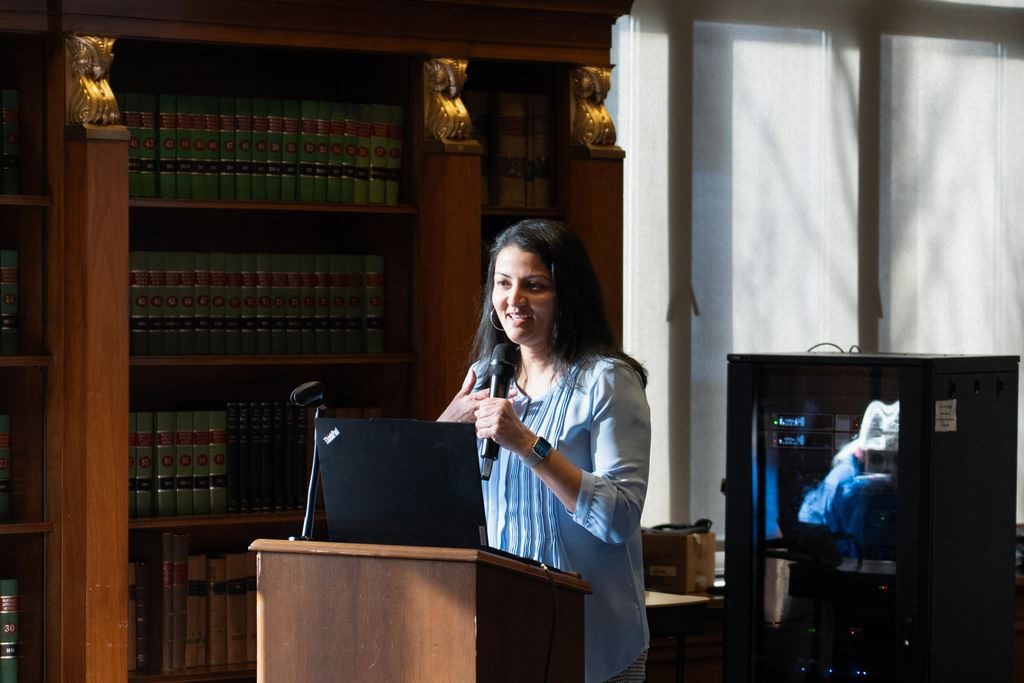
She said many immigrant voters already face barriers when voting, including difficulty with language access and unfamiliarity with the voting process.
May Tiwamangkala, director of organizing at Asian Americans Advancing Justice Chicago, said the legislation would also have an outsized impact on Asian voters, who tend to vote by mail.
According to data from the U.S. Census Bureau, almost 7 in 10 voters nationwide cast their ballot by mail or before Election Day in the 2020 election. Asian voters cast their ballot in this way at the highest rate of all racial groups, at 82%.
Tiwamangkala added that some voters who are naturalized citizens may struggle to get naturalization papers, passports or birth certificates to prove their citizenship due to cost and accessibility.
Christine Chen, executive director of Asian and Pacific Islander American (APIA) Vote, said naturalized Asian voters can also encounter clerical issues during voter registration that could affect their ability to vote under the proposed legislation.
Chen, who works with organizations nationwide to help register APIA voters, said she’s seen names misspelled due to differences in English spellings or surname order.
Changes could also affect married women who take their spouse’s last name, Chen said, since the legislation requires a person’s name to match their birth certificates.
What concerns do experts have about sharing voter data with DHS?
Gandhi said handing over voter lists to the federal government could lead to flawed citizenship checks that would exclude eligible naturalized immigrant voters.
An investigation by ProPublica and The Texas Tribune found that the federal government’s citizenship verification tool has led to “widespread misidentification” of voter eligibility, especially for citizens born outside the U.S.
Under U.S. law, it is illegal for a noncitizen to vote in any election, and instances of voter fraud have accounted for an extremely small percentage — 0.000008 percent — of votes cast in the last 11 presidential elections, according to a database by the conservative Heritage Foundation reported on by The New York Times.
Gandhi said the false rhetoric of widespread voter fraud chills voters from participating in elections.
“[Many voters] don’t even necessarily want to take the chance or take the risk of going out there to a polling place or having their name on a voter registration application if they’re receiving the message that they will be scrutinized and interrogated about their citizenship and eligibility,” Gandhi said.
Instead of changing voting rules, Chen said the federal government should focus on educating voters about the process and encouraging broader voter participation.
“A democracy is only a democracy when everyone who’s eligible is participating,” she said.
Is there any legal precedent for this act?
State legislators in Arizona passed a law in 2022 requiring voters to show documentary proof of citizenship, such as a passport or birth certificate, to register to vote.
Civil rights groups challenged the bill, and in 2025, a federal appeals court affirmed a lower court ruling against the legislation, essentially stating “that Arizonans who do not provide proof of citizenship may continue to vote in all federal elections,” according to the Brennan Center for Justice, an independent, nonpartisan legal organization that was part of the litigation against the bill.
The case, Mi Familia Vota v. Fontes, is still being litigated.
What do immigrants need to know when voting?
The SAVE America Act has not yet passed and is not law. However, some other states — such as Florida, Mississippi, South Dakota and Utah — have passed their own versions of the SAVE America Act, according to TIME.
A version of the SAVE America Act has not been passed in Illinois.
If you would like voting assistance, there are local organizations that support immigrants at the polls, including:
- Pan Asian Voter Empowerment Coalition
- Illinois Coalition for Immigrant and Refugee Rights, whose immigration and ICE hotline can be reached at 855-435-7693
- Asian Americans Advancing Justice Chicago, 773-271-0899
- Chicago Lawyers’ Committee for Civil Rights, whose voting rights program can be reached at:
• English: 866-OUR-VOTE (866-687-8683) • Spanish/English: 888-VE-Y-VOTA (888-839-8682) • Asian Languages/English: 888-API-VOTE (888-274-8683) • Arabic/English: 844-YALLA-US (844-925-5287)
The general election will be on Nov. 3, 2026. You can register to vote online here.
Katrina Pham is Borderless Magazine’s audience engagement reporter. Email Katrina at [email protected].
Update 04/14/26: The Chicago Lawyers’ Committee for Civil Rights contact information has been updated