 Camilla Forte/Borderless Magazine/Catchlight Local/Report for America
The 23-year-old never thought she could become an artist — but that changed when she met other Latino creatives.
This story was supported by the Brave of Us campaign.
*Editor’s note [12/18/25]: Borderless Magazine has chosen not to publish the full name of the interviewee to protect the individual’s safety and privacy. The source chose to use her first initial, E, for reference. For questions, please contact us at [email protected].
Growing up, E* would binge-watch YouTube videos of popular artists and musicians, like Bad Bunny and Lindsey Stirling, in awe of their work. It wasn’t until recently, after finding mentorship and community, that she realized she could be an artist, too.
E came to the U.S. from Mexico when she was 5 years old. Since then, she’s lived in the country without legal status — something that’s made accessing stable work and education more difficult. People who are undocumented can work and pay taxes as independent contractors, but finding stable, full-time work can be challenging.
News that puts power under the spotlight and communities at the center.
Sign up for our free newsletter and get updates twice a week.
More than half a million people in Illinois are undocumented, according to estimates from the Pew Research Center. Illinois is also home to the sixth-largest undocumented community in the country.
Despite the struggles she’s faced as someone who is undocumented, E says her identity and status have made her who she is today.
She said connecting with other people in the Latino community has helped her reshape the course of her life. It’s shown her that being a professional creative, as someone who is undocumented and Latino, is possible.
Borderless Magazine spoke to E, 23, about being undocumented and how she reignited her childhood passion for art and creativity.
Coming to the U.S.
Before we came to the U.S., my parents didn’t have much money. We went through poverty. My dad was working full-time and my mom was trying to get work, and they couldn’t even afford diapers. It was a challenge for them.
My mom didn’t go to school past elementary. I don’t think she even finished elementary school because her mom passed away when she was 9 from cervical cancer, and her dad wasn’t in the picture.
When my parents had me at a really young age, they decided to move because they knew that education was not the best in Mexico, and that they probably couldn’t afford it.
In Mexico, you’d only get a good education if you had money for it. Schools are usually further out, so you have to take a bus or some way of transportation and pay for books and uniforms. That’s very costly when you’re barely making ends meet with rent and food.
So my mom, at 23, immigrated here with just me and my sister, since my dad had already immigrated here. We crossed the desert when I was 5 years old.
At one point, while crossing, we were held at gunpoint by three Border Patrol agents and put in a customs jail cell for a day or two. At another point, we were also held for ransom for over a month by coyotes, who are smugglers.
Sometimes I have night terrors and dreams where I remember those days. I remember my legs were all scratched up, and at one point, I was laying in the sand, and it was cold, but I was just playing with it.
My mom had me at 18. I’m 23, and I don’t even have my life together. That drastic change at her age was a lot. But I admire her for being able to do that. To me, that’s insane, to go to a country where you don’t understand the language and you don’t understand how the system works.
“There’s a reason we’re here”
When I found out that President Donald Trump was re-elected, I was in shock and in denial. I just shut down and doomscrolled on TikTok. It was scary, especially when ICE threats started happening in January and February this year. I wouldn’t leave my house. Even going to work was scary.
I haven’t been that scared in a long time — especially as a woman and as a person of color, too.
Read More of Our Coverage
Since then, I’ve had moments where I was like, “Should I just leave? Should I apply to some study abroad program? Should I go back home to Mexico?” I have family there, but I don’t know them. I don’t have anyone that I know personally in Mexico right now.
It’s glorified to come live here, and it is better, in some ways. But we still lived through poverty here, too, and in middle school, we were living doubled up in someone’s basement. At the time, we relied on soup kitchens and food pantries through the church and other nonprofits.
When I ask my parents about moving back, they say, as bad as things are here, in their opinion, it’s still better than in Mexico.
But something my friend says is that all the things that have led up to this point are for a reason. There’s a reason we’re here in the U.S.
I’ve always known I was undocumented. Most people have a moment where they find out, but growing up, my parents always told us that life was going to be harder for us.
Being undocumented is a challenge for sure, but it’s made me who I am. It made me very resilient, hard-working and creative in finding solutions. I wouldn’t have this much grit and dedication to making it work if I weren’t undocumented.
Reigniting a love of art
I graduated from college in digital marketing in June 2024. I was a first-generation, undocumented student, but I graduated with no debt because of financial aid and scholarships I applied for.
When I graduated, I felt lost and unsure of what to do next. I had a degree, but I couldn’t really work without authorization. I also feel a lot of pressure because I’m the oldest of my siblings and the only one in my family who has a college degree.
But then I think about how my parents did it. They didn’t have a college degree, they didn’t know the language, and they still uprooted their family, and they’re OK now for the most part. If they can do it, I can do it.
After graduating college, I didn’t think being an artist was a possibility for me. I had wanted to study graphic design, but I didn’t know what a job in that field would look like, so I chose a more business-y career in digital marketing. After graduating, I worked with a small business owner doing social media management.
But I’ve always loved art.
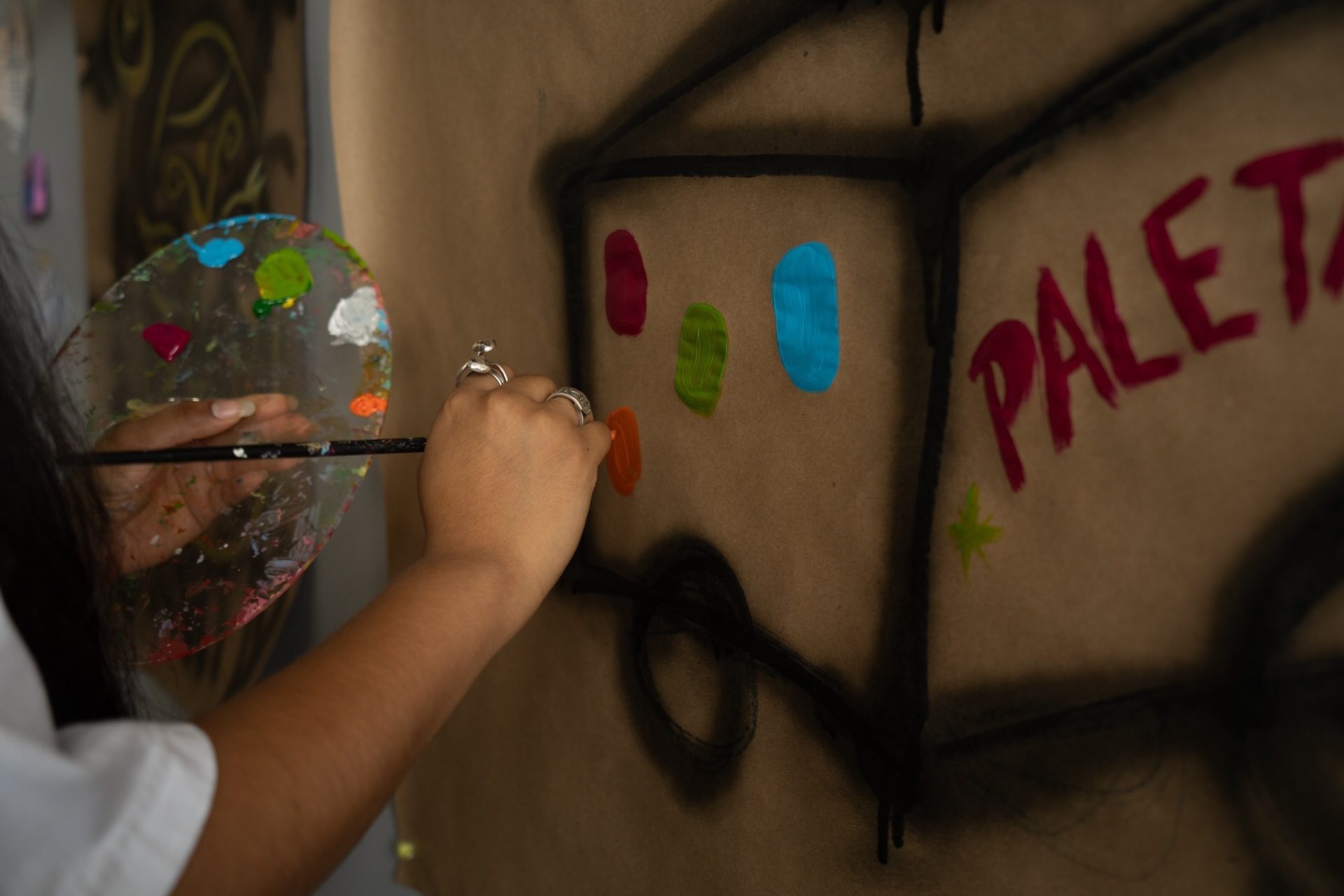
My first art obsession was the violin. I love the violin: the mariachis, but also in classical music. I would watch the violinist, Lindsey Stirling, and think, “I want to be her. I want to make music.”
I did orchestra as a kid when I lived in the suburbs, and later, my mom signed me up for a youth orchestra. I always sucked, but I still love music. When I was younger, I would download music from sketchy websites and put it into my MP3.
With photography, my dad and I decided to buy a camera and split the cost half-and-half. I took portraits of my friends in high school. In college, I stopped because it was hard to find time for my hobbies while working and doing school, but it’s been awesome to come back to photography recently.
I always loved blogging and documenting. As a kid, my sisters and I made short films to present to our family whenever they came over for Christmas. We would use iMovie and funky sound effects to make our skits.
I’ve also always loved artists and musicians. I would binge-watch them on YouTube. I was obsessed with Bad Bunny and other artists like him. But I always saw it as a life that I wouldn’t be able to do. It was just something I watched from afar.
But over the last year, my life has changed drastically.
Getting inspiration from others
One day, I messaged a local Latina photographer who’s been doing amazing work event curating, art, photography, videography, artist management and music videos. To my surprise, she responded.
At that point, I had sent a bunch of DMs to people whenever they would post that they needed help with marketing or social media, so I didn’t think she would respond. When she did, I was so excited and thought, “No way she actually responded.” I’ve been her social media manager since then.
Seeing how she did it, how she had her own studio, and how she was doing events there and building community in the art industry has made me think, “I want to be a part of this.”
She’s been my rock. She introduced me to the art and music industry and showed me that this could be something I could go into, too.
Before I met her, I wished I knew someone who was undocumented, owned a business and still continued to live their life. I wanted to have a community of people who resonated with me because I know there are so many people out there who are also undocumented.
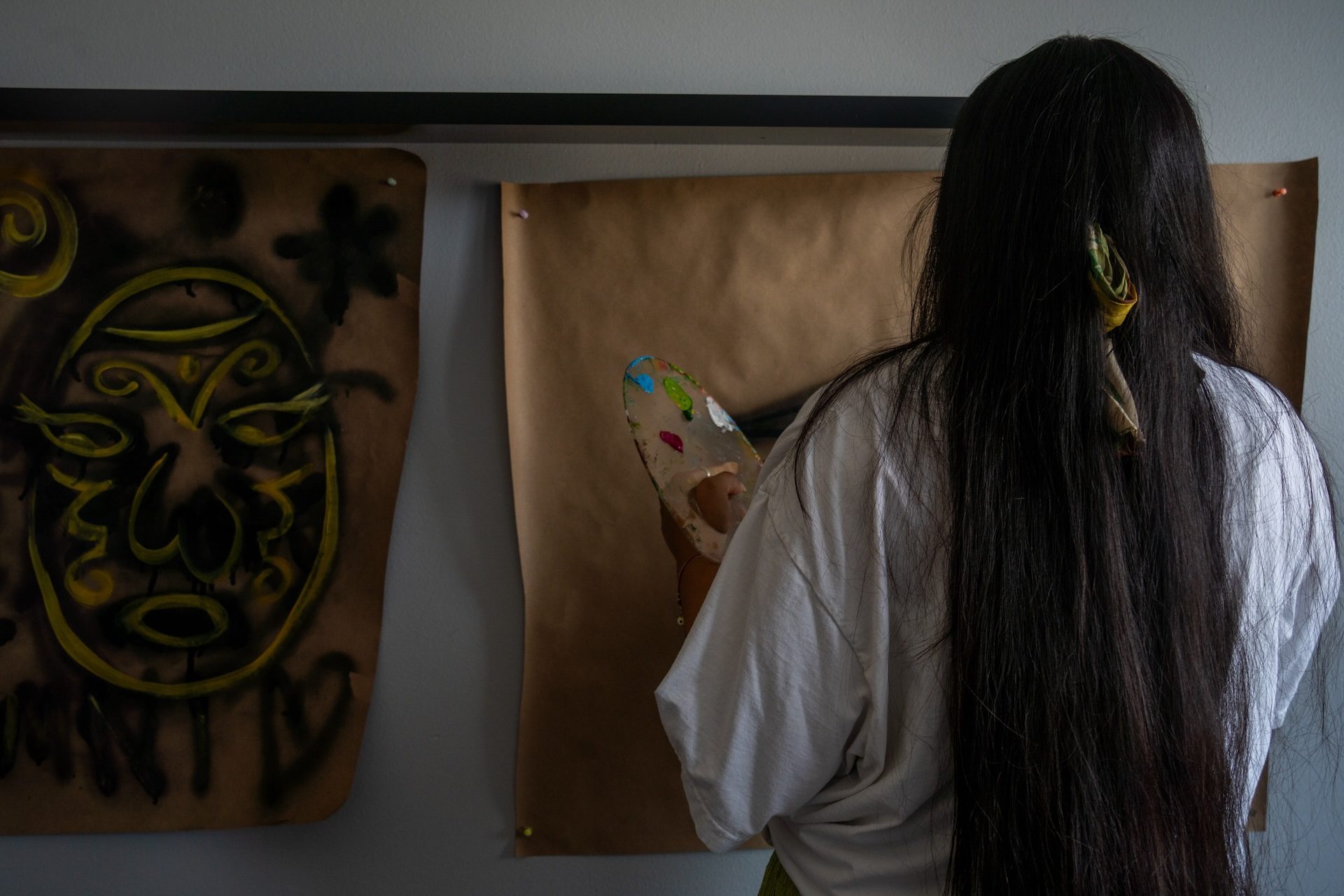
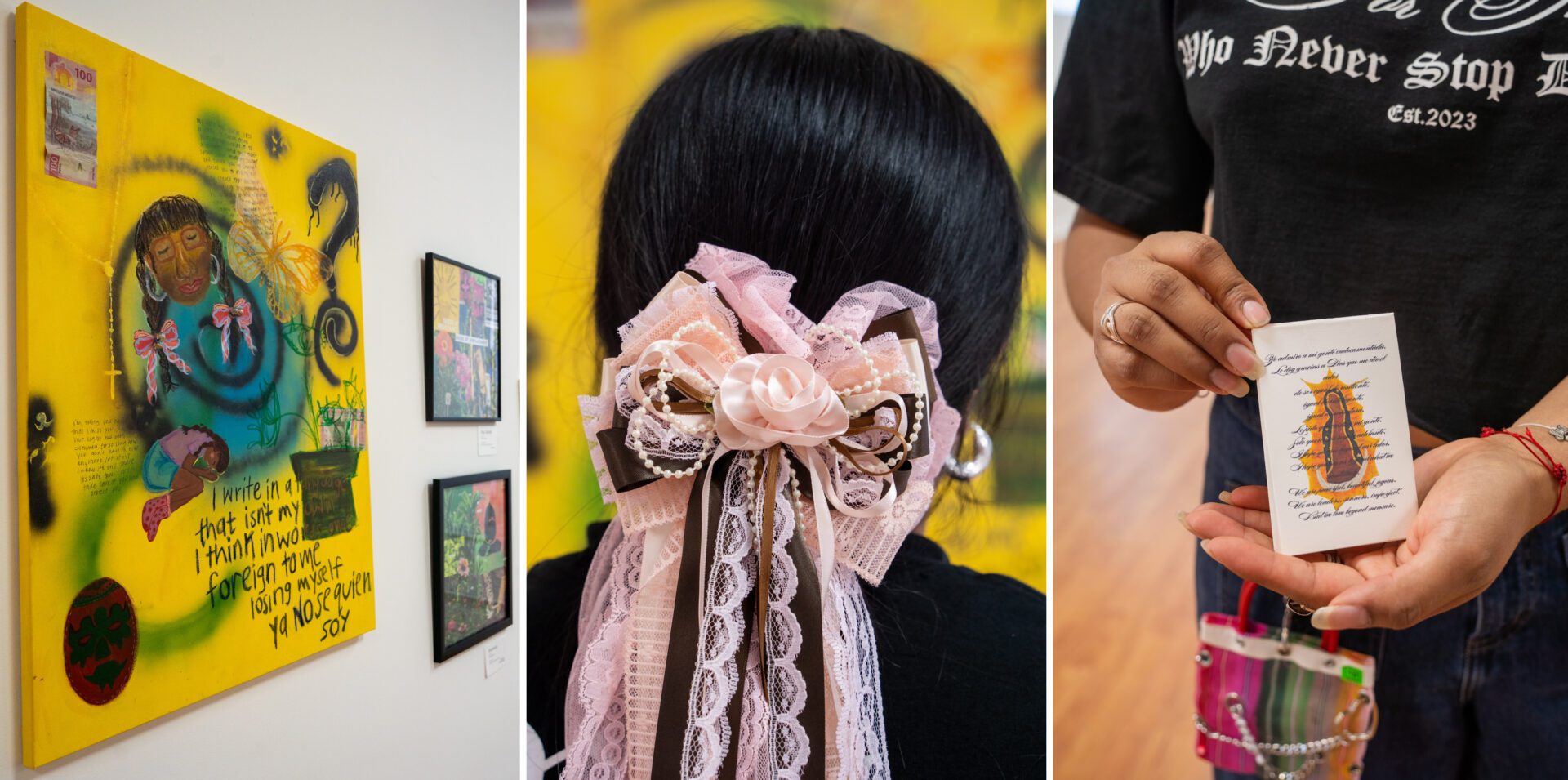
Working with her made me want to be more creative again and work on things like music videos and commercials rather than just social media management. Now, I’ve started doing photography again and making art related to my experiences being an undocumented immigrant here in the U.S.
It’s because I’ve connected with mentors who’ve introduced me to the industry and given me possibilities. I’ve thought about whether I could be doing big commercials for Adidas one day, or making a documentary about undocumented students.
That’s why it’s so important to have a foundation of people who are there with you and can answer questions about how they did things. It’s one thing to know how to do something, and it’s another thing to hear someone’s experience. Knowing people in similar situations definitely helps a lot.
What comes next
Recently, I’ve been trying to get into more gallery shows. I’m also currently looking for a studio so I can separate work from home because I work from home a lot of times. I also have undiagnosed ADHD, so it can be hard for me to focus.
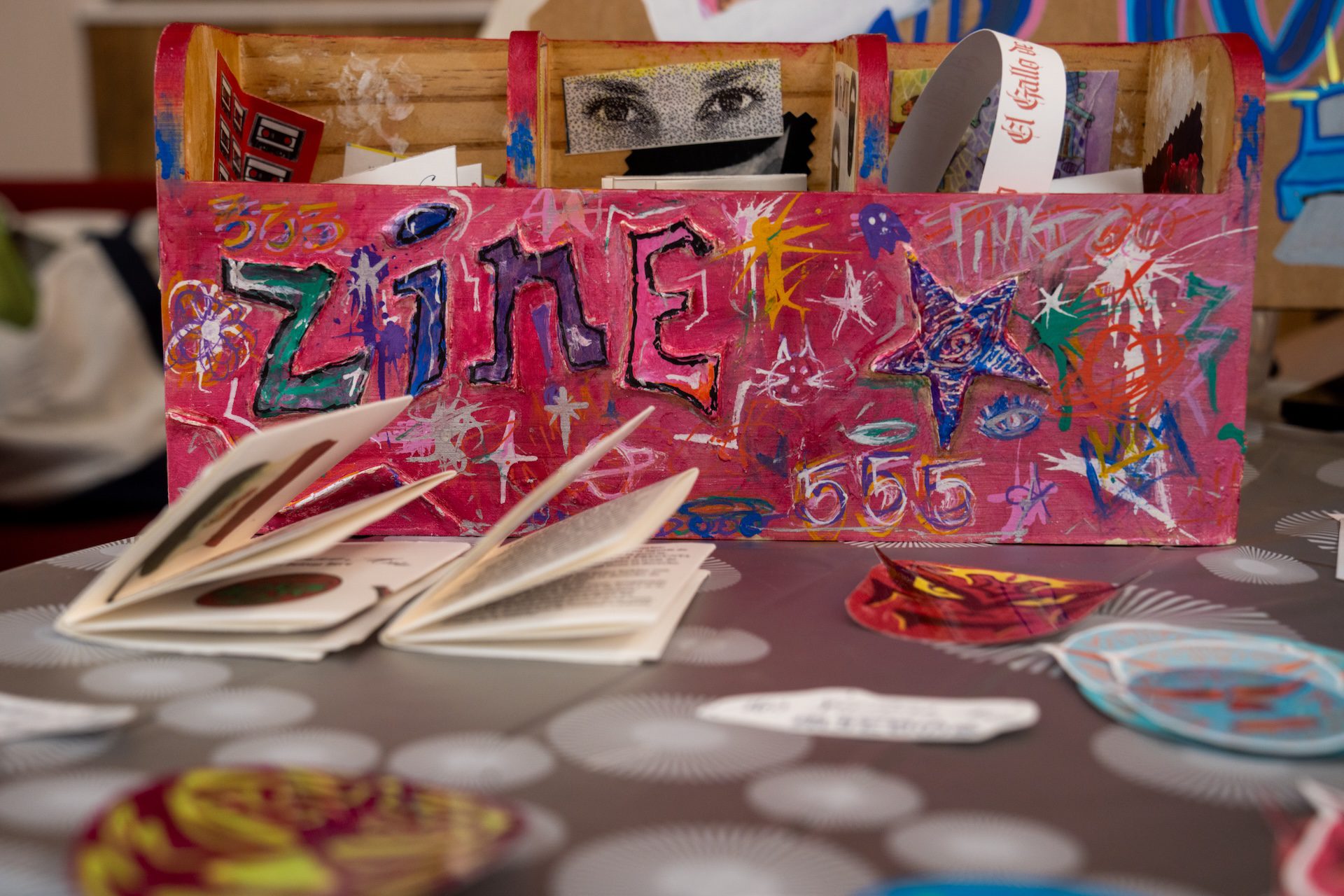
I love doing everything. It’s bad because people always tell you to pick one or two things you want to focus on. But I like trying different things. I want to experiment with acrylic painting and paper mache art. I’m not very good at it, but I like doing stuff like that. There’s a lot of things that I’d like to accomplish.
All of this is in the hope that one day, I can help my family be stable.
Under an administration like this, it’s scary to go outside, and I want to have the financial stability to be able to pay for my parents’ rent and food, so that they don’t really have to leave their home — or, if all things go crazy, I want to have the financial stability to uproot and move wherever we need to.
The media has heavily criminalized Black and Latino people, but I want my art to humanize us where the media hasn’t. People are getting used to the kidnappings where people are just being snatched up from the streets or their homes by Immigration and Customs Enforcement (ICE) agents, and that’s not normal.
For people who might not be as understanding of what undocumented immigrants go through, I hope they can read my story and see my paintings and be a little more compassionate towards people like me and more understanding of what our journeys are like.
I hope that when people see my paintings, they can see themselves in my story.
Katrina Pham is Borderless Magazine’s audience engagement reporter. Email Katrina at [email protected].
This story was produced using Borderless Magazine’s collaborative as-told-to method. To learn how we make stories like these, check out our as-told-to visual explainer.