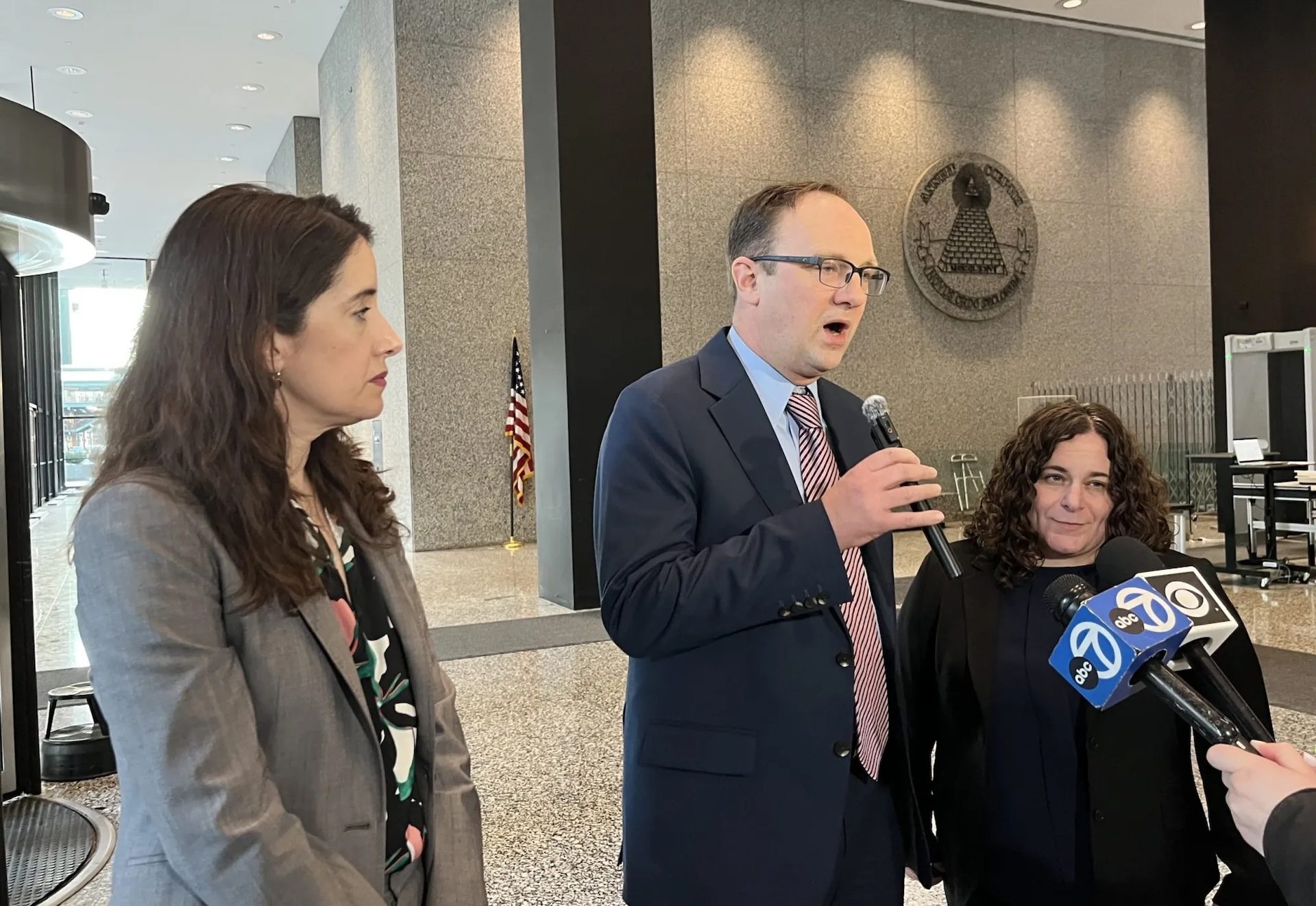
 Francia García Hernández/Block Club Chicago
El juez de distrito Jeffrey Cummings dictaminó que los agentes de inmigración deben seguir el decreto de consentimiento de Castañón Nava, que sigue en vigor.
Esta historia fue originalmente publicada en Block Club Chicago, una sala de prensa sin fines de lucro enfocada en reportar sobre los vecindarios de Chicago. Suscríbete a su boletín diario gratuito.
LOOP - Un juez federal dictaminó el viernes que los agentes de Aduanas e Inmigración de EE.UU. deben seguir un decreto de consentimiento que restringe su capacidad para detener a los no ciudadanos sin órdenes judiciales o causa probable.
Durante una audiencia celebrada el viernes en la que se anunció la sentencia, el juez de distrito Jeffrey Cummings calificó de un memorándum interno difundido el mes pasado en la agencia "incoherente" con la legislación vigente.
El memorando interno compartido con los agentes de inmigración el mes pasado amplió la capacidad de los agentes para detener a las personas que encuentran y sospechan que son inmigrantes indocumentados, en lugar de hacer detenciones selectivas con órdenes judiciales, el New York Times informó por primera vez.
Noticias que ponen el poder en el punto de mira y a las comunidades en el centro.
Suscríbase a nuestro boletín gratuito y reciba actualizaciones dos veces por semana.
Cummings dictaminó el viernes por la tarde que los agentes deben seguir el decreto de consentimiento, que prohíbe las detenciones sin orden judicial a menos que los agentes tengan causa probable para creer que alguien está en Estados Unidos ilegalmente y es un riesgo de fuga.
El fallo se produjo después de que grupos de defensa de los derechos de los inmigrantes y grupos de defensa de los derechos civiles pidieran al tribunal que aplicara el decreto de consentimiento de 2022 en lugar de permitir que la agencia de inmigración siguiera el memorando interno.
La demanda original de 2018 que dio lugar a lo que se conoce como la Decreto de consentimiento de Castañón Nava tuvo su origen en una operación de control del ICE en la zona de Chicago. De 156 arrestos durante la operación, más de 100 se realizaron sin una orden judicial. Margarito Castañón Nava presentó la demanda tras ser detenido por agentes de inmigración durante un control de tráfico en Chicago en mayo de 2018.
Uno de los requisitos del decreto de consentimiento, aceptado por el gobierno en 2022, era que adoptaría la política relativa a realizar detenciones sin orden judicial para los agentes de inmigración en todo el país, según el decreto de consentimiento.
Durante la audiencia, James Walker, abogado del Departamento de Seguridad Nacional, dijo que el departamento mantiene que el memorando y las políticas del decreto de consentimiento coexisten y no están necesariamente en conflicto. Walker compareció por teleconferencia.
"Nos sentimos más motivados que nunca después de la audiencia que acabamos de celebrar y las diversas órdenes que van a salir para obligar finalmente a esta administración a cumplir el decreto de consentimiento y, francamente, a empezar a cumplir la ley en lo que respecta a las detenciones sin orden judicial", dijo Mark Fleming, director asociado de litigios del Centro Nacional de Justicia para Inmigrantes, después de la audiencia del viernes.
Ningún abogado representante del gobierno habló con los periodistas tras la vista. Un portavoz del ICE y del Departamento de Seguridad Nacional no respondió inmediatamente a una solicitud de comentarios.
En la audiencia del viernes por la tarde, Cummings dijo que el memorando interno de la agencia plantea posibles problemas con la forma en que los agentes federales lo interpretan para justificar una detención sin orden judicial. También dictaminó que el decreto de consentimiento, que expiraba el 2 de febrero, sigue en vigor porque los demandantes han presentado tres mociones denunciando violaciones del decreto de consentimiento y de las órdenes judiciales en el litigio.
"Hasta que se haga este decreto, esa declaración de política de difusión sigue en vigor", dijo, refiriéndose a que la política se comparte ampliamente con todos los agentes del país.
La decisión es uno de los últimos litigios en virtud del decreto de consentimiento presentado por el Centro Nacional de Justicia para los Inmigrantes y la Unión Americana de Libertades Civiles de Illinois sobre las detenciones sin orden judicial realizadas por el ICE el año pasado, antes y durante la Operación Midway Blitz. Cummings dictaminó anteriormente que la agencia violó el decreto de consentimiento con docenas de detenciones sin orden judicial en Chicago y ordenó al gobierno federal que compartiera los documentos de las detenciones para revisar posibles cientos de violaciones adicionales.
En otro acontecimiento significativo del viernes, Cummings también dictaminó que los no ciudadanos que fueron detenidos en violación del decreto de consentimiento deben ser liberados sin condiciones, como se explica en el decreto de consentimiento.
La decisión se produce después de que las personas que han sido puestas en libertad han sido puestas en libertad condicional o se les ha pedido que se presenten a los controles del ICE, un "argumento basura" del Departamento de Seguridad Nacional que va en contra del decreto de consentimiento, dijo Michelle García, subdirectora jurídica de la ACLU de Illinois, también después de la audiencia.
Cummings también ordenó al Departamento de Seguridad Nacional que compartiera con los abogados los registros de todas las detenciones sin orden judicial y las realizadas con órdenes administrativas durante la Operación Midway Blitz.
Los abogados de los inmigrantes han alegado que las detenciones durante las cuales se esposaba a las personas antes de que los agentes cumplimentaran una orden administrativa también violan el decreto de consentimiento. El Tribunal de Apelación del Séptimo Circuito aún no se ha pronunciado al respecto.
Los documentos de arresto revisados por los abogados muestran que cientos, si no miles, de arrestos durante la Operación Midway Blitz se realizaron sin órdenes judiciales o con órdenes administrativas que se cumplimentaron después de que se detuviera a un no ciudadano, dijo Fleming.
"No hemos visto ni un solo expediente de detención en el que se haya realizado un análisis adecuado de causa probable o de probabilidad de fuga", declaró Fleming a la salida del tribunal.
Más información

El viernes, Cummings cuestionó repetidamente cómo el Servicio de Inmigración y Control de Aduanas y la Patrulla Fronteriza podían haber realizado detenciones selectivas si no disponían de una orden judicial, un número de registro de extranjero o información sobre la persona detenida. El Departamento de Seguridad Nacional ha afirmado que los agentes federales efectuaron detenciones selectivas durante la Operación Midway Blitz, contradiciendo las informaciones según las cuales los agentes decidían a quién arrestar en ocasiones en función de su aspecto.
"Sé que hay gente que no sabes que está aquí, pero ¿cómo harías un arresto selectivo de alguien que no conoces, o que el ICE no conoce?". dijo Cummings en la audiencia.
El tribunal tiene previsto revisar los casos de 53 no ciudadanos que parecen haber sido detenidos en violación del decreto de consentimiento, dijo Fleming después de la audiencia. Más de 120 casos adicionales aún están siendo juzgados y cientos más podrían ser revisados una vez que el gobierno comparta los registros de cientos de detenciones sin orden judicial realizadas en octubre y noviembre durante la Operación Midway Blitz, dijo Fleming.
Los abogados también habían solicitado la intervención del tribunal federal para acelerar la puesta en libertad de las personas que siguen en centros de todo el país y deberían haber sido liberadas. El viernes, Cummings ordenó que los agentes federales liberaran antes de las 17.00 horas del lunes a cinco personas que ya deberían haber sido puestas en libertad.
Cummings ordenó a los funcionarios federales que notifiquen con 12 horas de antelación a los abogados cuándo se pondrá en libertad a un no ciudadano para que pueda regresar a su hogar en condiciones de seguridad, algo que no ha ocurrido con las personas puestas en libertad recientemente en centros de todo el país.
Walker dijo en la audiencia que Seguridad Nacional no querría avisar con antelación de la puesta en libertad de una persona debido a la "preocupación de las fuerzas de seguridad por proyectar actividades con antelación", pero no pudo explicar por qué cuando fue preguntado por Cummings.
Recientemente, un abogado de inmigración se puso en contacto e indicó que su cliente había sido liberado en El Paso, Texas, a las 11 de la noche y estaba sentado en un restaurante al otro lado de la calle, dijo Fleming.
"Me gustaría que se evitara. Después de poner a alguien en libertad, no hay necesidad de lo que podría considerarse un castigo adicional", dijo Cummings.
Cummings también ordenó al Departamento de Seguridad Nacional que proporcionara informes semanales certificados sobre el número de registros de arrestos que se compartieron con los abogados y de personas arrestadas ilegalmente que fueron puestas en libertad sin condiciones. El primer informe debe presentarse el 20 de febrero.