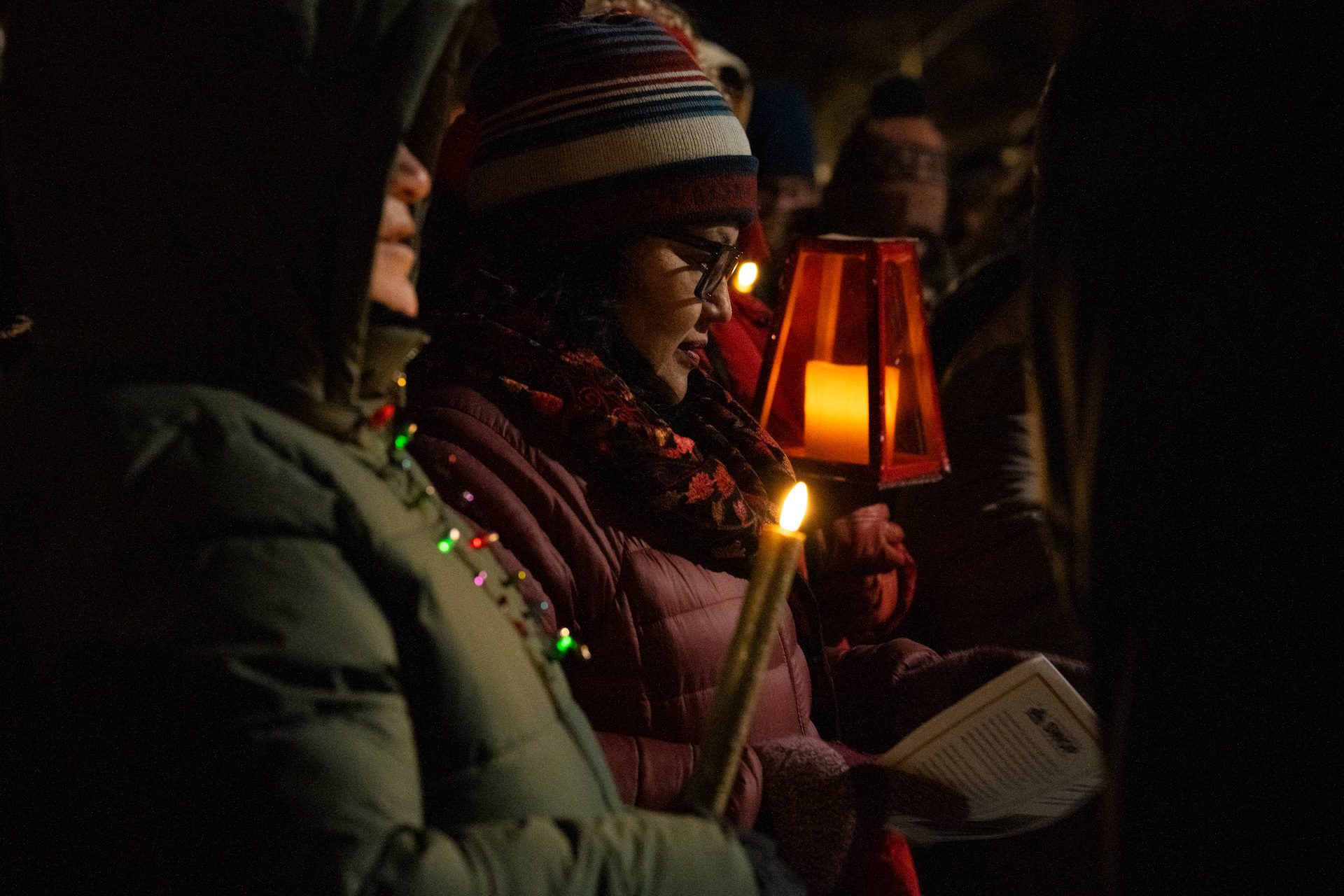
 Camilla Forte/Borderless Magazine/Catchlight Local/Report for America
For Latino, Filipino and Polish communities, Christmas Eve is a celebration of love, unity and faith.
Holiday preparations typically begin a week early for Bolivian native Sofia Rhodes.
Her family spends each day baking a variety of pastries, including a Christmas wreath made with apples, raisins and cinnamon. The preparations lead up to Christmas Eve on Dec. 24 — known as Noche Buena, or the “good night.”
For some immigrants like Rhodes, Noche Buena is the most important night of the Christmas season for Catholics as they honor Christ’s birth and preserve religious roots with festive meals, music and Mass.
News that puts power under the spotlight and communities at the center.
Sign up for our free newsletter and get updates twice a week.
Noche Buena is the final night of Las Posadas — a nine-day symbolic preparation typically celebrated by Latin American communities for Christ’s birth. The tradition involves caroling, prayers at host homes, festive meals, and music. Las Posadas reenact Mary and Joseph’s search for lodging just before Christ’s birth.
The last posada on Dec. 24, Noche Buena, can take place at Mass and officially marks the start of the Christmas season. This involves the final reenactment of Christ’s birth. Families exchange gifts and typically have a fiesta, or party, with food and music.
Timothy Matovina, a professor of theology at the University of Notre Dame, says Noche Buena is the “most sacred way to build a home for Christ to be born anew.”
Experts like Matovina say the holiday holds even more relevance than Christmas Day itself. It reminds some Latino, Filipino and European communities of the support system they have in friends and family, especially during times of hardship.
“There [are] difficult things that you have to face, and yet you never have to face them alone,” Matovina says.
Rhodes said her family typically came together for church at 10 p.m. and later ate dinner — Picana Navideña, a slow-cooked Bolivian soup with various meats, vegetables, corn, potatoes, carrots and seasoning. For dessert, they would eat buñuelos — fried dough, sometimes coated in cinnamon and served with sugarcane honey.
But Latino communities are not alone in embracing Christmas Eve celebrations.
Polish communities host Wigilia, a Christmas Eve celebration in “anticipation of the Christ-child’s arrival,” according to Beata Pawlikowska, a tour guide at the Polish Museum of America in Chicago.
Some Polish families follow a strict fast until the first star appears in the sky, symbolizing the Star of Bethlehem. The family shares an oplatek, a Christmas wafer, before sitting down to eat a dinner with 12 meatless dishes to commemorate the 12 apostles.
They attend midnight Mass after dinner and open gifts.
“In my family, it was always celebrated with great care and love shown to tradition,” Pawlikowska said. “When everyone else already is bored with Christmas, we’re just getting into the swing of things.”
Similarly, in Catholic Filipino communities, Noche Buena celebrations are particularly significant, marking a time to be present with loved ones.
Families play games, sing songs and feast, according to James Zarsadiaz, director of the Yuchengco Philippine Studies Program and associate professor of history at the University of San Francisco.
The essence of Noche Buena, Zarsadiaz said, is unity and love.
For Rhodes, it’s a reminder that she can become whoever she wants to be in the following year.
“For me, it was about the rebirth of love, that something new was born for the next year,” she said. “You can be born again into the person you want to become.”
Tara Mobasher is Borderless Magazine’s newsletter writer and reporter. Email Tara at [email protected].