 Óscar Gómez/Borderless Magazine
Un incendio en un apartamento de Chicago desplazó a 23 residentes, cobró dos vidas, y dejó a sobrevivientes como Mariana Peña Ramírez en busca de justicia.
Los sonidos de la policía y los bomberos despertaron a Mariana Peña Ramírez antes del amanecer del 15 de junio de 2024.
Los vecinos deben estar peleando de nuevo, pensó aturdida.
Pero en ese entonces, Mariana sintió la pesadez en el aire. El humo llenaba su habitación.
“Grité para que mi esposo fuera a buscar a nuestro hijo,” contó Mariana, en español, a Borderless Magazine.
Noticias que ponen el poder en el punto de mira y a las comunidades en el centro.
Suscríbase a nuestro boletín gratuito y reciba actualizaciones dos veces por semana.
Su hijo de 7 años, Adrián Matías Linares, dormía junto a ellos en una pequeña cama dentro del apartamento de dos habitaciones que compartían con otros familiares en el sur de Chicago. La familia venezolana se había mudado de un refugio de la ciudad al edificio apenas unos meses antes, como parte del programa estatal de asistencia de alquiler de emergencia para migrantes. Y ahora, su apartamento estaba en llamas.
Cuando la pareja abrió la puerta de su habitación, una nube de humo llenó gran parte del apartamento.
"No podía ver a nadie más," dijo Mariana. "Todo estaba oscuro."
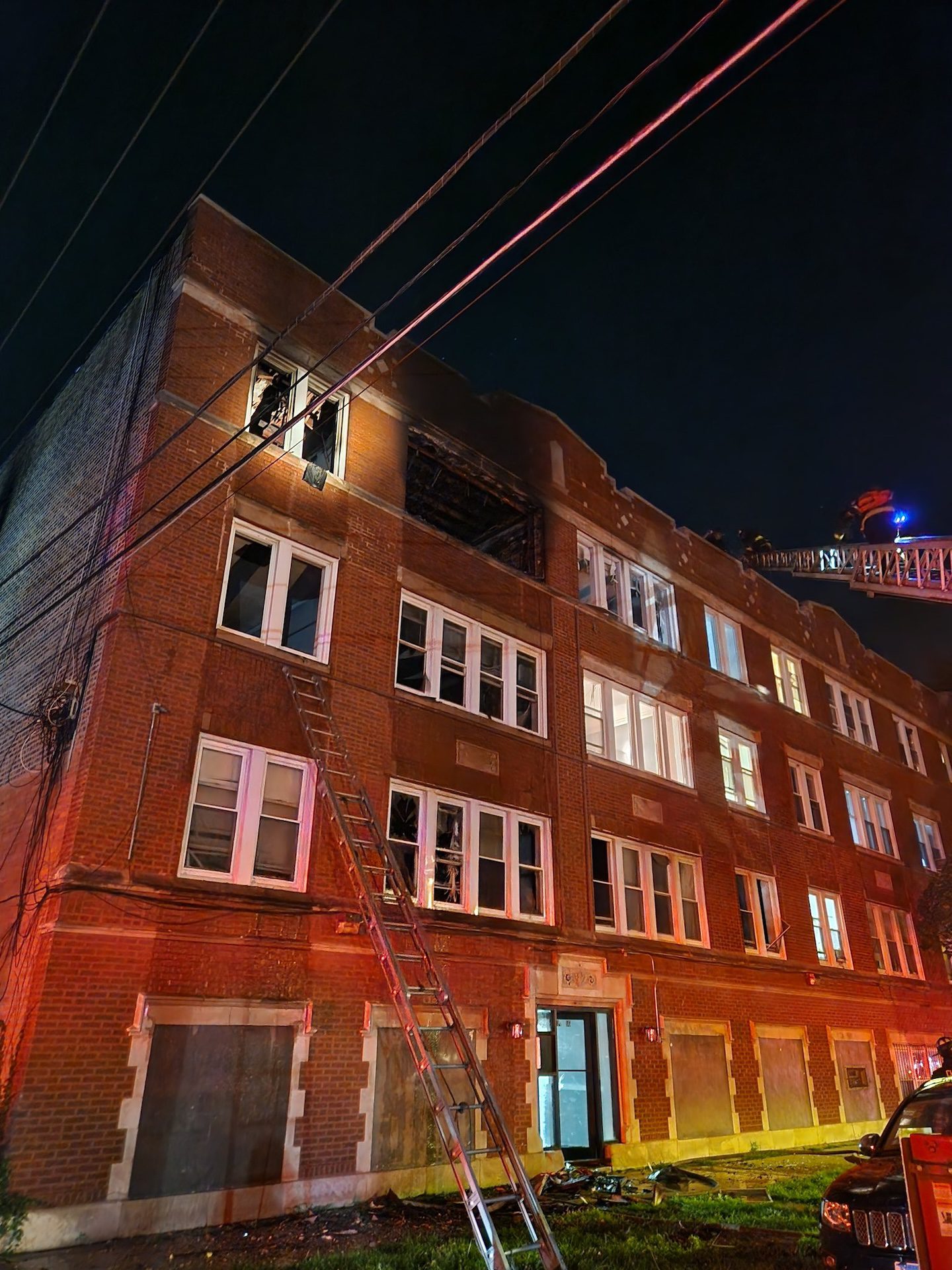
Estaban atrapados: la puerta principal del apartamento estaba frente al incendio, y tuvieron dificultades para abrir varias ventanas, según le contó la familia a Borderless Magazine.
"Buscábamos una manera de salir o escapar," dijo.
Finalmente, los bomberos ayudaron a Mariana y a su familia a escapar uno a uno por diferentes ventanas del apartamento del tercer piso. En el suelo, se enteró de que su hijo Adrián había sido trasladado a un hospital en ambulancia, pero su cuñado de 24 años, Urbna Yolmar, seguía desaparecido.
Después de varios días, ambos murieron a causa del humo y las heridas relacionadas con el incendio.
“Vinimos a Estados Unidos con la esperanza de una vida mejor para él,” dijo Mariana con la voz entrecortada. “Era nuestro único hijo.”
Más de un año después de la muerte de Adrián, Mariana sigue buscando respuestas sobre la noche del incendio, que la policía investigó como provocado.
Cuando Mariana y su familia llegaron a Chicago el pasado otoño de 2023 en busca de asilo, su sueño de encontrar un hogar se vio abatido al encontrarse atrapados en un laberinto de burocracias gubernamentales: el sistema de refugios para migrantes, el programa estatal de ayuda de emergencia de alquiler para migrantes y una investigación en curso por un incendio provocado en un apartamento que el estado les ayudó a conseguir.
De Venezuela al refugio de Halsted en Chicago
El viaje de Mariana a Chicago comenzó años antes en Venezuela, donde estudió medicina antes de pausar sus estudios para dar a luz a Adrián. Ante la incertidumbre política y económica, la familia emigró a Colombia. Allí, Mariana trabajaba en un restaurante y su esposo, Eleazar Perdomo, era repartidor. Después de unos años, la familia de Mariana solicitó asilo en Estados Unidos, ya que Colombia enfrentaba su propia incertidumbre económica y preocupaciones de seguridad.
Cruzaron la frontera entre Estados Unidos y México y llegaron a Chicago en octubre de 2023, con la esperanza de un nuevo comienzo.
"Vinimos buscando un futuro mejor, más estabilidad, mejor salud, mejor educación, y más oportunidades económicas," dijo Mariana.
Más de 51.000 personas llegaron a Chicago entre 2022 y 2024, mientras el gobernador de Texas, Greg Abbott, y otros líderes republicanos transportaban en autobús y avión a miles de migrantes y solicitantes de asilo que llegaban a la frontera a ciudades lideradas por demócratas.
A raíz de ello, las autoridades municipales abrieron casi tres docenas de refugios para migrantes en toda la ciudad para albergarlos y alimentarlos temporalmente.
A finales de octubre de 2023, Mariana y su familia se mudaron al refugio de Halsted en Pilsen, donde vivieron hasta abril de 2024.
En pleno auge, el refugio Halsted albergó a unos 2,300 recién llegados y fue el centro de múltiples investigaciones de Borderless Magazine. La primera de estas detallaba condiciones de vida inhumanas y la propagación de enfermedades. Días después de la publicación de la investigación, Jean Carlos Martínez Rivero, de cinco años Jean Carlos Martínez Rivero murió de septicemia tras contraer múltiples virus en el refugio.
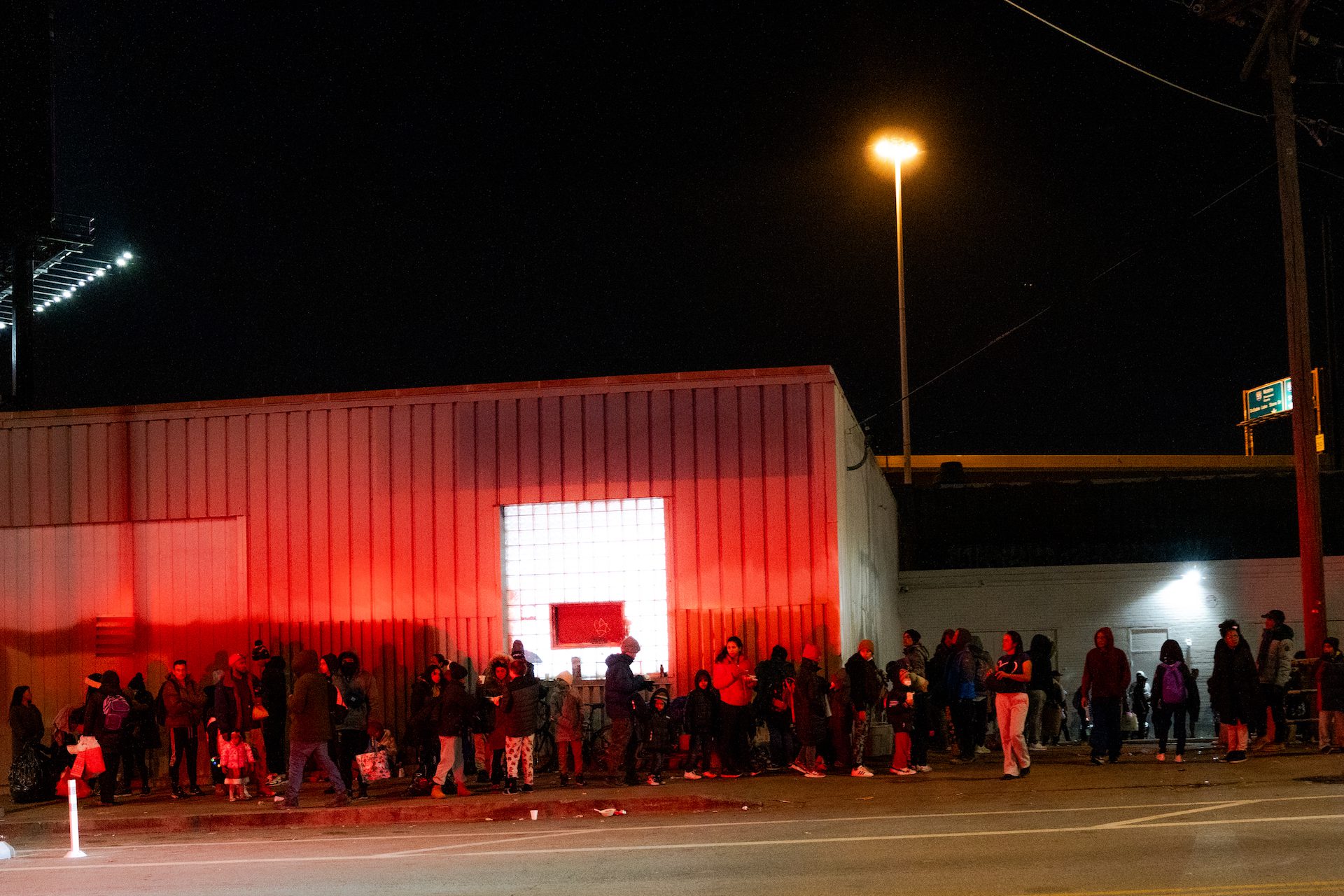
Semanas antes de su muerte, los migrantes presentaron al menos 17 denuncias ante el Office of Emergency Management and Communications, OEMC, por sus siglas en inglés, en las que denunciaban la comida en mal estado, el suministro limitado de agua y los malos tratos por parte del personal.
En quejas formales presentadas ante la ciudad y en entrevistas con Borderless, los migrantes afirman que el personal del refugio no se tomó en serio sus preocupaciones médicas. Un concejal local también advirtió a los funcionarios municipales que no se estaban tomando en serio la preocupación por la propagación de enfermedades. .
“Esta fue una muerte evitable. Y era 100% esperada,” dijo Britt Hodgdon, trabajadora social voluntaria que apoyaba a migrantes, en aquel momento. “Sabíamos que esto iba a pasar. Llevamos meses y meses alzando la voz”."
El Halsted Shelter cerró en septiembre de 2024 debido a la continua preocupación por las condiciones sanitarias, incluyendo un brote de sarampión y denuncias de maltrato. Muchos migrantes y defensores de los inmigrantes celebraron la medida de la ciudad de reducir gradualmente el sistema de refugios temporales.
“Cuando nos llevaron al refugio, era muy difícil vivir entre [miles] de personas,” dijo Mariana. Aun así, estaba agradecida de tener un lugar donde dormir. “No era muy cómodo, pero con el paso de los meses, uno tenía que adaptarse.”
Pero para Mariana y muchos otros, encontrar un hogar permanente después de salir de los albergues no fue fácil.
Vivienda “digna, segura, e higiénica”
Mariana y su familia se enteraron por primera vez de la existencia del programa estatal Asylum Seeker Emergency Rental Assistance Program, (ASERAP, por sus siglas en inglés) mientras vivían en el refugio Halsted.
Lanzado en diciembre de 2022, ASERAP ofrecía una subvención única de hasta $15,000 para ayudar a los migrantes recién llegados a encontrar una vivienda asequible. El programa, administrado por el Illinois Department of Human Services (IDHS, por sus siglas en inglés) con el apoyo de Illinois Housing Development Authority (IHDA, por sus siglas en inglés), cubría inicialmente seis meses de asistencia para el alquiler antes de que el estado limitó el programa a tres meses para los migrantes que accedieron a los albergues antes del 16 de noviembre de 2023.
En aquel entonces, líderes locales promovieron el programa como una medida estatal fundamental para proveer vivienda alternativa y respaldar a la ciudad para recibir a los miles de migrantes que llegaban a Illinois.
“Dado que muchos de los solicitantes de asilo no dominan el inglés o carecen de conocimiento del idioma , el IHDA diseñó el programa intencionalmente para garantizar que no encontraran ningún obstáculo para emitir una solicitud”, escribió el estado en una solicitud de adjudicación de 2023 al National Council of State Housing Agencies.
“Con el respaldo de los proveedores de [Housing Stability Service] HSS identificamos propietarios con unidades disponibles para alojar de forma segura a los residentes, ya que los solicitantes de asilo se encontraban en un entorno desconocido y requerían asistencia inmediata y crucial” indica la solicitud.
El estado indicó que los proveedores de vivienda deben asegurar que “la vivienda que proveen sea digna, segura, y higiénica.”."
Los trabajadores sociales de Caridades Católicas ayudaron a familias en los refugios — como la de Mariana — a encontrar vivienda y solicitar fondos de ASERAP.
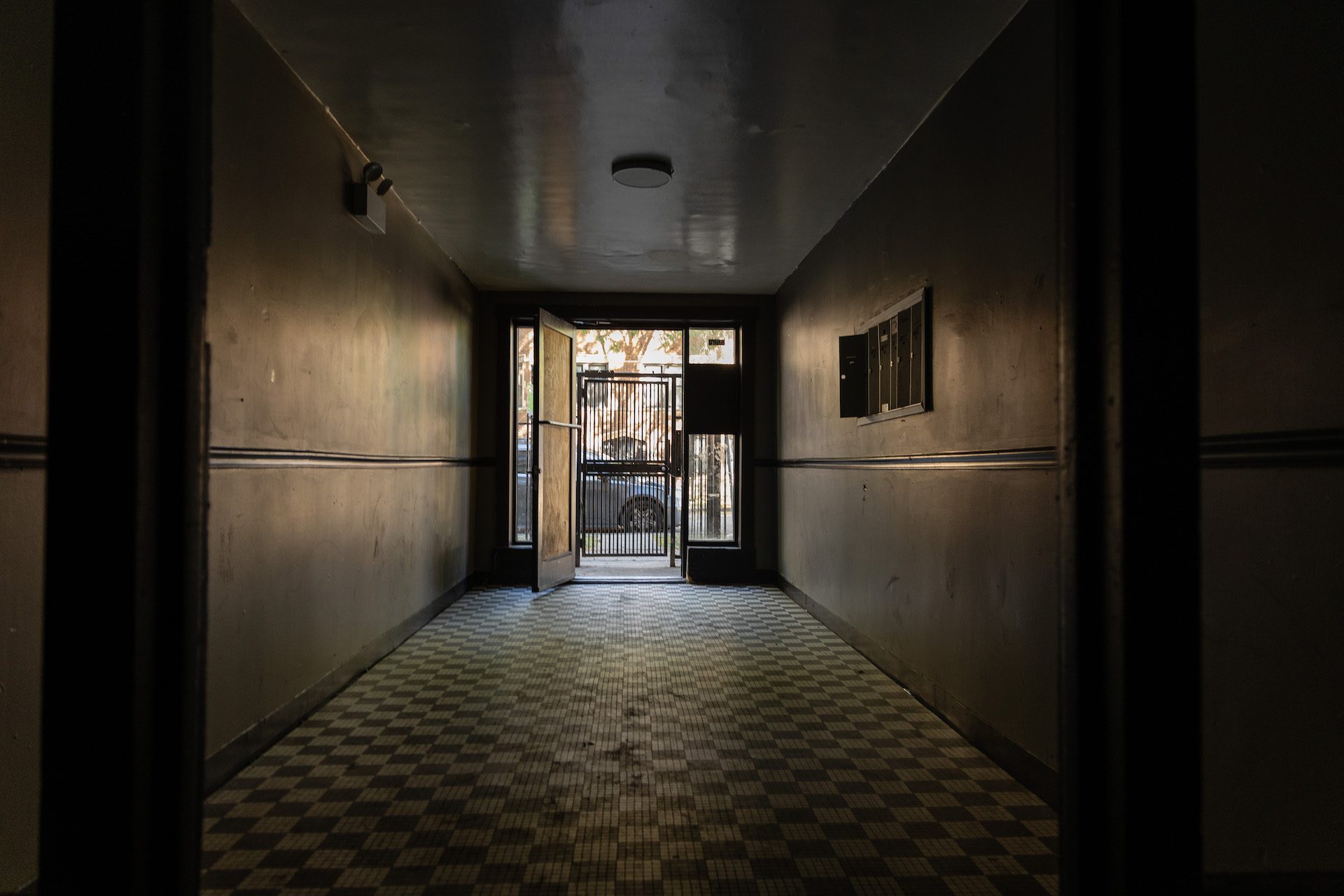
De diciembre de 2022 a Diciembre de 2024, el estado ayudó a más de 6.600 personas a mudarse de albergues a apartamentos como parte del programa, según datos del IDHS entregados a Borderless.
Sin embargo, el reasentamiento de los recién llegados a los vecindarios afroamericanos de Chicago aumentó las tensiones entre los residentes locales de largo tiempo, quienes señalaron que la ciudad favorecía a los recién llegados en la distribución de recursos.
South Shore se convirtió en la vecindad principal donde los migrantes encontraron vivienda permanente a través de ASERAP, según registros de FOIA solicitados por Borderless. Muchas familias se quedaron en comunidades segregadas y escuelas con una escasez de recursos, sin servicios bilingües,informaron Chalkbeat Chicago y Block Club Chicago.
En abril de 2024, Mariana y su familia se mudaron a un apartamento de dos habitaciones en South Shore a través del programa ASERAP. Siete personas vivían en el apartamento, incluyendo su hijo, su esposo, el hermano de su esposo y la familia de su hermana, que incluía a su cuñado y su sobrino de tres años. La familia estaba agradecida de tener baño y cocina privada tras vivir en el refugio.
“Era nuestra primera vez viviendo en un edificio de apartamentos en Estados Unidos,” dijo Mariana.
Pero su ilusión se desvaneció rápidamente.
Poco después de mudarse, la familia de Mariana se dio cuenta de la frecuencia con la que se llamaba a la policía por distintos problemas.
La policía respondió a más de una decena de llamadas de auxilio del apartamento y sus alrededores, meses antes de la mudanza de la familia, según datos de la ciudad de Chicago. Las quejas incluían disputas domésticas, robos y asaltos.
“La policía siempre estaba aquí,” dijo Mariana. “Los bomberos siempre estaban aquí.”
La familia escuchaba con frecuencia discusiones en una de las otras unidades del edificio, recordó Mariana. Durante el poco tiempo que estuvieron en el edificio, le dijo a Borderless que su correo había sido quemado y que el coche de su cuñado sufrió daños tras ser chocado mientras estaba estacionado afuera.
No denunciaron el incendio provocado ni los daños a la policía porque pensaban que la situación era “normal” en Estados Unidos, dijo Mariana.
Registros de inspección de edificios
La familia tampoco sabía que el apartamento al que llamaban hogar tenía un largo historial de infracciones del código de construcción y varios propietarios a lo largo de los años.
Recientemente, 7756 S Phillips Limited Liability Company compró el edificio en abril de 2023. Según los registros de la propiedad, el inmueble tiene dos direcciones registradas: 7756 S. Phillips St. y 2414 E. 78th St.
Los documentos hipotecarios muestran que Yissocher Rotenberg figuraba como miembro gerente de la LLC. Chicago Crossing Management LLC estaba autorizada para administrar la propiedad, y Chicago Crossing completó la solicitud ASERAP para la propiedad en marzo de 2024, según los registros ASERAP obtenidos por Borderless Magazine.
Bajo el programa ASERAP, el estado pagaba un depósito y $1,700 mensuales al propietario para cubrir el alquiler, según un contrato de arrendamiento compartido con Borderless Magazine.
Una revisión de los registros del Departamento de Edificios reveló varias infracciones al código de construcción identificadas en inspecciones municipales realizadas entre 2006 y 2022.
Durante ese período, los inspectores señalaron problemas en el edificio, como la escasez de detectores de humo o con baterías bajas, salidas bloqueadas y la acumulación de basura. Algunas de las infracciones anteriores que no se corrigieron dieron lugar a al menos 11 audiencias administrativas para abordar las infracciones del código de construcción, según los registros del edificio.
Las infracciones que dieron lugar a audiencias administrativas se han sido completamente corregidas antes de 2023, según el departamento jurídico de la ciudad.
El subcomisionado del Department de Buildings, John Scott, le declaró a la revista Borderless Magazine que la agencia llevó a cabo “inspecciones permanentes aquí” en la propiedad debido a su historial de infracciones.
Sin embargo, Borderless no encontró informes de inspección de 2023 ni de 2024, el tiempo por la cual el propietario del edificio comenzó a recibir fondos del ASERAP y en el que ocurrió el incendio.
Más información
Al preguntarle por qué no se realizó ninguna inspección en el 2023 y 2024, un portavoz del Department of Building, Nefsa’Hyatt Brown respondió en un correo electrónico que la agencia está “obligada a realizar inspecciones periódicas, no anuales."
Tras el incendio de junio de 2024, la propiedad sufrió daños severos, entre ellos problemas con la calefacción. Los funcionarios municipales no lograron ponerse en contacto con 7756 S Phillips LLC y Rotenberg después del incendio, y en julio de 2024 un juez nombró a un administrador judicial para ayudar a coordinar y desalojar el edificio, según Scott y Brown, del Department of Buildings.
“La propiedad se encuentra actualmente bajo administración judicial, y el administrador judicial la mantiene desocupada y segura”, afirmó un portavoz del Departamento Jurídico de la ciudad en un correo electrónico.
Rotenberg no respondió a las múltiples solicitudes de comentarios.
El sistema de verificación del estado
Los funcionarios estatales que supervisan el ASERAP aprobaron que el apartamento fuera un refugio para los recién llegados a finales de marzo de 2024, según los registros del IDHS obtenidos por Borderless.
“Cuando el solicitante del ASERAP presentaba su solicitud, la Autoridad de Desarrollo de la Vivienda de Illinois (IHDA) comprobaba si la dirección infringía alguna normativa vigente y remitía los resultados al Departamento de Servicios Humanos de Illinois para que tomara una decisión definitiva”, explicó Andrew Field, subdirector de asuntos gubernamentales y especialista en relaciones públicas de la IHDA.
“Esto [la evaluación] se hizo para garantizar la salud y la seguridad de los solicitantes de asilo mientras continuaban su camino hacia la independencia y la prosperidad en Estados Unidos”, dijo Field.
Los registros ASERAP de IHDS indican que los funcionarios estatales no encontraron ninguna infracción activa del código de construcción cuando aprobaron el edificio para el programa.
Las agencias informaron a Borderless Magazine que los solicitantes de ASERAP recibieron “un conjunto de herramientas para facilitar su búsqueda de vivienda, que incluía información sobre cómo prepararse para una visita a la unidad, una lista de verificación para la visita, e información sobre los derechos y responsabilidades de los inquilinos.”
En respuesta a las preguntas de Borderless sobre el proceso de evaluación de apartamentos, la portavoz del IDHS, Rachel Otwell, declaró que los propietarios firmaban un contrato de arrendamiento en el que se estipula que los inquilinos podían abandonar la vivienda y rescindir la relación si el edificio o la vivienda infringían los códigos de construcción.
Los propietarios también debían completar una solicitud en línea que validaba la propiedad, el número de la seguridad social y un documento de identidad con fotografía. Si un propietario no entregaba las llaves, había que seguir una serie de pasos para que se devolvieran los fondos y se anulara el contrato de alquiler, explicó.
Si la vivienda o el edificio infringen el código de construcción y/o la ordenanza local sobre arrendadores y arrendatarios, el arrendatario tiene derecho a rescindir la relación entre arrendador y arrendatario y desalojar la vivienda en un plazo de 30 días, de acuerdo con el contrato de arrendamiento.
Cuando el apartamento fue aceptado en el ASERAP, los migrantes tenían la responsabilidad de irse o presentar una queja si creían que el propietario estaba infringiendo los códigos de construcción. Pero para familias como la de Mariana, que no hablan inglés y que pasaron meses moviéndose de la pobreza a refugios de la ciudad, la línea entre lo normal y lo ilegal en Chicago a menudo no estaba clara.
Para familias como la de Mariana, que se enfrentaban a barreras lingüísticas y habían salido recientemente de la pobreza y de los albergues de la ciudad, comprender la diferencia entre las condiciones ordinarias de la vivienda y las posibles infracciones en Chicago resultaba a menudo difícil.
Otwell señaló que “ IDHS, el Illinois Housing Development Authority, y los socios de vivienda ocasionalmente recibían quejas de inquilinos que recibían asistencia del programa. Si un propietario recibía múltiples quejas, dejaba de ser elegible para recibir fondos de ASERAP.”
No está claro cómo el estado rastreó estas quejas.
Borderless presentó múltiples solicitudes de registros de quejas presentadas ante el IHDA y el IDHS, pero se le informó que ninguna de las agencias tenia dichos registros.
“El IDHS no es responsable de monitorear las quejas sobre las condiciones de vivienda presentadas por inquilinos que se mudaron a apartamentos bajo Asylum Seeker Emergency Rental Assistance Program,” escribió la agencia en respuesta a una solicitud de registros de la revista Borderless.
“La autoridad no mantenía un proceso formal de quejas ni un formulario para presentar quejas”, según la respuesta de IHDA a la solicitud de Borderless de FOIA. “No había una forma de ‘presentar’ quejas ante la autoridad” y “los inquilinos podían quejarse de sus condiciones de vivienda de manera informal ante la autoridad o sus socios por correo electrónico o verbalmente, y los registros de esas comunicaciones verbales podían incluir notas en los expedientes de solicitud”.
Después del incendio
Tras escapar por las ventanas la noche del incendio, Mariana y su familia vieron con horror cómo los bomberos combatían las llamas que consumieron su apartamento.
Esperaban respuestas sobre el estado de su cuñado, Urbna Yolmar.
Mariana recordó que un familiar intentó entrar corriendo, pero no pudieron salvarlo.
Yolmar intentó abrir la puerta del pasillo con la esperanza de ayudar a la familia a escapar, pero quedó atrapado por el humo, según informó la familia a Borderless Magazine .
Fue declarado muerto poco después de las 6:30 a.m. Murió por inhalación de humo tras el derrumbe de las escaleras del edificio, según los registros del Chicago Police Department.
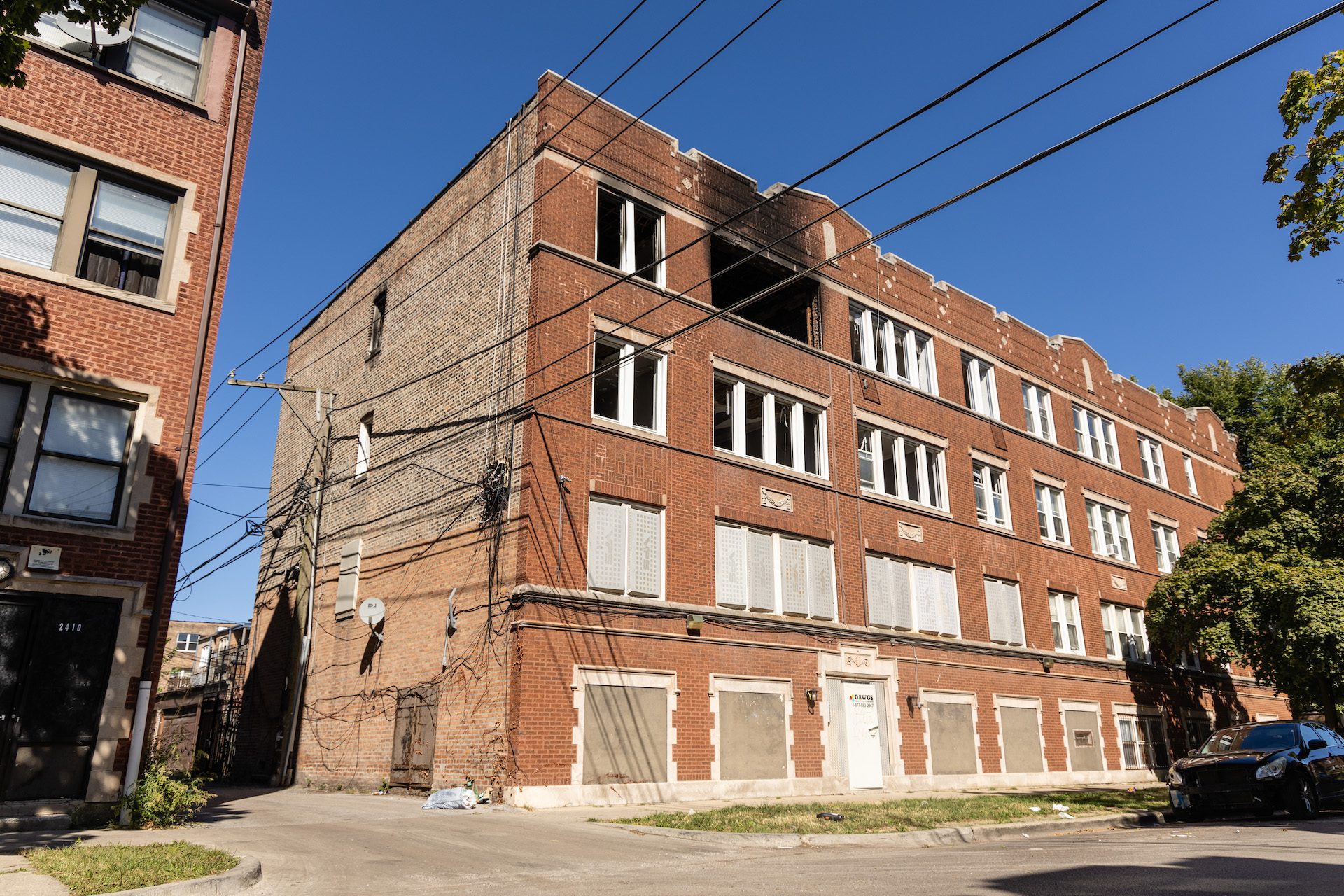
El hijo pequeño de Mariana, Adrián, sufrió quemaduras graves del “75 % de su cuerpo” y falleció tres días después en Comer Children's Hospital, según el informe del Cook County Medical Examiner’s Office.
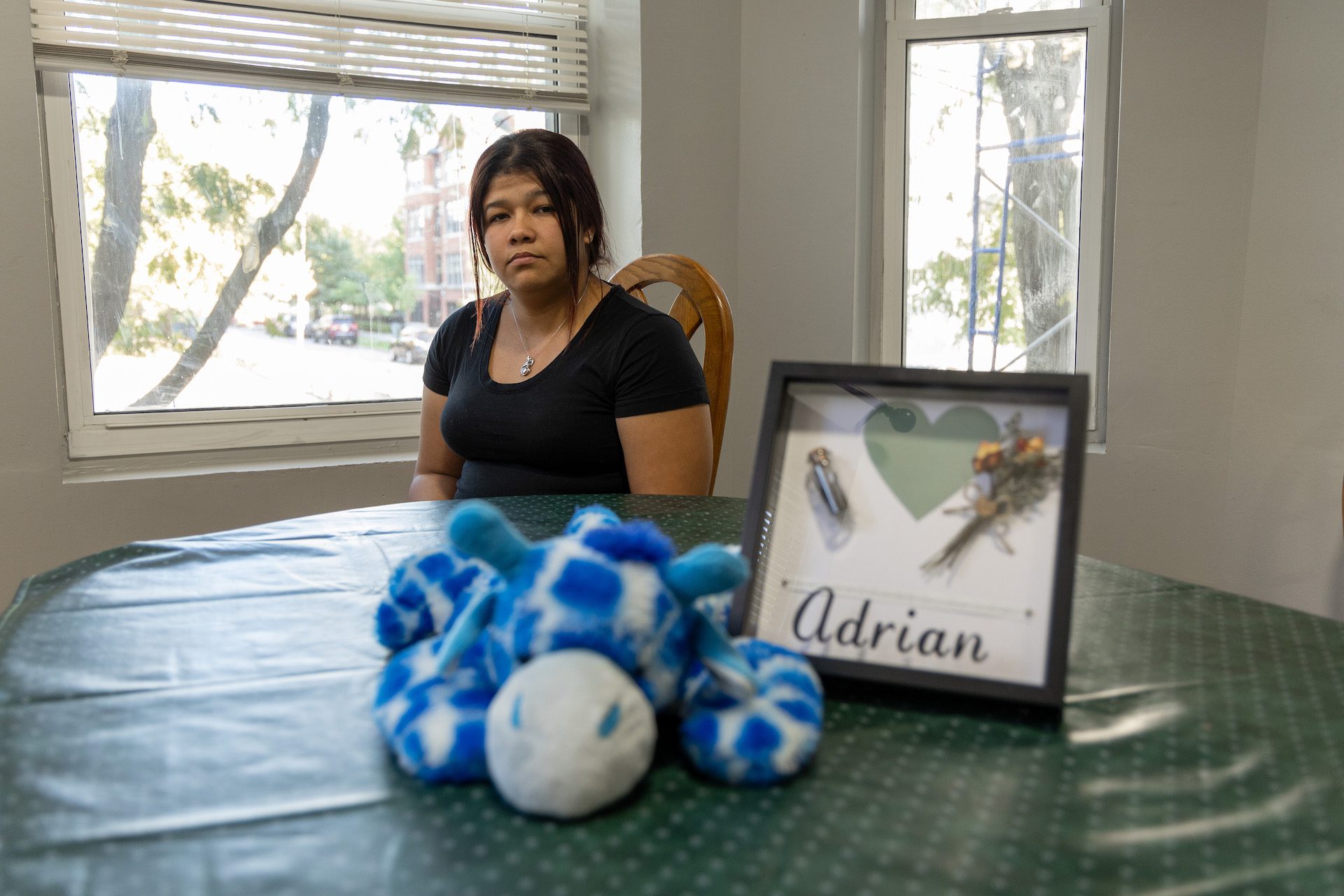
“Me despedí de Adrián y el hospital me dio su manta y un pequeño peluche,” dijo Mariana con voz temblorosa.
La Oficina del Cook County Medical Examiner’s Office dictaminó que la muerte de Adrián fue un homicidio. Una investigación preliminar del Chicago Fire Department y el Chicago Police Department calificó el incendio como provocado, originado en las escaleras interiores o la rampa. No se ha detenido a nadie y la investigación sigue en curso más de un año y medio después, según el Departamento de Policía de Chicago.
Sin embargo, la investigación del incendio provocado permanece suspendida a la espera del resultado de la investigación del homicidio, según informó el Chicago Policía Department en un correo electrónico.
El sobrino de tres años de Mariana también fue hospitalizado. Quedó traumatizado por el incendio y no habló con nadie durante días, según la familia.
Después del incendio, los inquilinos fueron reubicados temporalmente a hoteles y la familia de Mariana fue enviada a otro albergue para migrantes. La familia recibió apoyo del personal del refugio, un trabajador social del hospital, la escuela de su hijo, la Cruz Roja, y una iglesia local que ayudó a la familia a reunir fondos para cubrir los gastos funerarios y de cremación, así como para mudarse a otro apartamento.
Un informe de Chicago Police Department obtenido por la revista Borderless Magazine indicaba que los daños causados por el incendio provocaron el derrumbe de una escalera y dejaron el edificio inhabitable. Semanas después, el Departamento de Edificios presentó una demanda en julio de 2024 después de que el propietario no lo mantuviera en "condiciones seguras", dijo el comisionado adjunto de edificios, Scott.
“Los habitantes regresaron a la parte del edificio que no había sido dañada por el incendio después de que se restableciera el suministro eléctrico”, dijo Scott. “Sin embargo, el propietario no ha realizado las reparaciones necesarias para encender la calefacción, por lo que ya no es seguro que nadie permanezca en el edificio”.
El Department of Buildings colaboró con el Department of Law para presentar una demanda ante el Tribunal de Circuito del Condado de Cook en julio de 2024, según el exdirector de asuntos públicos Michael Puccinelli.
“No hay calefacción en el edificio y el administrador judicial no puede restablecerla de forma segura debido a los daños causados por el incendio que el propietario no reparó. El tribunal nombró a un administrador judicial con poderes limitados y lo autorizó a desalojar y asegurar el edificio, así como a proporcionar una ayuda para la reubicación por un importe de 1500 dólares por cada unidad ocupada”, declaró en julio de 2024.
En noviembre de 2024, los inquilinos finalmente fueron reubicados del apartamento de forma segura por una persona neutral y externa designada por el tribunal. El propietario se vio obligado a tener un vigilante en el lugar entre las 4 p. m. y las 8 a. m. para “locales residenciales vacíos y peligrosos,” según consta en los registros del edificio.
Cinco meses después del incendio, los inquilinos fueron finalmente reubicados fuera del edificio de apartamentos de forma segura por una tercera persona neutral designada por el tribunal.
En busca de respuestas
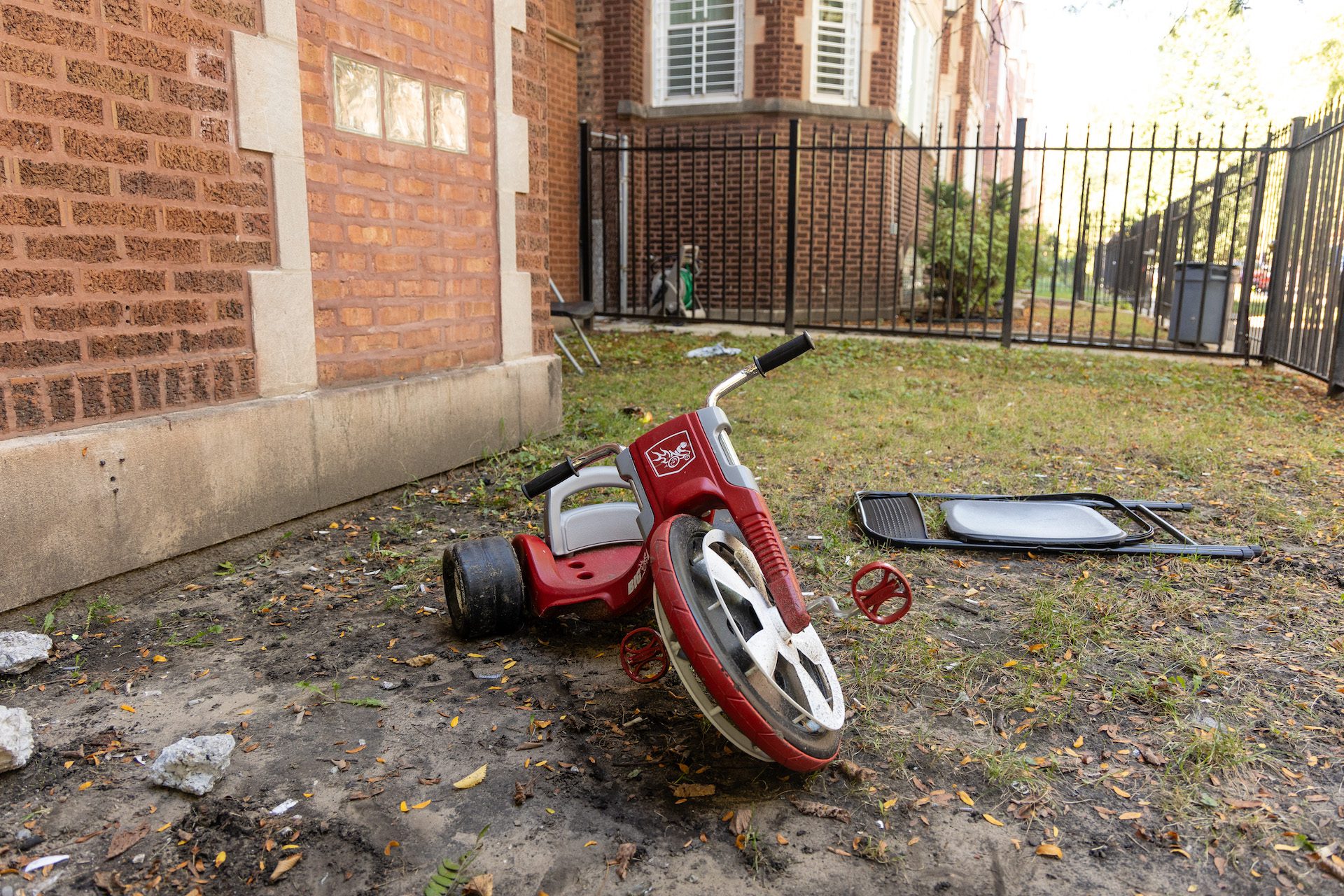
En el West Side de Chicago, Mariana abraza la pequeña manta azul de su hijo de 7 años en un apartamento con pocos muebles.
Huele a su hijo.
“No lavé ninguna de estas porque huelen a él,” dice.
Más de un año después del incendio, las pesadillas de Mariana sobre la noche del incendio no terminan.
“En el momento en que cierro los ojos, todo sucede a la vez,” dijo.
Mariana aún se aferra a la esperanza de que se encuentre al responsable del incendio. “No saben el dolor que causaron… Perdimos dos vidas que tenían un futuro por delante,” dijo.
“Realmente quiero saber por qué lo hicieron,” dijo. “Le arrebataron la vida a mi hijo; era solo un niño.”
Por ahora, su familia sigue atrapada entre el dolor y la supervivencia, intentando reconstruir un futuro en una ciudad que prometía tanto, pero que les ha traído una pérdida inimaginable.
“Sería como retomar el camino donde lo dejamos… con los planes que teníamos inicialmente,” dice la hermana de Mariana. “Esta vez sin dos personas, pero creo que tenemos que seguir adelante.”
Aun con terapia, los recuerdos del incendio y de su hijo la persiguen.
Mariana se aferra a una manta y a una impresión enmarcada del electrocardiograma de su hijo: su último vínculo con Adrián.

“Él era nuestra razón de todo,” dijo. “Siento que Adrián todavía está conmigo… Llevo sus cenizas, pero el dolor no se va.”
Fatema Hosseini es becaria de periodismo de investigación Roy W. Howard y cubre comunidades inmigrantes para Borderless Magazine.