 Camilla Forte/Borderless Magazine/Catchlight Local/Report for America
With ICE presence reported at O’Hare Airport, Borderless Magazine has compiled a guide to help travelers understand their rights and protect their digital privacy.
This article is for educational and informational purposes only and should not be construed as legal advice.
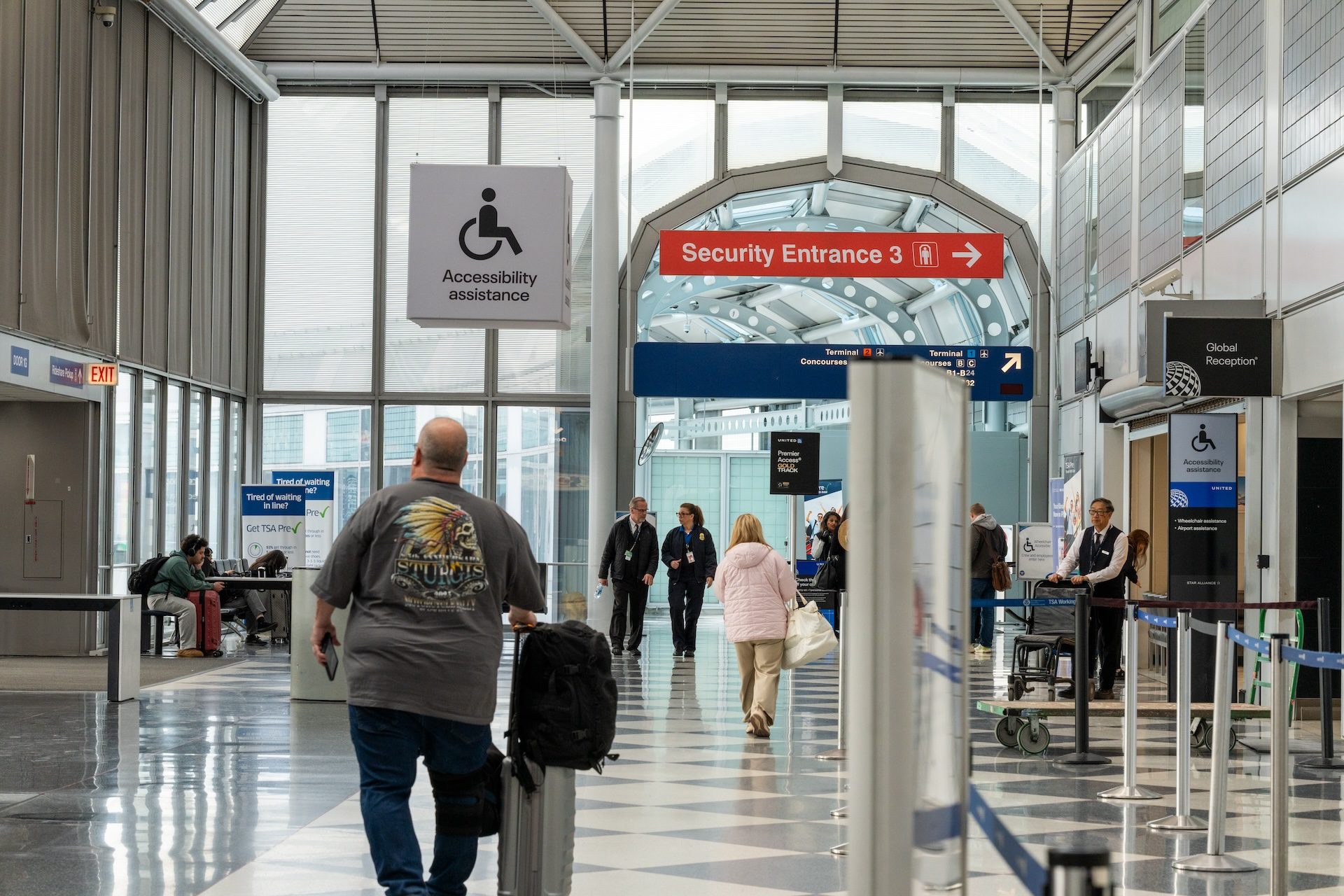
Immigration and Customs Enforcement (ICE) agents have been deployed to airports across the country, sparking concerns over safety and privacy among travelers, especially noncitizens and immigrants.
President Donald Trump moved to bring ICE agents to airports amid a partial government shutdown that began in February. For over a month, lawmakers have been at odds over funding for the Department of Homeland Security (DHS).
But a funding deal has nearly been reached. Last Wednesday, Republican lawmakers announced a plan to end the partial shutdown that directly impacted the Transportation Security Administration (TSA). It was approved by the Senate on Thursday and is headed to the House, but does not include funding for ICE or Customs and Border Protection (CBP).
News that puts power under the spotlight and communities at the center.
Sign up for our free newsletter and get updates twice a week.
The shutdown left roughly 60,000 TSA agents without pay for over a month, causing staffing shortages and record-long security lines at airports. ICE agents were deployed to assist TSA with security, according to Border Czar Tom Homan. TSA agents have since received payments, but ICE agents reportedly remain at airports until TSA operations return to “100%.”
Borderless Magazine spoke with legal experts and immigrant rights groups to compile a guide to help travelers understand their rights if stopped or questioned by immigration officers, who are at risk, and best practices to protect their digital privacy while traveling.
Why are ICE agents in airports?
Lawmakers approved a spending package in early February to fund most of the federal government through September. Funding for DHS, which encompasses the TSA, ICE and CBP, was left out.
During the impasse, TSA agents worked without pay. Some agents quit while others called off sick, resulting in long security lines across airports.
Democrats demanded ICE reforms, such as requiring agents to stop wearing masks and carry identification, and refused to support DHS funding until the changes were implemented. Meanwhile, President Trump previously pushed for a DHS funding deal encompassing the SAVE America Act — an elections bill requiring proof of citizenship to register to vote and a photo ID to cast a ballot.
Homan told CNN that the agents would help with tasks that don’t require TSA training. He said the move is about “helping TSA do their mission and get the American public through that airport as quick as they can while adhering to all the security guidelines and the protocols.”
Now, TSA agents have begun getting paid and a plan to fund DHS is underway. But ICE agents still remain in airports across the country until operations return to normal, according to Homan.
Who’s at risk?
While the Trump administration has said agents will play a limited role in security operations, they have already been seen targeting travelers. Experts say all travelers should consider themselves at risk.
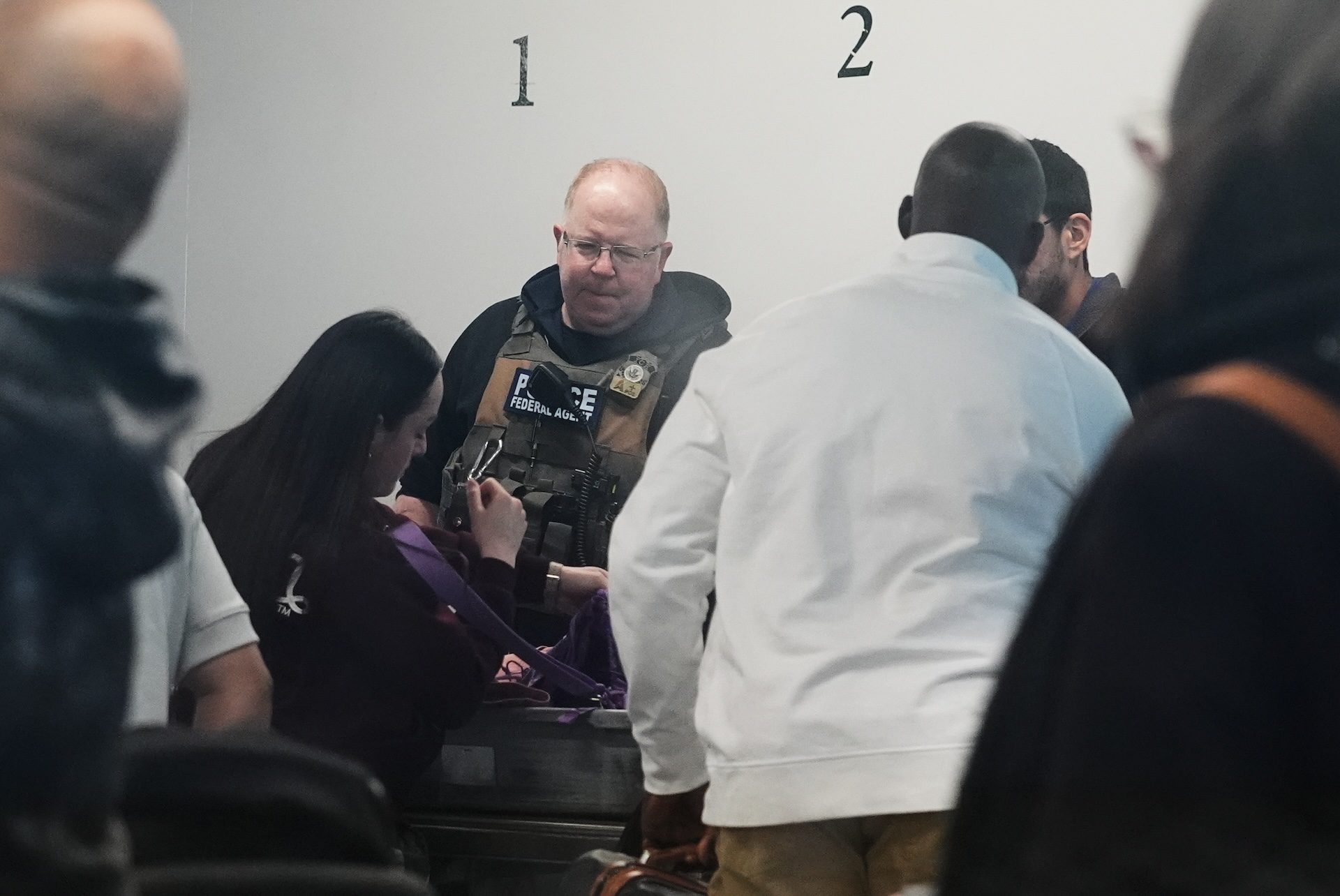
“When we put them in an airport where they’re clearly not trained to handle whatever’s happening with travelers — then under those circumstances — I think that everyone becomes a risk,” said Rekha Sharma-Crawford, second vice president of the American Immigration Lawyers Association (AILA).
But non-citizens of color are most at risk of being interrogated, illegally detained, and potentially assaulted, Evelyn Vargas, leadership and growth organizer at Organized Communities Against Deportation (OCAD), told Borderless in an email.
“Legal residents should expect some risk,” she said. “Risk may involve additional screening, missing a flight or possibly illegal detainment.”
Immigrant rights groups like Pilsen Unidos por Nuestro Orgullo (PUñO) note that those who are particularly vulnerable include:
-
Undocumented people
-
Green Card holders
-
DACA recipients
-
Asylum seekers
-
Visa holders
-
Individuals with pending immigration cases
-
Rideshare or airport drivers
-
Individuals with final orders of removal
“I think the problem is that everyone is at risk,” Sharma-Crawford said.
What are my rights if I encounter ICE at the airport?
Everyone on U.S. soil has constitutional rights, regardless of legal status. If you are approached by an ICE agent, you have the right to:
-
Record any enforcement activity
-
Remain silent
-
Refuse to sign any forms
-
Speak to an attorney
Sharma-Crawford also added that everyone has the right to inquire why they’re being detained and to decline to answer an officer. But, she said, people should always be aware of the risks when encountering agents.
“Regardless of the venue, regardless of whether they’re in an airport or they’re in a parking lot somewhere, they have a right to know those things,” she said.
How can I prepare for a potential ICE encounter at the airport?
Immigrant rights groups in Chicago, like the Illinois Coalition for Immigrant and Refugee Rights (ICIRR), PUñO, and OCAD, have offered tips for travelers amidst ICE enforcement in airports.
These precautions could help travelers stay safe and prepared when interacting with agents.
The organizations recommend, when traveling, to:
-
Print out copies of relevant documents, including passports, proof of status, and pending applications.
-
Use Signal or WhatsApp for encrypted messages.
-
Turn off facial recognition and fingerprints on your phone before going to the airport, and turn off your phone.
-
Log out of your email and social media apps.
-
Print out a physical boarding pass to limit your need to take out your phone.
-
Make a safety plan with your loved ones, and have a trusted lawyer’s contact information memorized.
Both Sharma-Crawford and Saira Hussain, senior staff attorney at the Electronic Frontier Foundation, suggest recording any encounters with ICE to document their actions.
However, Hussain emphasized that those choosing to keep their devices powered on to record an ICE interaction should be aware of the risks of doing so.
For those concerned about their safety and privacy, Hussain suggests contacting an immigration lawyer before travel.
Correction: 04/13/26 A previous version of this story incorrectly stated that Democrats are demanding new policies for ICE agents to wear masks. It has been clarified that Democrats are demanding new policies that would prohibit federal immigration agents from wearing masks.
Tara Mobasher is Borderless Magazine’s newsletter writer and reporter. Email Tara at [email protected].