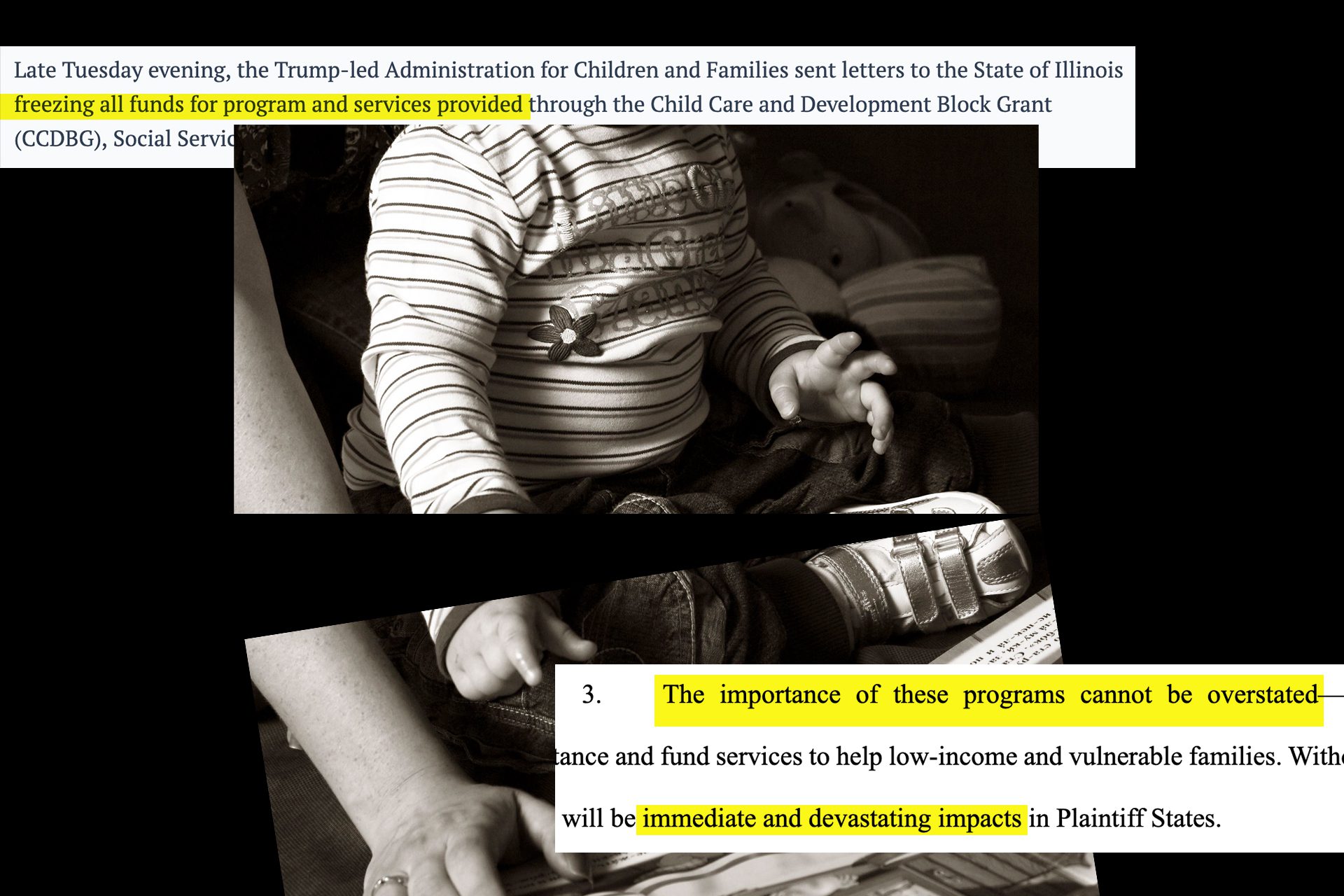
 Photo illustration by Max Herman/Borderless Magazine. Source images: Zoonar/Morozova Tatiana/Alamy and State of Illinois
 While the funds have not been permanently cut, advocates say the impact is threatening Illinois families, creating uncertainty for the future of some immigrant-run child care facilities.
At one point, Tatiana Bermeo paid around $1,000 a month for her daughter’s home child care center — an amount she says was far over her budget as a mom of two kids.
Balancing groceries, rent and child care on a limited income was difficult.
But that changed in 2023 when Bermeo began receiving benefits from the Child Care Assistance Program (CCAP), which reduced her payments to roughly $290 per month.
News that puts power under the spotlight and communities at the center.
Sign up for our free newsletter and get updates twice a week.
The assistance is funded through state and federal resources like the Child Care Developmental Fund (CCDF) and Temporary Assistance for Needy Families (TANF).
With the support, Bermeo said she could afford child care and maintain a steady routine for her daughter.
“It made it a lot easier to keep a budget and be able to sustain both of them financially,” she said.
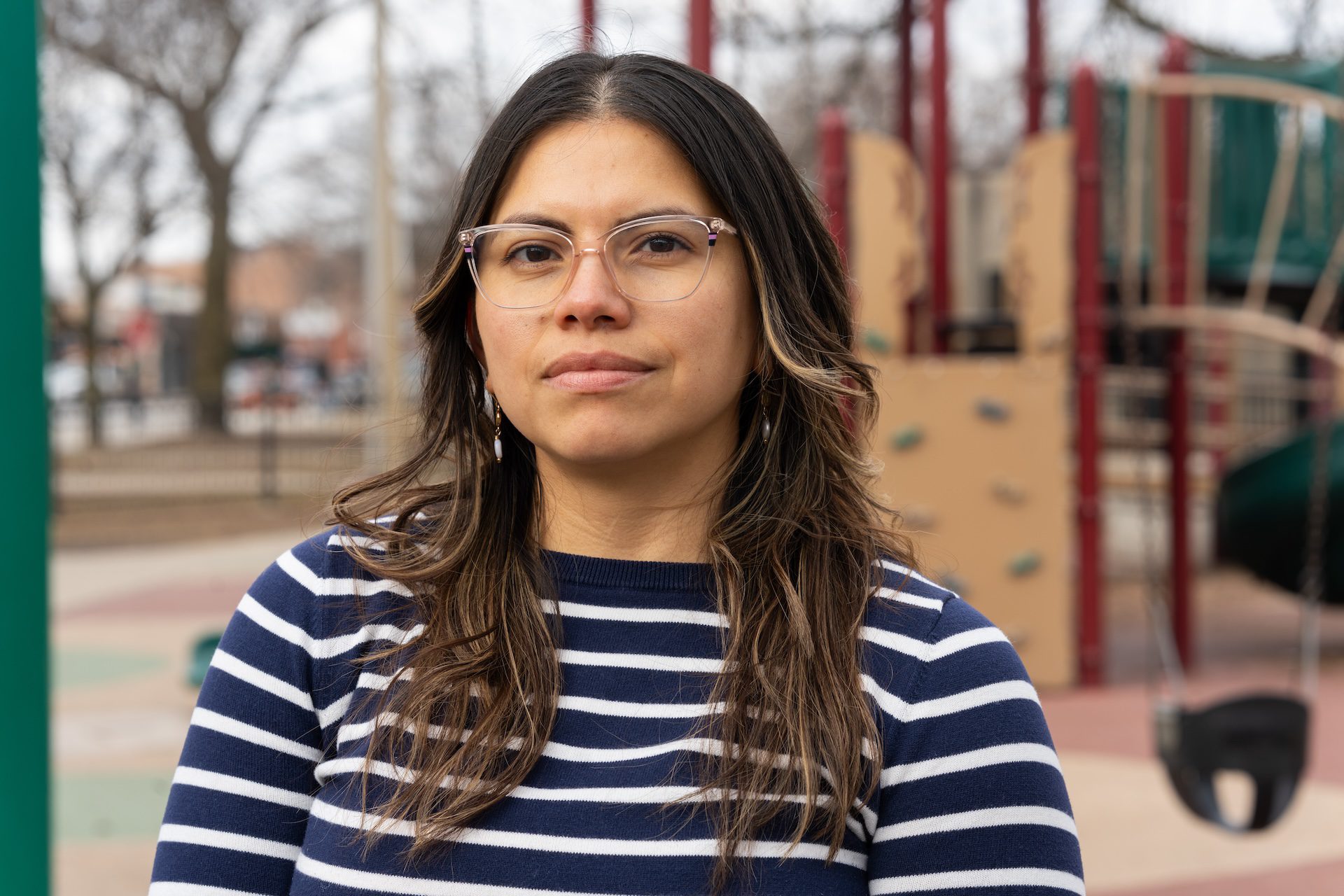
However, that help is now at stake, Bermeo says.
In January, President Donald Trump’s administration froze around $10 billion in federal child care and family assistance funds. The temporary freeze impacted five states, including Illinois.
While the funds have not been permanently cut, advocates say the impact extends beyond cases like Bermeo’s — leaving some families in limbo and threatening day care centers that rely on federal funds.
“We are feeling a lot of frustration,” said Alice Dryden, a child care worker at the Mary Crane Center. “It makes it very hard to plan for the future. We are so aware that if the freeze goes through, everything may change.”
A funding freeze
The temporary federal freeze threatened $1 billion in funding for child care programs in Illinois, including:
- the Child Care and Development Fund (CCDF),
- the Temporary Assistance for Needy Families (TANF)
- and the Social Services Block Grant.
CCDF allocates money to states for low-income families to pay for child care while TANF provides temporary financial assistance and support services to pregnant women and families with one or more dependent children. The Social Services Block Grant offers state funding to support different social services, like child care and food pantries.
The freeze followed unsubstantiated claims of fraud within Minnesota day care centers, which led the Trump administration to request years of extensive documentation about the programs’ beneficiaries before restoring funds.
On Jan. 6, Illinois received three letters detailing the documents required to lift the funding freeze. Each letter cited concerns that the state was providing benefits to undocumented immigrants.
Illinois Attorney General Kwame Raoul joined a lawsuit with four other states on Jan. 8, stating that the freeze came with no real proof of fraud. A judge granted them two temporary restraining orders, the last of which expired on Feb. 6.
The states were then granted a preliminary injunction, which will be in place until the court decides the legality of the freeze. States are not required to send in the requested information at this time.
Read More of Our Coverage

The Trump administration said this funding freeze was an attempt at combating fraud in social services. But states argue that the administration gave them “an impossible task on an impossible timeline.”
“There are processes for determining whether or not that funding should be taken away,” Gov. J.B. Pritzker said at a press conference in January. “We’re continuing to accept funding from the federal government because they’ve been pushed back by the court. And we are doing everything we can to fund at the state level to continue to allow people to get child care and early childhood education.”
More barriers to federal support
Despite the freeze being blocked, some child care centers, immigrant child care workers and families have already been impacted.
Stephanie Schmit, director of child care and early education at the Center for Law and Social Policy (CLASP), said that Illinois experienced funding delays — having to continuously defend its need for resources to the federal government.
“A lot of these checks and balances are already within the CCDF system that require states, in advance of even being approved to receive the resources, to explain how they are going to use the money,” she said. “Another layer on top of many layers that already exist in the program is required for states to justify their spending for the program to access the federal dollars.”
States use these funds to fund child care subsidies — financial aid that helps families pay for child care — to boost the overall quality of child care across each state, according to Schmit.
“Our biggest hope is that there continues to be funding for child care and early education that is not disrupted,” Schmit said. “And that immigrant children and families are able to access care in ways that best meets their needs and is not driven by fear.”
Lasting effects
For Bermeo, a potential freeze could be detrimental to her work life, finances and her daughter’s everyday routine.
Bermeo’s daughter is receiving early intervention services at Concordia Place on Whipple, a child care program on the North Side.
She said that without funds from the federal government, Concordia Place would have difficulty operating and she may need to find this support elsewhere, outside of her regular work hours.
“I would have to work around my work schedule to figure out a way for her to have those interventions and manage without having them at the day care,” she said.
Nearly 54% of families at Concordia Place utilize CCAP to afford child care. It served more than 150 migrant families last year.
Concordia Place remains hopeful, but is also planning for multiple scenarios, including one where a funding freeze impacts CCAP funding for families, according to CEO and president of Concordia Place, Grace Araya.
“If this funding were to go away, [more than half] parents could not afford child care,” Araya said.

Daphne Williams, CEO and director of Smarty Pants Early Learning Center in Bronzeville, said parents will have to choose “between going to work and keeping their kids.”
More than 40% of families at the center benefit from CCAP.
Without that support, Williams says, families could not only lose their child care but also their ability to receive other benefits like SNAP due to new federal work requirements.
“How can you volunteer if you don’t have child care?” she said. “They will have problems trying to maintain a stable income, while also trying to feed their families.”
A challenge, Araya says, that would dismantle systems of support that families have relied on throughout the years.
“It would take a lot to build it back up,” she said. “It means families can’t work — they’ll be struggling.”
Tara Mobasher is Borderless Magazine’s newsletter writer and reporter. Email Tara at [email protected].