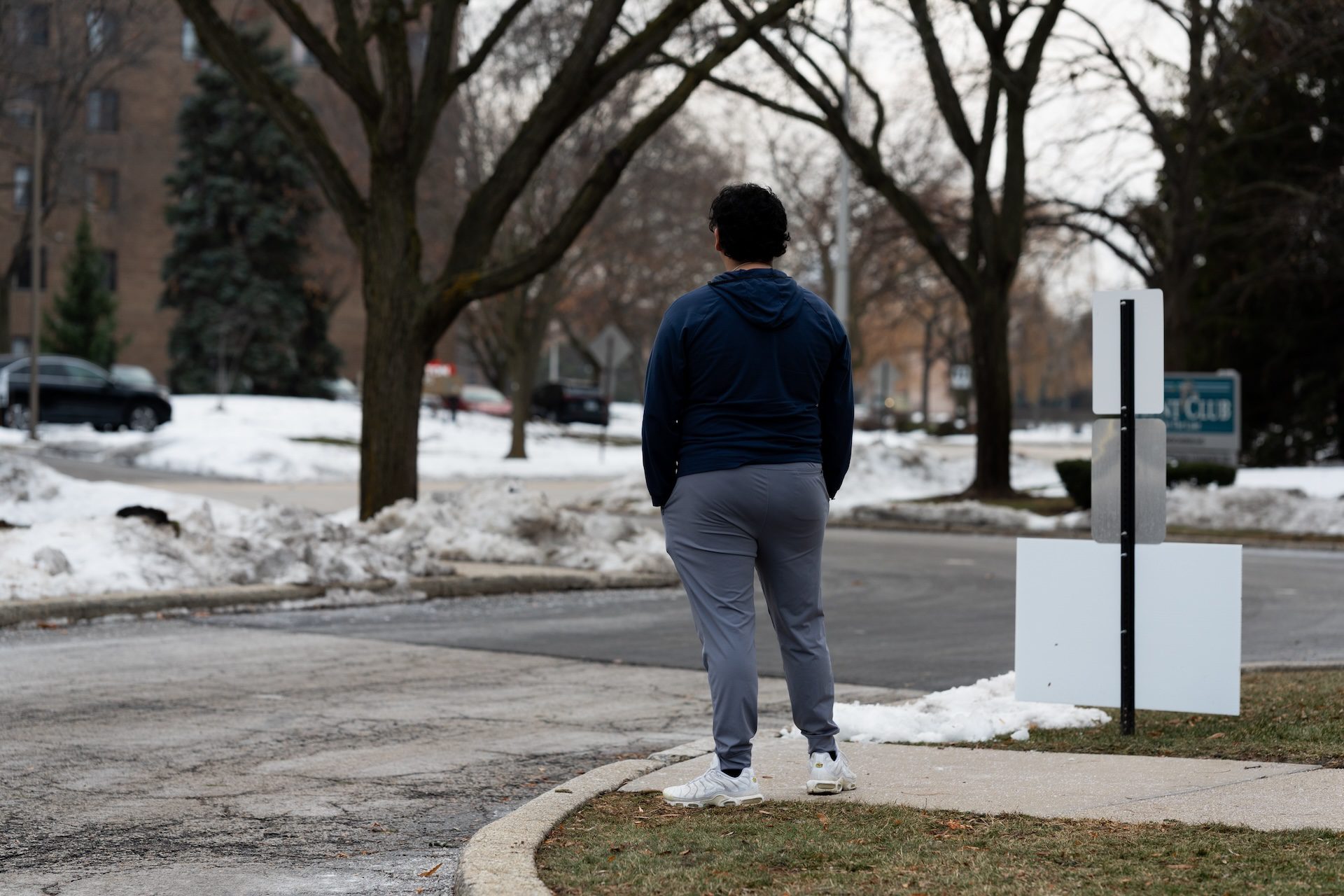
 Camilla Forte/Borderless Magazine/Catchlight Local/Report for America
Voluntary departures have skyrocketed under Trump, leading some attorneys to question whether immigrants are being coerced into agreeing to the alternative to deportation.
Jaime hadn’t slept in four days.
The father of four was packed in a windowless room with about 60 other men. It smelled foul – there were no showers, people had vomited and the bathroom was filthy and out in the open. Twice, he saw people being taken out on stretchers.
The 57-year-old felt like his head was “going to explode.”
Every few hours, Jaime walked up to a small booth and asked to see an immigration judge. He told the person in the booth that his children were home alone, and since his wife had recently passed away, they needed him.
News that puts power under the spotlight and communities at the center.
Sign up for our free newsletter and get updates twice a week.
Each time, a Broadview facility worker in the booth told him in English he had a deportation order, and he needed to sign a “voluntary departure” form if he wanted to leave, said Jaime. He asked Borderless to only use his first name due to fear of retaliation and privacy concerns for his family.
On Oct. 12, federal immigration agents took Jaime from the parking lot of his condo in suburban Mount Prospect and brought him to the Broadview Processing Center.
Four days after being separated from his children, the Mexican immigrant decided to sign the voluntary departure form.
The next day, he was on his way to the U.S.-Mexico border, unaware that his attorney had secured him an emergency hearing.
“They told me it was voluntary departure, but that I didn’t have another option,” Jaime told Borderless in Spanish.
By signing the document, Jaime waived his right to appeal and seek other forms of relief to remain in the U.S. through what’s known as voluntary departure. But immigration attorneys question whether this legal process is truly voluntary, pointing to cases like Jaime’s, where immigrants report being coerced into signing documents they don’t fully understand due to language barriers and lack of legal knowledge.
How voluntary is voluntary departure?
Until recently, voluntary departures were relatively rare. That has changed significantly during the second Trump administration.
Noncitizens may qualify for voluntary departure and leave the U.S. to avoid a deportation order on their record and have a better chance for legal reentry. The requirements for qualifying for voluntary departure vary depending on the status of a person’s immigration case.
For example, for someone like Jaime, who was detained by federal immigration agents but never saw an immigration judge, a person qualifies if they have not committed an aggravated felony or terrorist act. For someone who has appeared before a judge and lost their case, they must show “good moral character” to qualify, an immigration law term that includes not being “a habitual drunkard” and not receiving the majority of one’s income from illegal gambling.
Those who sign a voluntary departure document waive their right to appeal and to pursue other protections from removal, such as asylum, in removal proceedings. They are also subject to a 10-year bar to reentering the U.S. for people who have been unlawfully present for more than a year, but may obtain a waiver.
For this reason, many immigrants facing deportation choose to fight their case in immigration court rather than opt for voluntary departure.
But that is starting to change.
The number of voluntary departures increased 21-fold during the first nine months of 2025, according to an analysis from the Deportation Data Project. The increase in the number of individuals deciding to be deported may be due to the fact that few are released once arrested. During the same period, the release rate for detained immigrants decreased: only 3% were released within 60 days of their arrest.
A CBS News analysis of immigration court records found that the percentage of voluntary departures among those detained grew nearly every month in 2025, reaching 38% in December.
In a federal lawsuit against the Department of Homeland Security (DHS) filed by the American Civil Liberties Union (ACLU) in October, the lawsuit accuses DHS of violating detainees’ rights to due process, routinely coercing, threatening, and pressuring detainees into signing immigration documents, including voluntary departure forms.
Immigration lawyers and experts Borderless spoke to said they are worried that people being held in immigration detention centers are being pressured to request voluntary departure without fully understanding the consequences of that decision.
“We’re very concerned that people are being told things that aren’t accurate about the effects of voluntary departure,” said Samuel Cole, senior supervising attorney and chief immigration litigation counsel at the ACLU of Illinois.

Cole, who previously served as an immigration judge in Chicago, said some immigrants may not be able to make informed decisions about voluntary departure due to language barriers in detention centers and their being denied access to lawyers.
“People are giving up their rights to fight their case, and they’re being confronted with something in a high-pressure environment that is really something that needs careful consideration,” said Cole. “It’s a very coercive environment, and we think that what’s happening in Broadview and really around the country, in terms of the voluntary departure, is extremely problematic.”
DHS did not respond to Borderless Magazine’s questions.
Caught in Midway Blitz
Jaime is one of more than 4,500 people DHS detained in the Chicago area during the height of Operation Midway Blitz between September and November last year. Many, like Jaime, ended up in the Broadview facility just outside of Chicago.
“When they’re in these detention centers, they’re often coerced,” said Kimberly Weiss, Jaime’s attorney. “They’re pushed. They’re intimidated.”
If Jaime hadn’t signed the form, they could have had a strong case for him to be allowed to stay in the U.S., said Weiss, who wasn’t able to get a hold of Jaime while he was held at Broadview.
“[Jaime] didn’t realize how important it was for him to stay there,” she said.
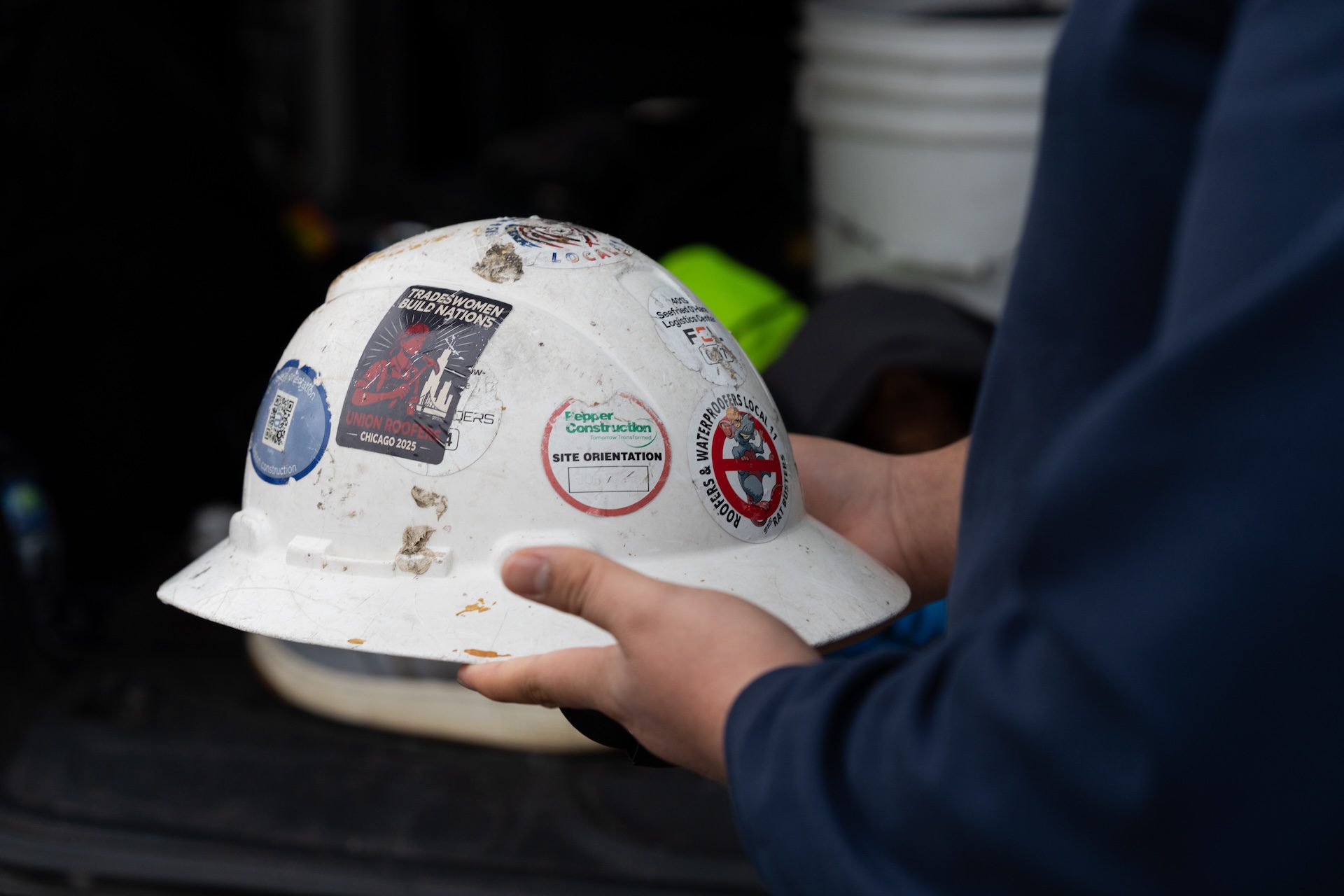
Jaime, a native of Mexico, arrived in Chicago about 35 years ago. He had a work permit that he used to get a job as a roofer, he said. The permit expired 27 years ago, but he continued working for the same employer and built a life in Chicago, marrying his wife, having four children and a granddaughter since then.
He and his family were concerned about his immigration status as reports of increased U.S. Immigration and Customs Enforcement (ICE) activity in Chicago began to spread after Trump’s election. However, their primary concern was caring for Jaime’s wife, a U.S. citizen who was battling cholangiocarcinoma, a rare bile duct cancer, for years until she died in January of last year.
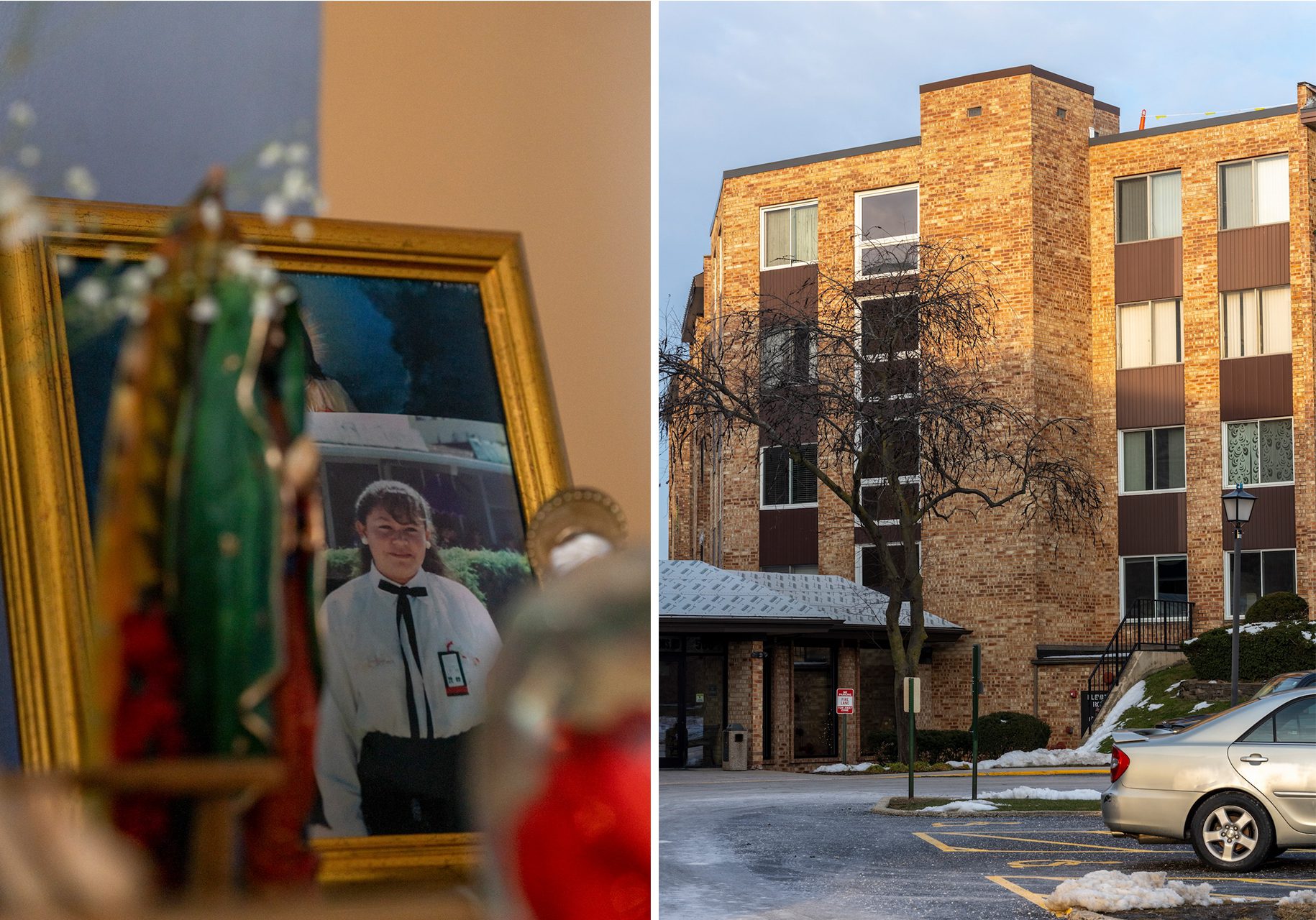
“These past five years, we did talk about fixing his status,” said Jaime Jr. “Obviously, with my mom being sick, it’s not something that was our priority. We had to help her with pretty much everything.”
Nine months after his wife’s death, Jaime was taken by federal immigration agents.
‘My son needs me’
The groceries were still cold when Jaime Jr. found them on Oct. 12. Eggs, milk, chicken — his father had just bought them and placed them in the back seat of his car.
About an hour earlier, federal immigration agents took Jaime that Sunday morning, while his 21-year-old son was at the gym.
Security camera footage showed that Jaime had pulled into his condo parking lot in Mount Prospect that morning, and two unmarked vehicles followed him in. At least four agents approached his car, asked for identification and told him he was being detained.
Jaime said the agents allowed him one phone call, so he called his sister-in-law to tell her what was happening and ask her to contact his son.
Agents parked his car, tucking his keys inside the driver’s side door. The groceries sat in the back seat, unpacked. His roofing tools and gear were in the trunk, ready for work the next day.
Within three minutes of being stopped, Jaime was headed to the Broadview detention facility.
Jaime spent four days at Broadview, a facility intended to be a processing center, not a jail or detention center. The facility’s status as a processing center meant it lacked beds and other essential items for overnight stays.
Sleeping at Broadview was nearly impossible, Jaime remembers. The lights stayed on late. People made noise throughout the night. Foul odors drifted from the toilets, which were out in the open. The detainees, some of whom — including Jaime — were there for more than three days, hadn’t been able to shower. Jaime tried to sleep on the floor like others, but there were too many people. Some slept standing up.
Jaime’s experience echoes those described in the October lawsuit by the ACLU, which also accuses the agency of subjecting detainees to poor and unsafe conditions at Broadview. Immigration attorneys, including Weiss, and immigrants who had been detained at Broadview reported in the lawsuit that detainees were not receiving medical treatment for injuries and illness, not having access to daily medication and being coerced into signing a form they didn’t fully understand.
“Sometimes I felt like I couldn’t breathe because so many people were crammed into one place,” Jaime said. “I felt like my head was going to explode because I hadn’t slept well and hadn’t rested.”
He saw a man vomit blood and at least two people being taken out of the facility on a stretcher.
Jaime wanted answers about why he was detained and asked to speak with a judge to learn why he had a deportation order. His kids need him, Jaime would tell people working at Broadview. His wife, their mother, had just died that same year, he explained. The response each time was the same: sign the voluntary departure form.
But his hopes of getting out soon were dwindling the longer he stayed at Broadview. Some detainees told Jaime they’d been there for five or six days.
Jaime began to fear not only that he would be kept there longer, but that he would risk getting sick as his children’s sole guardian if he stayed.
“I didn’t want to enter a state of depression, and I didn’t want to get sick, because the truth is my son needs me,” Jaime said.
A Family Separated
While Jaime was at Broadview, his son was busy trying to get him back.
Jaime Jr. started a GoFundMe to help cover the legal costs of getting Jaime to re-enter the U.S. and a petition calling attention to the conditions at Broadview that Jaime experienced. He reached out to U.S. Rep. Raja Krishnamoorthi, D-Illinois, who brought up the case during a U.S. House Judiciary Subcommittee on Immigration Integrity, Security and Enforcement field hearing in October.
Right after his dad’s arrest, Jaime Jr. frantically made calls to immigration attorneys. He found Weiss, an attorney based in the Chicago suburbs, who took the case.
Weiss said she filed emergency paperwork with the immigration court, including a motion for bond and an emergency stay of removal to stop deportation. The judge responded quickly, granting him an emergency hearing for Friday.
But Jaime didn’t know what was going on outside of Broadview. The day before the hearing was to take place, Jaime signed the voluntary departure form, and ICE put him on a plane to the U.S.-Mexico border.
Since then, Jaime Jr. has been looking after his younger sisters, who are 17 and 13.
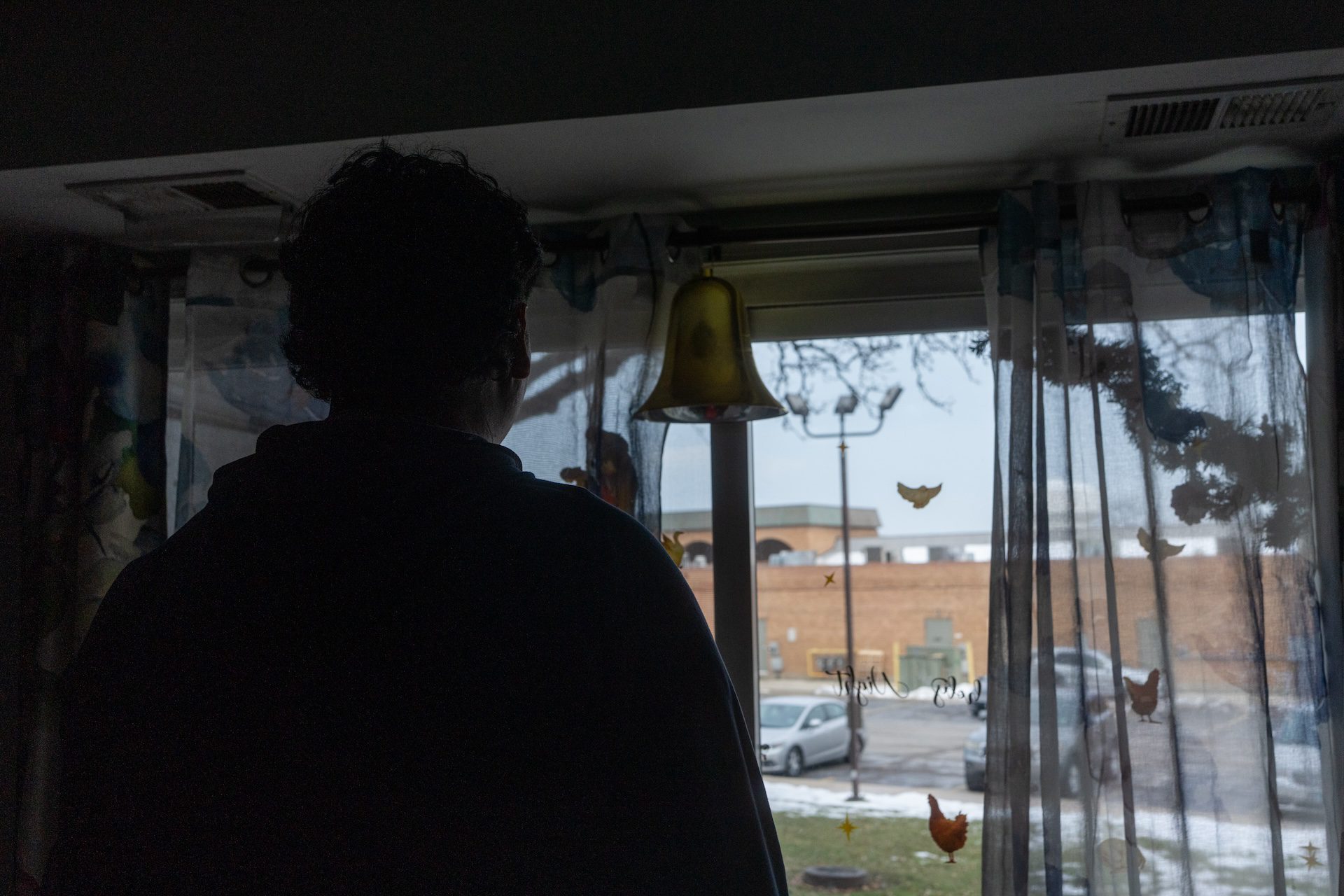
He is now paying bills, splitting chores with his sisters and taking care of a household while trying to finish college and find a job. Social security survivor benefits from their mother’s death help with bills. Their aunts and uncles stop by the condo weekly with prepared food and cash.
It’s been hard for him and his sisters to balance coping with the death of his mom and his dad being deported while in college, he said. He’s felt the toll of the drastic changes in his family’s life, he said. In November, he was diagnosed with Bell’s palsy, a sudden paralysis of facial muscles often triggered by stress.
Still, he tries not to worry his dad when they talk on the phone twice a day, once in the morning and once in the evening.
“One of the things I told my dad is, instead of thinking about it as you being deported, just think about it as a little vacation for now,” said Jaime Jr.
After crossing the border into Mexico, Jaime moved into his childhood home in Mexico City. He also spent some time in Michoacan, where he has some relatives and where his late wife grew up before meeting Jaime and forming a life together in Chicago.
After Jaime was taken to Mexico, Weiss filed an emergency widower petition, which, if granted, would allow him to return to the U.S. immediately.
In December, he went to an appointment with the U.S. Consulate in Juarez, where he completed a medical exam, biometrics and an interview. He was given a written notice stating that he could not be issued a visa at this time due to his immigration history: a removal order over 25 years ago for not appearing at a hearing, remaining in the U.S. after that order and leaving the country in October.
But Jaime said he did not receive notice of this hearing two decades ago.
The consulate, for these reasons, issued a 10-year bar on his return. They also issued a “permanent bar,” saying that he entered the country illegally.
Weiss said the permanent ban was incorrectly applied because Jaime never re-entered the country illegally. She added that Jaime’s widower petition case is ongoing and that she is challenging the basis under which the permanent bar was placed.
In the meantime, Jaime doesn’t know if it will be weeks or years before he can return to the U.S.
He found a job in roofing in Mexico City.
He’s now spent birthdays, the Christmas holidays, and the first anniversary of his wife’s death without his children.
But he’s not giving up hope of returning home soon.
“I want to go back more than anything right now to be with my children, who are in the phase of making something of themselves,” said Jaime. “My second son wants to be a doctor, and I have to help him get there. I still have two girls, and they’re good students, and I want to help them.”
Aydali Campa is a Report for America corps member and covers environmental justice and immigrant communities for Borderless Magazine. Email Aydali at [email protected].