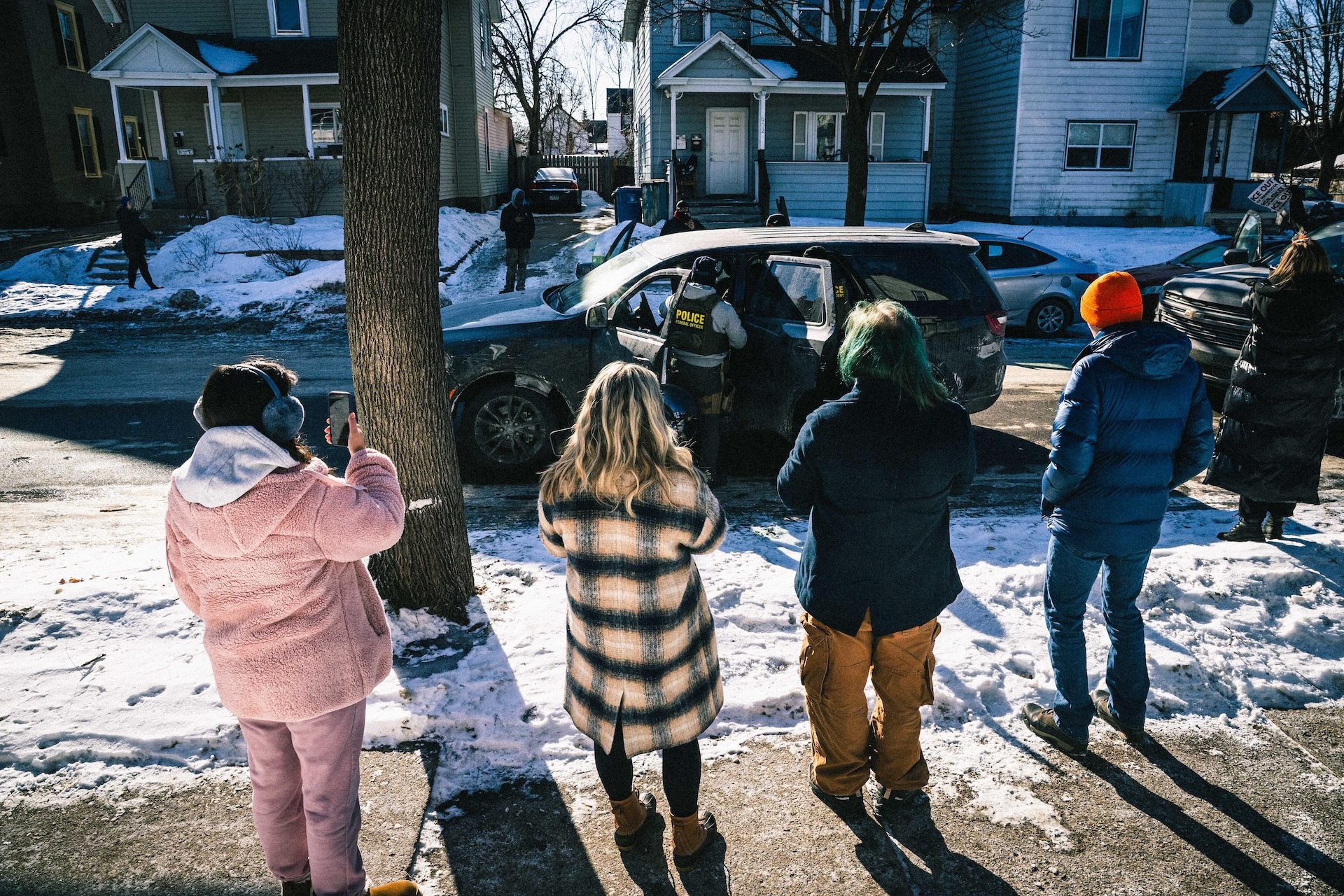
 Dave Decker/ZUMA Press Wire/Alamy
As immigration enforcement escalates following multiple fatal ICE shootings, Borderless Magazine spoke with an attorney on what to know when exercising your First Amendment right.
On January 24, Alex Pretti, a 37-year-old ICU nurse, was shot and killed by federal immigration agents after attempting to film the officers as they shoved a woman to the ground. Pretti is the second person to be fatally shot in Minneapolis by Immigration and Customs Enforcement agents in recent weeks, and his death follows the killing of Silverio Villegas-Gonzalez by agents in a Chicago suburb in September.
As immigration enforcement has escalated in recent months, politicians, community organizers, and the media have encouraged the public to film ICE activity. Just a week before Pretti was killed, Minnesota Gov. Tim Waltz told Minnesotans to carry their phone with them at all times so they can record federal agents in their neighborhoods. Locally, the Illinois Accountability Commission is collecting videos documenting the actions of federal officers.
As encounters with ICE agents continue to turn violent, however, many are wondering if filming ICE agents is safe. Borderless spoke with Saira Hussain, senior staff attorney at the Electronic Frontier Foundation, to answer this question and to explain what you should know when filming federal immigration activity.
This article is for educational and informational purposes only and should not be construed as legal advice.
News that puts power under the spotlight and communities at the center.
Sign up for our free newsletter and get updates twice a week.
Can I film an encounter with an ICE agent?
The First Amendment solidifies the right for anyone, regardless of citizenship, to record all law enforcement officials, including ICE and Border Patrol agents, who are carrying out their duties in public. This is a federal law, so regardless of where you reside, your right to record remains. Hussain stressed, however, that deciding to record is an individual decision and can put you at risk.
“I want to be very clear that while you have this right, we’ve seen in recent encounters that ICE and CBP [Customs and Border Protection] are not always respecting this,” said Hussain. “And so when we say that you have the constitutional right to record, it doesn’t necessarily guarantee that law enforcement is going to honor that right.”
Given the risks, why should I record?
Recording these encounters helps hold officials accountable, said Hussain, as well as expose injustices and inconsistencies in crucial details.
In both the case of Renee Nicole Good, a U.S. citizen who was shot and killed by ICE officials earlier this month, and Alex Pretti, the video footage taken by civilians directly contradicts government accounts of the incidents. Without those brave individuals who filmed while these horrible acts were occurring, said Hussain, we wouldn’t know the reality of what occurred.
“When you have ICE and CBP in particular, who are engaged in such lawless actions, where they’re doing things like violating the Constitution by entering homes with administrative warrants, where they’re shooting first and asking questions later, where they’re trying to spin narratives about people who are merely engaged in exercising their constitutional rights, and painting them as being domestic terrorists, the right to record becomes so much more important to expose these false narratives and to counter these claims,” said Hussain.
What types of situations should I record?
If you’re in a place where there’s been a surge of ICE activity, recording can help both spread information about that activity to others and hold officers accountable, encouraging them to follow the law.
In these situations, it’s important to maintain a calm demeanor and stay back from the scene so that law enforcement can’t accuse you of interfering with an operation. While officers can give orders to disperse if there’s a public safety issue, they cannot legally ask you to move for public safety reasons solely because you are recording.
Read More of Our Coverage
What should I do with my video once I’ve recorded it?
There are various apps available online, including TikTok, Instagram and Facebook, that allow for live streaming. This option preserves your video in the cloud if your phone is confiscated during an arrest, for instance.
But because of the sensitive nature of ICE arrests, Hussain says you may want to consider uploading after the fact, though this is entirely dependent on the nature of what’s occurring.
While consent to film is not required under the First Amendment, consider the activities and individuals in view.
“In some instances, you want to be able to document the encounter and immediately share, like if there is excessive force being used,” said Hussain. “If there’s any concern about the people who may be nearby, or the person who’s being arrested and their identity being exposed because of immigration status or other sensitive details, you may want to think about trying to blur out faces or obtaining consent from the person or their family before uploading the video more widely.”
Can an ICE agent confiscate my phone or delete my recording?
Legally, no. The Fourth Amendment says that without a warrant based on probable cause and signed by a judge, an agent cannot access your personal device. You also do not have to delete a recording, unlock your phone, or provide your login credentials to an officer or agent (even if you’re placed under arrest) under the First Amendment.
However, that doesn’t necessarily mean an agent won’t try to take your device or intimidate you into deleting a recording. Hussain offered practical steps to help secure your device, like using a strong password to lock your phone rather than a fingerprint or face unlock, and installing the latest version of software to limit vulnerability to cyber attacks. The Electronic Frontier Foundation has also created a series of playbooks called Surveillance Self Defense, including a guide on how to prepare for a protest with additional tips to keep you and your data safe.
What if an officer challenges my right to record?
This depends on an individual’s comfort level with standing up to authority, said Hussain. “It’s really going to depend on things like whether you have citizenship or not, how comfortable you feel speaking to authority, and your ability to maintain composure and remain calm.”
She went on to say that the best way to assert your rights is to know what your rights are.
If you are challenged, explain that you are exercising your First Amendment right to record law enforcement.
“A lot of times when agents are approaching people and threatening them, they’re thinking that people don’t understand what their rights are, or that they can be intimidated into just giving up their rights,” said Hussain. “The more you know, the easier it becomes to assert those rights.”
Chelsea is a contributing writer at Borderless Magazine.