Camilla Forte/Borderless Magazine/Catchlight Local/Report for America
As a war breaks out in Iran, Iranians in Chicago say this year’s Nowruz celebrations are a symbol of protest following U.S. and Israeli strikes in their homeland.
Every March, first-generation Iranian American Talla Mountjoy jumps over electric candles with her family, metaphorically burning their sins from the previous year while ushering in Nowruz, the Persian New Year.
“I’m trying to raise my kids to be Iranian without ever having been to Iran,” she said.
For Mountjoy and others in Chicago’s Iranian community, Nowruz celebrations are taking on a different meaning this year. The holiday that typically welcomes new beginnings is now a symbolic act of resistance, they say, as they navigate uncertainty following the death of Iran’s supreme leader and an ongoing war.
News that puts power under the spotlight and communities at the center.
Sign up for our free newsletter and get updates twice a week.
“It’s a powerful form of resistance,” Mountjoy said. “If we celebrate and keep this culture alive here.”
Nowruz, known as “New Day,” typically falls on or around March 20, following the Solar Hijri calendar, and commemorates the triumph of light over darkness and the hope for new beginnings. Families and friends gather to feast, dance, read poetry and display a Haft-Sin table with items symbolizing beauty, health, patience and renewal for the upcoming year.

Preserving and spreading these traditions, including the Persian language, Mountjoy said, is a way of quietly pushing back against the regime.
“What I tell my kids is, when they speak Farsi, when they celebrate Iranian traditions, that makes the bad guys in Iran in pain,” Mountjoy said. “It hurts them when they hear a little kid in America speak Farsi.”
What’s happening in Iran?
For the diaspora, honoring Nowruz is more important than ever, Montjoy says, amid uncertainty and mourning from the ongoing war and last month’s anti-regime protests.
The protests, which began in February, were initially about the regime’s economic mismanagement and evolved to demand the fall of the Islamic regime and Iran’s supreme leader, Ayatollah Ali Khamenei.
United Nations human rights experts urged Iranian authorities in February to fully disclose the locations of those detained, disappeared or missing during the nationwide protests, and to stop all death sentences and executions.
An estimated 30,000 protesters or more were killed — the largest in modern Iranian history, but an exact death toll is unclear. An internet shutdown also made it difficult for those in the diaspora to communicate with their families, according to Amnesty International.
Kaveh Ehsani, a professor of international studies at DePaul University, noted that some in the diaspora began referring to these recent protests as a moment of overthrowing the regime after nearly 50 years of bloodshed and repression.
“It became a lot more violent,” he told Borderless before the war began, referring to Iran’s protests. “The security forces resorted to mass shootings of people . . . It became a bloodbath with thousands killed, admittedly by the government itself.”
Protests that began in downtown Tehran quickly spread to other Iranian cities and across the world, including in Chicago.
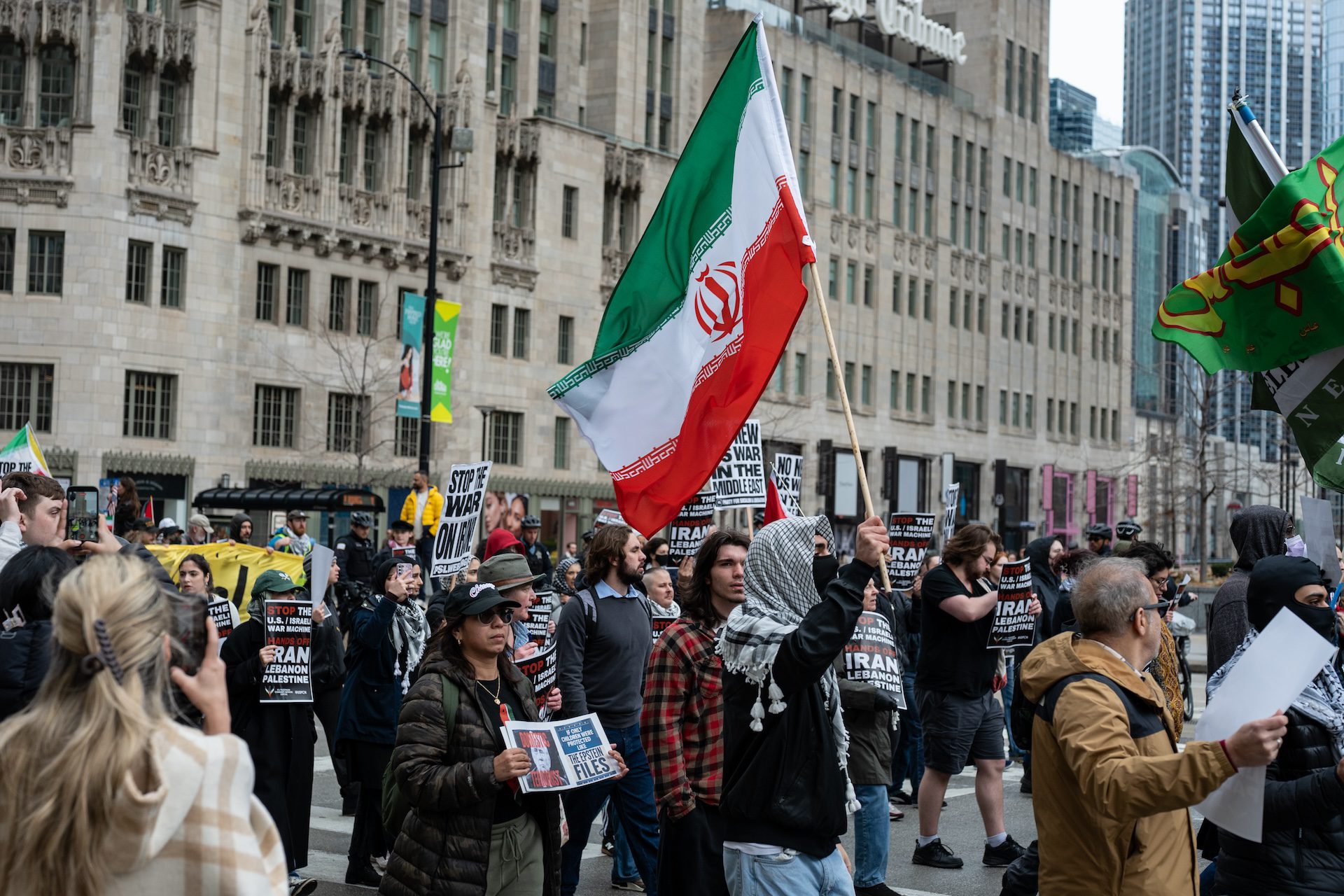
Following months of protests, some Iranians celebrated the death of Khamenei and say they’re more hopeful for a free Iran that allows for gender equality, freedom of religion and democracy. Still, they’re also worried for their loved ones back home, while in opposition to U.S. intervention in the region.
“I don’t think it will change overnight,” Tirdad Kiamanesh, co-founder of the advocacy organization Chicago4Iran said. “But I hope that at the end of this we will see a path towards a society that can be more involved in choosing their future and choosing their leaders and their policies.”
Celebrating the new year with mixed emotions
This year, even with the war and internet blackout making it difficult to connect with her family back home, Mountjoy will still celebrate the coming of a new year with her family.
“The situation we’re seeing in Iran is so complicated and so difficult and so heartbreaking,” Mountjoy said. “To watch it from so far away without any risk or worries here also makes that extra difficult.”
At a time when Iranian people are “sacrificing so much just to stay alive,” Mountjoy says it’s the least the community can do, as a diaspora, to continue their people’s traditions.
Similarly, Kiamanesh said the community’s connection to each other is often bound through cultural traditions like Nowruz.
“What makes us Iranian, and what makes Iran one of the longest, oldest countries in the world is that we protect our culture, and we never let it go,” he said. “Our language, our celebrations, our stories, history — everything.”
Mountjoy, who maintains these traditions with her children, who have never been to Iran, says she tries to give them the Nowruz she never had in school. In 2022, she started an Iranian affinity group at her kids’ laboratory school, where they celebrate Nowruz every year.
“I’m really grateful for the community we live in now, that allows us to celebrate it so loudly,” Mountjoy said. “I needed something to be able to connect to joy after seeing so much heartache.”
Referencing online videos showing Iranians dancing at the funerals of loved ones, Mountjoy says that as a people, Iranians are complex and remain joyful and resilient amidst tragedy — traits she sees in Chicago’s Iranian community as well.
“We’re still going to celebrate it,” she said. “That is a really powerful form of resistance.”
Tara Mobasher is Borderless Magazine’s newsletter writer and reporter. Email Tara at [email protected].