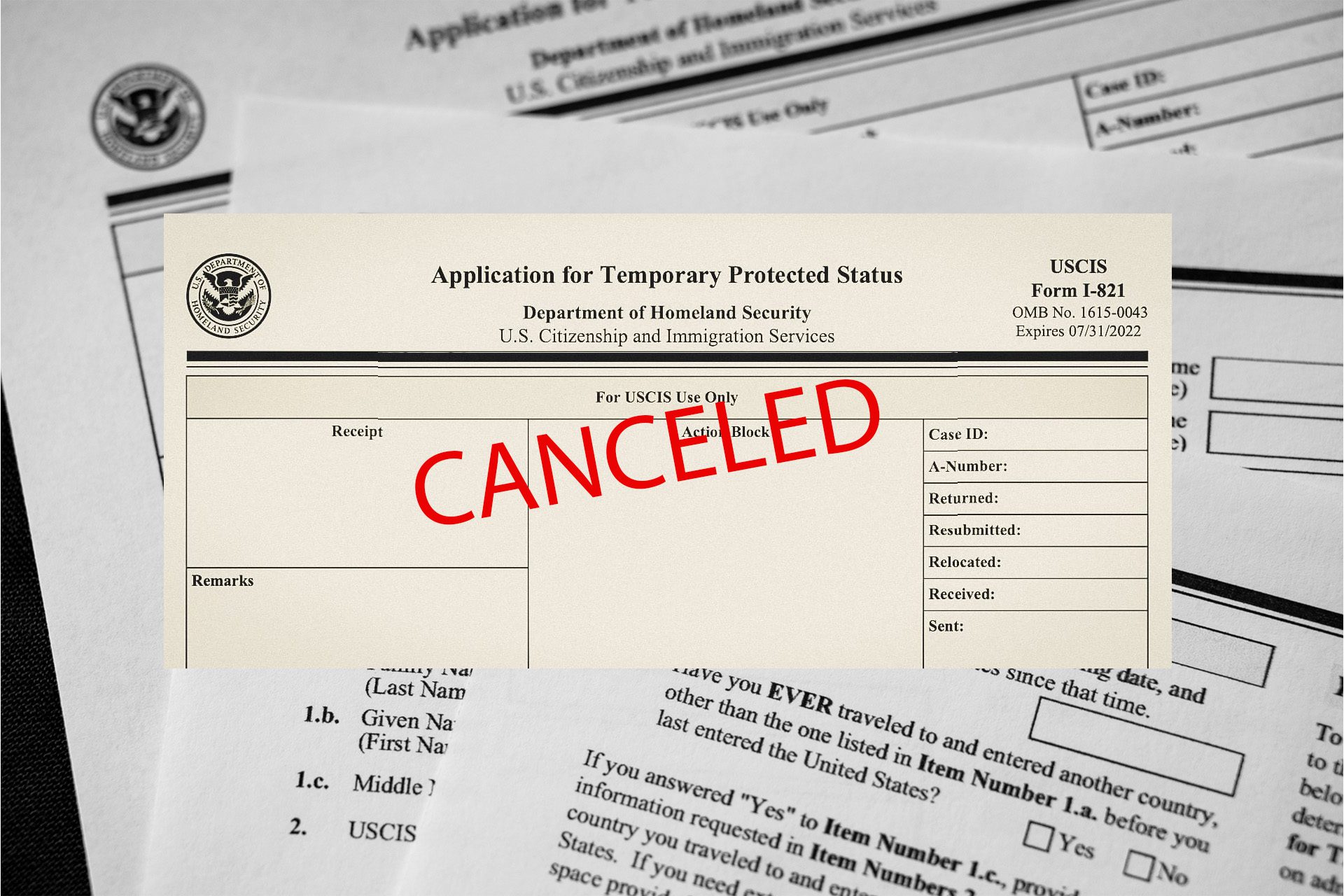
 Photo illustration by Max Herman/Borderless Magazine
 With Trump attempting to terminate TPS for countries like Myanmar/Burma and the protections expiring for others, over a million immigrants are in legal limbo.
More than 3,600 immigrants from Myanmar/Burma are in limbo after a federal judge blocked the Department of Homeland Security’s(DHS) efforts to end their deportation protections Friday.
Myanmar is the latest country affected by legal challenges to TPS terminations ordered by DHS Secretary Kristi Noem since President Donald Trump took office last year, resulting in immigrants from a dozen countries losing their work permits and protection from deportation.
Statuses for the remaining TPS-designated countries are set to expire within the next 9 months. Unless Noem renews TPS protections, more than 1.3 million immigrants will have lost or are set to lose legal protections by October this year.
News that puts power under the spotlight and communities at the center.
Sign up for our free newsletter and get updates twice a week.
“Many [TPS holders] have built families, have mortgages, have really made a life in the US,” said Helena Olea, deputy director at Alianza Americas, a network of migrant-led organizations from Latin America and the Caribbean based in Chicago. “For many of them, falling out of status has devastating impacts economically and emotionally.”
Borderless spoke with immigration experts to learn about changes to TPS and what options are available to TPS holders as their protections end.
What is TPS?
TPS was created under the Immigration Act of 1990 to offer temporary benefits to immigrants from certain countries experiencing extraordinary conditions that prevent a safe return or strain the country’s ability to receive nationals. Individuals with TPS can obtain work authorization, are protected from deportation and may be granted travel authorization.
Conditions that could prevent nationals from returning safely include ongoing armed conflict, as was the case in South Sudan, or environmental disasters, like the disastrous earthquake in Haiti that displaced millions of Haitians in 2010.
Who authorizes TPS benefits and for how long?
The Secretary of Homeland Security designates, extends or terminates TPS “after consultation with appropriate U.S. Government agencies,” according to federal law.
Extensions to current TPS designations must be made at least 60 days before the existing designation expires.
Unlike humanitarian parole, which is for individual humanitarian needs, TPS is country-based humanitarian relief for people from designated countries. TPS designations can be for six to 18 months at a time, and may be extended.
What are TPS requirements?
To qualify for TPS, applicants must:
- Be a national of a designated country (or a stateless person who last resided there)
- File during the open registration period or meet late-filing requirements
- Have maintained continuous physical presence and residence in the U.S. since their country’s most recent designation date
“Brief, casual, and innocent” trips abroad may be permitted, according to U.S. Citizenship and Immigration Services (USCIS). Applicants must report all absences since the required dates; USCIS determines whether exceptions apply.
While TPS holders cannot be deported based on their immigration status in the U.S., their status does not lead to lawful permanent resident status or any other immigration status. Still, TPS beneficiaries may apply for asylum or pursue other avenues to obtain lawful permanent residence or immigration status, according to federal law.
Applying for or receiving TPS doesn’t affect an asylum application or other immigration benefits, and vice versa, though a person must still meet separate eligibility requirements for each, according to USCIS.
How has TPS historically been used?
TPS designation and termination have often become political flashpoints, highlighting differing views on immigration policy between presidential administrations.
Colleen Putzel-Kavanaugh, associate policy analyst at the Migration Policy Institute, noted that individuals from certain countries have seen their status granted and revoked from one administration to another.
“Particularly under the [former President Joe] Biden administration, we saw grades of Temporary Protected Status, sort of balloon, so there were a lot more people who were covered under the status,” said Putzel-Kavanaugh.
During his first term as president, Trump terminated TPS designations for several countries, including El Salvador, Nicaragua and Sudan. The Biden administration rescinded several Trump-era terminations in 2023. Biden also designated new countries for TPS while in office, including Afghanistan, Cameroon, Ethiopia, Myanmar, Ukraine, Venezuela and Lebanon. Since returning to office, Trump has again terminated or not extended several TPS designations in the last year.
“The biggest change that we’ve seen under this [Trump] administration is more so rescinding or not renewing grants of TPS or terminating grants of TPS,” said Putzel-Kavanaugh. “We’re seeing actions on TPS in line with the administration’s other actions on immigration, which is to say, much more enforcement-focused, much more focused on limiting immigration at large through all sorts of avenues.”
Where do TPS designations currently stand?
In the last year, Noem has made several attempts to rescind and revoke TPS designations for nationals from several countries, including Honduras and Nicaragua, which have had TPS designations since the 1990s.
The Trump administration argues that this status is meant to be temporary and that conditions in several designated countries have improved.
Several attempts to terminate TPS designations have been challenged in court. A federal judge found the decisions to terminate designations for Nicaragua, Honduras and Nepal unlawful in December, but it is unclear for how long TPS beneficiaries from these countries may be able to keep their work permits.
DHS “vehemently disagrees” with this order and is working to determine next steps for these designations, according to the USCIS website.
The designations Noem has terminated so far:
- Afghanistan – TPS designation ended on July 14, 2025.
- Cameroon – TPS designation ended on Aug. 4, 2025.
- Nepal – TPS designation ended on Aug. 20, 2025, but it is valid again for now.
- Honduras – TPS designation ended on Sept. 8, 2025, but it is valid again for now.
- Nicaragua – TPS designation ended on Sept. 8, 2025, but it is valid again for now.
- Syria – TPS designation ended on Sept. 30, 2025, but it is valid again for now.
- Venezuela – 2023 TPS designation ended on May 19, 2025, and the 2021 TPS designation ended on Nov. 7, 2025, but some TPS holders may still have work authorization until Oct. 2, 2026.
- South Sudan – TPS designation ended on Jan. 5, 2026, but it is valid again for now.
- Myanmar/Burma – TPS designation ended on Jan. 26, 2026, but it is valid again for now.
- Haiti – TPS designation ends on Feb. 3, 2026.
- Ethiopia – TPS for this country expires on Feb. 13, 2026.
- Somalia – TPS designation ends on March 17, 2026.
These countries have expiring designations:
- Yemen – TPS designation ends on March 3, 2026.
- Lebanon – TPS designation ends on May 27, 2026.
- El Salvador – TPS designation ends on Sept. 9, 2026.
- Sudan – TPS designation ends on Oct. 19, 2026.
- Ukraine – TPS designation ends on Oct. 19, 2026.
What options do immigrants with expiring TPS have now?
To maintain TPS, beneficiaries must re-register during their country’s re-registration period on the USCIS website. The federal agency recommends filing as early as possible.
Enrique Espinoza, staff attorney at Chicago-Kent College of Law’s Immigration Clinic, said anyone with doubts about whether their TPS status is valid or expired should talk with an immigration attorney. If an immigrant loses their TPS, their options will depend on many factors, including their home country.
Espinoza recommended that individuals who qualify for asylum should apply, even as Noem paused all pending asylum applications in early December. He cautioned that each case is still unique depending on whether they have relatives who are citizens, how long they’ve been in the U.S., whether they have applications for other immigration statuses pending and other circumstances.
How are Chicagoans responding to TPS changes?
Olea of Alianza Americas said the end of TPS could affect sectors such as trucking and construction, where many TPS holders currently work under work permits.
Luciano Pedota, president of the Illinois Venezuelan Alliance board, said he hopes for a new TPS designation for Venezuela, as the future of the country and safety for Venezuelans returning to their home country is up in the air with Maduro’s authoritarian regime still in place.
“We don’t know what’s going to happen in the next week or in the next month,” said Luciano Pedota, president of the board of directors with the Illinois Venezuelan Alliance. “Things seem to be moving very quickly after the fall of Maduro.”
Alianza Americas is advocating for a path to permanent residence for TPS holders who have been in the U.S. for several years and have established a life here.
“These people have been in the US for a long time with this temporary status,” said Olea. “There should be legislation to pass so that they could apply for permanent status because that’s really the problem of TPS, that people are stranded in that immigration category.”
Update 1/26/26: A federal judge has blocked President Donald Trump’s administration from ending deportation protections for Myanmar nationals in the U.S.