 Camilla Forte for Borderless Magazine
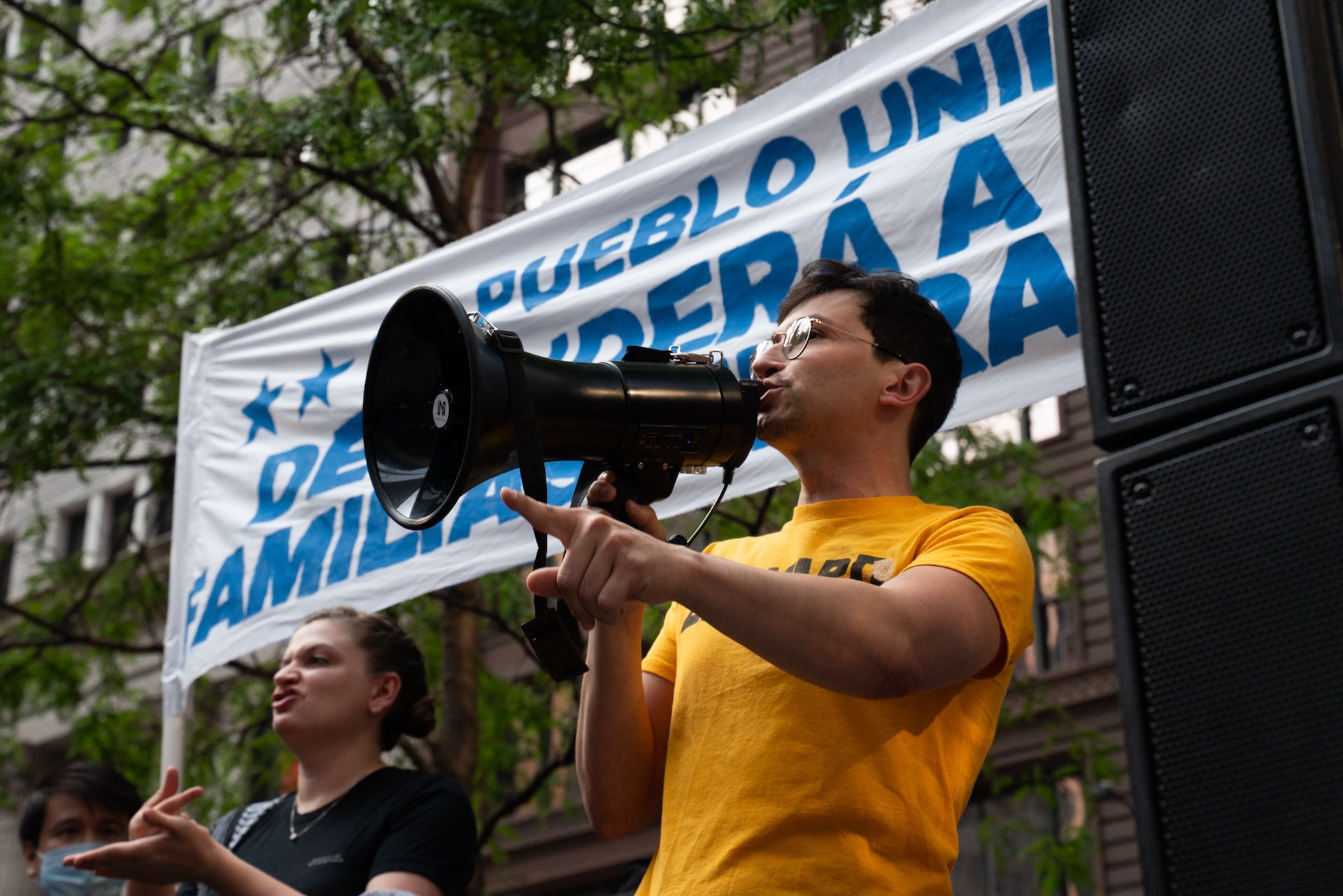
Organizers say the work helps their neighbors feel empowered by knowing their rights amid ICE activity. They say more community members have joined since Trump took office.
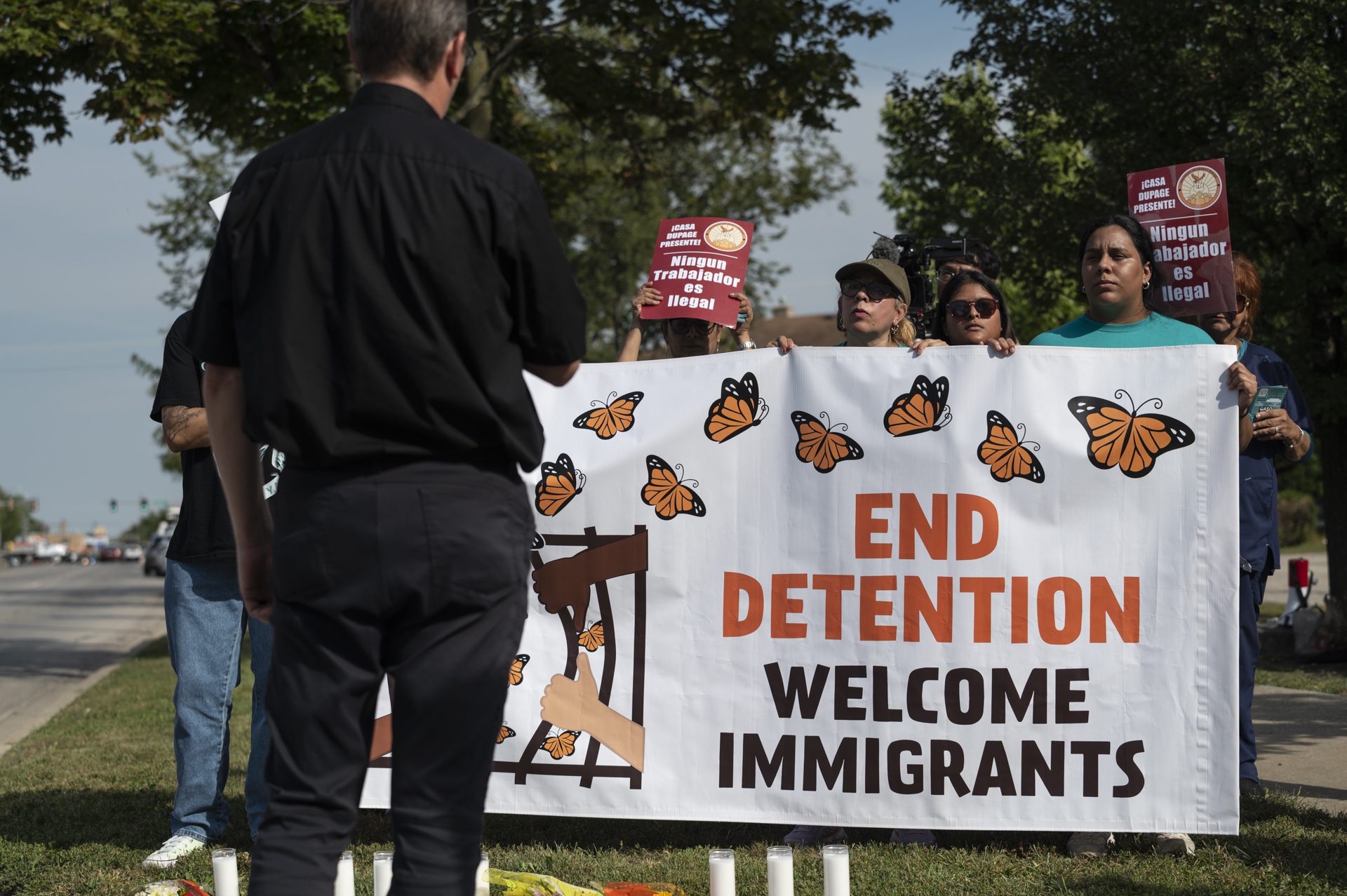
In the year since President Donald Trump was inaugurated for his second term, two people have been shot and killed by Immigration and Customs Enforcement (ICE) agents on duty, and at least 15 people have died in ICE custody, according to the agency’s public data.
That figure doesn’t include at least a dozen other deaths recorded by outlets like NPR and the Guardian. These publications have reported that 2025 was the deadliest year for ICE in the last two decades.
“They’ve gotten much more brutal,” said Diego Morales, a rapid response organizer with Pilsen Unidos por Ñuestro Orgullo (PUÑO), “They’ve abandoned any pretense of respecting the law, and the risks for everybody involved have gotten higher and higher.”
News that puts power under the spotlight and communities at the center.
Sign up for our free newsletter and get updates twice a week.
Deaths in detention and on the streets are just one part of the administration’s aggressive and deadly track record for Trump’s first year back in office. Trump has also made widespread changes to federal immigration law through executive orders, enacted strict border policies, threatened to deploy the National Guard in Democratic cities nationwide, revoked immigrants’ legal statuses and swept thousands of immigrants into detention.
In response, Chicagoans have bolstered their network of mutual aid groups and rapid response teams. These volunteer-led support systems work to protect immigrant communities by documenting federal activity and informing neighbors of their rights.
From workshops to protests, politicians, activists and civilians have mobilized in Chicago and the surrounding suburbs to denounce Trump’s immigration policies.
Community members have been organizing as part of rapid response groups tracking ICE activity — blowing whistles to alert neighbors to the presence of federal agents from Lakeview to Little Village. In October, for “No Kings Day,” hundreds of thousands of people took to the streets nationwide to protest Trump in Illinois.
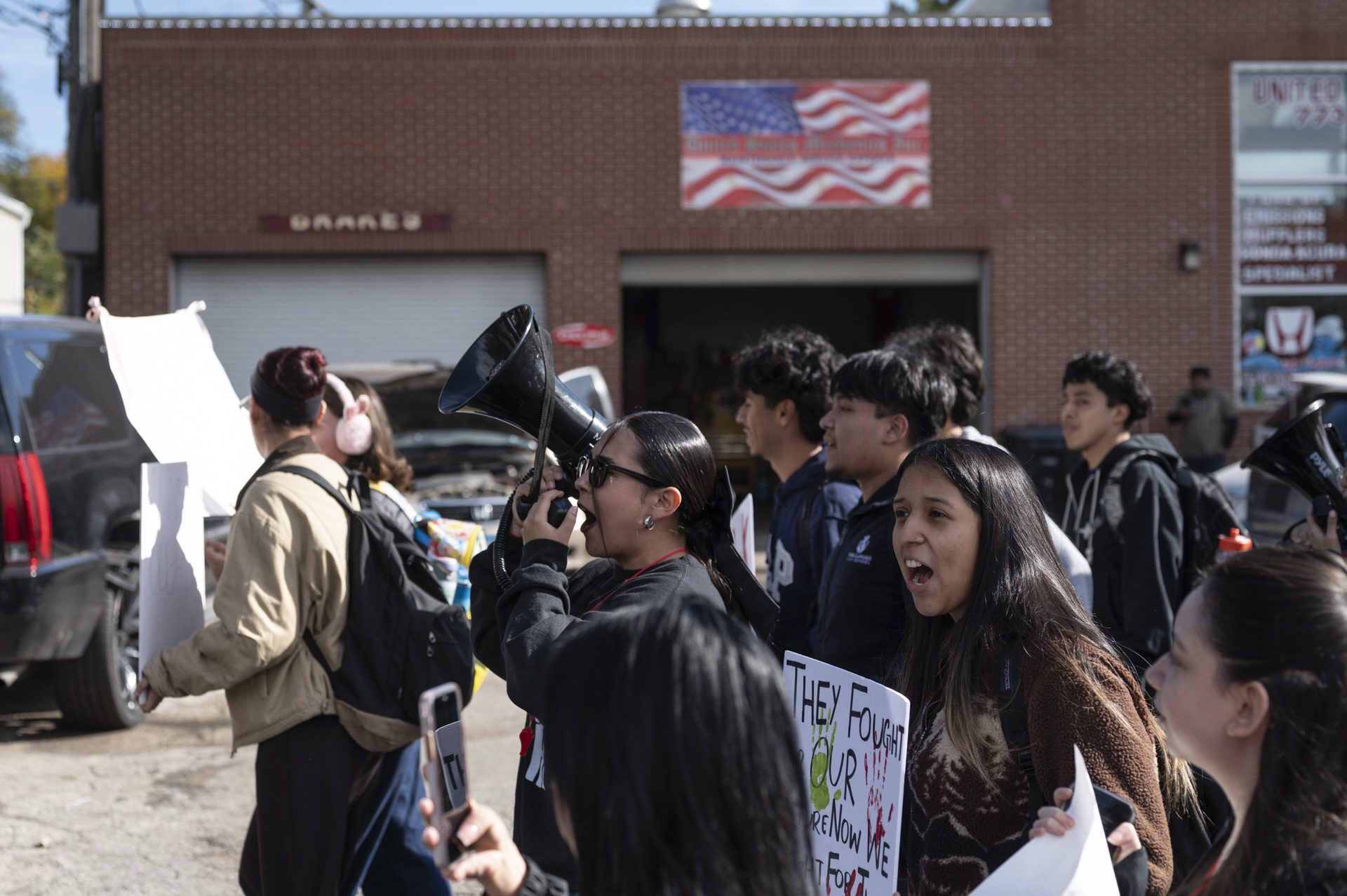
“The federal government is not doing this behind a curtain. They are doing it plain, at the public eye, and with no remorse,” said Marièn Casillas Pabellón, executive director of the West Suburban Action Project, or PASO. “People can see the harm that it causes and the trauma that it causes long-term … even if they are not directly impacted.”
Organizers like Pabellón and Morales say they’ve seen more community members galvanized by the Trump administration’s actions and joining organizations like theirs to do rapid response or other forms of community support for impacted individuals.
As Chicagoans face down the next three years under an administration keen on keeping immigrants in the city and suburbs in its crosshairs, organizers say the work to support immigrants continues.
“The risk is there, and that hasn’t gone down,” Pabellón said. “It does produce a level of anxiety … but it’s not surpassed by your need to do good.”
Borderless compiled this guide to rapid-response groups, mutual aid funds, and other organizations in Chicago and its surrounding suburbs that are supporting immigrants impacted by federal immigration enforcement.
If you have a suggestion on a group or fund to add to this guide, let us know at [email protected].
Immigrant Serving Organizations
- Illinois Coalition for Immigrant and Refugee Rights (ICIRR) and Organized Communities Against Deportations (OCAD) oversee a state-wide network of rapid response organizations that verify and document ICE activity and provide support to detained immigrants.
- ICIRR also has a Court Watch program where volunteers attend hearings to support detained immigrants. Interested volunteers can email [email protected].
- The National Immigrant Justice Center (NIJC) provides free immigration legal support and assistance to individuals who have been detained. If you speak a language other than English, you can volunteer to provide language translation and support services for immigration cases NIJC is supporting.
Rapid Response Groups:
Pilsen Unidos por Ñuestro Orgullo will host a rapid response training, also known as Migrawatch, on Jan. 27 at 6 p.m. For more details and to get involved, visit their Instagram page.
ICIRR also hosts weekly online Migrawatch trainings in English and Spanish every Wednesday at 6 p.m. More details here.
Other local rapid response groups that verify, document and alert communities of immigration activity include:
- Aurora Rapid Response Team
- Berwyn-Cicero Rapid Response Network
- Chicago Far South Side Rapid Response
- Chinatown-Bridgeport-South Loop Rapid Response Team (Email is [email protected])
- DeKalb Area Rapid Response Team
- Immigrant Solidarity DuPage
- Kenwood-Hyde Park-Woodlawn Rapid Response Team
- La Villita Se Defiende
- Northside Lakefront Rapid Response Team (Uptown, Edgewater, Lakeview and Lincoln Park)
- Northwest Side Rapid Response Team
- PASO, or the West Suburban Action Project, conducts Know Your Rights workshops, rapid response, and trainings for rapid responders looking to support Chicago-area suburbs like Cicero, Berwyn, Melrose Park and more.
- Protect Rogers Park
- Southeast Side Rapid Response Team
- Southland Rapid Response Team (Blue Island, Crestwood, Alsip)
- Southwest Rapid Response
Organizers recommend attending a training before joining a rapid response team to ensure you know your rights and how to document federal immigration activity.
Mutual Aid Funds:
Organized Communities Against Deportations (OCAD) maintains a mutual aid fund to support immigrants and families affected by ICE raids, offering rental assistance, grocery support and other essential services.
The Midwest Immigration Bond Fund (MIBF) helps detained immigrants in Illinois, Indiana, Minnesota, Wisconsin and Kentucky get released from detention by paying their bond. They accept donations to their bond fund here.
Learn more through Borderless Guides:
Looking to learn more about immigration court or empower your immigrant neighbors with knowledge about their rights? Check out these Borderless guides and explainers about ICE, your rights and more.
Know Your Rights:
- What Immigrant Communities Should Know About Their Rights
- What Can Chicago’s Small Businesses Do if ICE Is at Their Door?
- What Rights Do Tenants and Landlords Have While Facing ICE?
For Immigrants:
- What to Know About Deportation Proceedings
- Immigration Attorneys Share Tips for Seeking Legal Assistance During Uncertain Times
For Protesters:
Clarification 1/21/26: This story has been updated to clarify the name of the Chinatown-Bridgeport-South Loop Rapid Response Team.
Katrina Pham is Borderless Magazine’s audience engagement reporter. Email Katrina at [email protected].